Crisil Report Highlights Major Shift in India's Import Strategy as Supply Disruptions, Rising Prices and Geopolitical Risks Reshape Global Methanol Trade
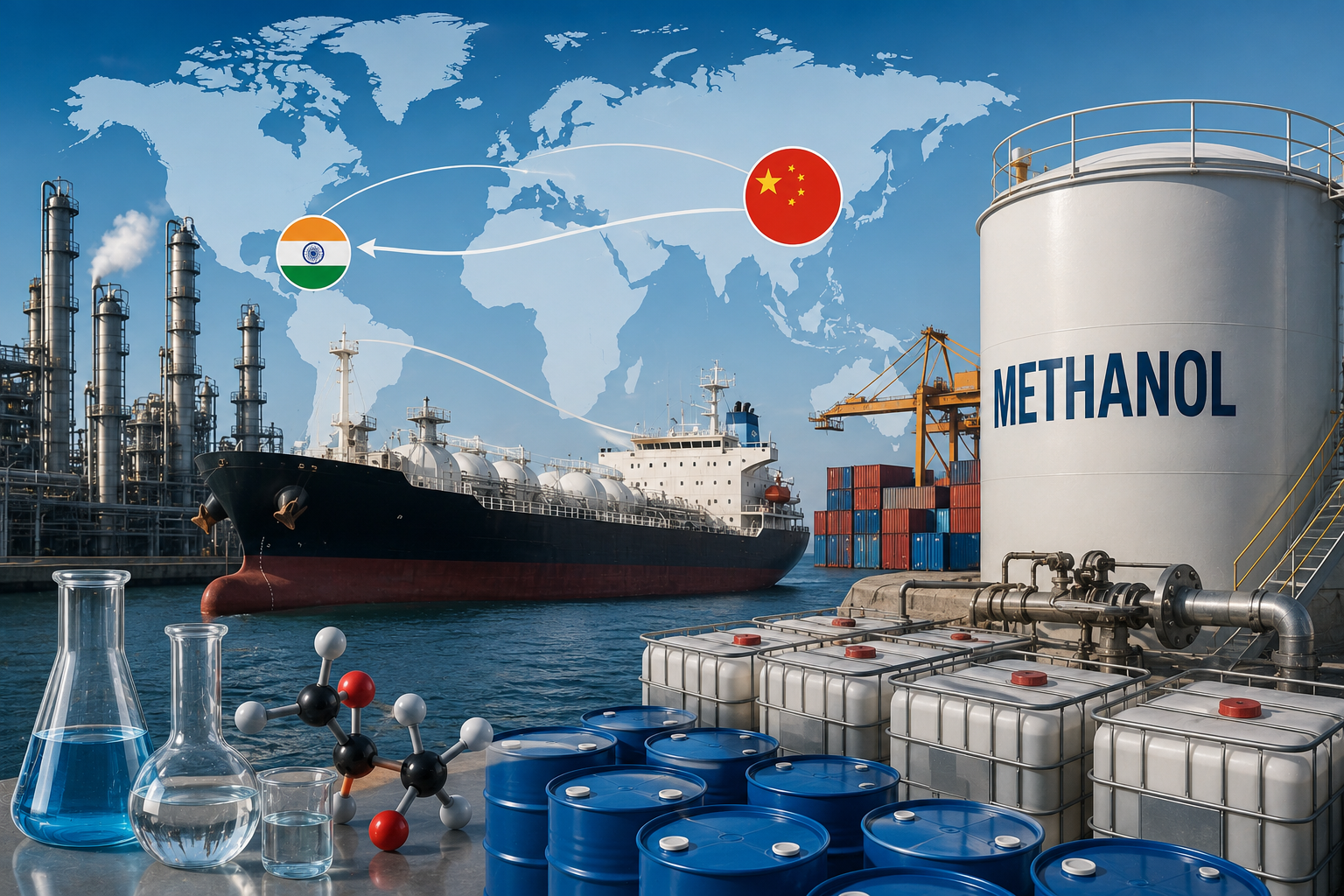
India has significantly reshaped its methanol import strategy in response to the prolonged conflict in West Asia, reducing its dependence on traditional suppliers in the Middle East while rapidly increasing imports from China. According to a report by Crisil Intelligence, disruptions in production, shipping bottlenecks and surging methanol prices have compelled Indian importers to diversify sourcing in order to safeguard supplies for critical manufacturing industries.
The development marks a notable shift in India's industrial supply chain strategy and reflects the growing influence of geopolitical events on global commodity trade. With the country importing nearly 98% of its methanol requirement, ensuring uninterrupted supply has become a strategic priority for both industry and policymakers.
Middle East's Dominance in India's Methanol Imports Declines
For decades, the Middle East has been India's largest source of methanol imports due to its abundant natural gas reserves and large-scale production facilities. However, the ongoing conflict has significantly disrupted this supply chain.
India's Changing Methanol Import Mix
| Period | Share of Imports from Middle East |
|---|---|
| April 2025 – February 2026 | Around 88% |
| March – May 2026 | Around 51% |
The sharp decline illustrates how geopolitical instability has forced Indian buyers to reduce dependence on a single region and seek alternative sources.
China Emerges as India's Fastest-Growing Supplier
As shipments from the Gulf became increasingly uncertain, China quickly emerged as an important alternative supplier.
Chinese exporters benefited from:
-
Stable production facilities.
-
Greater export availability.
-
Competitive pricing.
-
Reliable logistics.
-
Faster response to changing global demand.
The increase in imports from China demonstrates the flexibility of global supply chains and India's ability to adapt during periods of disruption.
Why Methanol Is a Critical Industrial Raw Material
Methanol is one of the most important feedstocks used across a wide range of manufacturing industries.
Major Applications
-
Automotive manufacturing.
-
Pharmaceuticals.
-
Specialty chemicals.
-
Construction materials.
-
Paints and coatings.
-
Formaldehyde production.
-
Adhesives and resins.
-
Clean fuel and energy applications.
Any prolonged disruption in methanol supplies can increase production costs across several sectors of the economy.
India Remains Highly Dependent on Imports
Despite being one of the world's fastest-growing manufacturing economies, India continues to rely heavily on imported methanol.
Key Facts
-
Nearly 98% of domestic methanol demand is met through imports.
-
Domestic production remains limited.
-
Industrial demand continues to rise due to expanding manufacturing activity.
This high import dependence makes India particularly vulnerable to disruptions in global supply chains and commodity markets.
West Asia Conflict Reshapes Global Chemical Trade
The geopolitical crisis has disrupted not only crude oil markets but also the supply of several petrochemical products, including methanol.
Key challenges include:
-
Production interruptions.
-
Shipping delays.
-
Higher freight charges.
-
Increased marine insurance costs.
-
Supply uncertainty.
-
Price volatility.
These disruptions have encouraged importers around the world to diversify procurement and reduce supply concentration risks.
Supply Chain Diversification Becomes a Strategic Necessity
The latest shift reflects a broader trend among Indian manufacturers towards building more resilient supply chains.
Rather than relying predominantly on one region, companies are increasingly sourcing raw materials from multiple countries.
Benefits of Diversified Sourcing
-
Lower geopolitical risk.
-
Improved supply security.
-
Greater pricing flexibility.
-
Reduced logistics disruptions.
-
Better business continuity.
Diversification has become an essential strategy as geopolitical uncertainties continue to affect international trade.
Higher Prices Prompt Procurement Changes
The conflict has resulted in higher methanol prices due to tighter global supplies and elevated transportation costs.
Indian importers have therefore prioritised suppliers capable of offering:
-
Stable pricing.
-
Reliable delivery schedules.
-
Long-term supply agreements.
-
Consistent production.
Cost competitiveness has become increasingly important as manufacturers seek to protect operating margins.
Industries That Could Feel the Impact
Fluctuations in methanol availability and pricing directly affect multiple industries.
Key User Industries
-
Chemicals.
-
Pharmaceuticals.
-
Automobile manufacturing.
-
Construction.
-
Plastics.
-
Paints.
-
Industrial solvents.
-
Petrochemicals.
For these industries, methanol represents a key input cost, making supply stability critical for maintaining production efficiency.
Opportunity for Domestic Methanol Manufacturing
The latest disruption has once again highlighted India's heavy dependence on imported methanol.
Industry experts believe the situation could accelerate investments in:
-
Domestic methanol manufacturing plants.
-
Coal-to-methanol technologies.
-
Green methanol production.
-
Biomass-based methanol.
-
Strategic chemical infrastructure.
Increasing domestic production could improve India's self-reliance while reducing vulnerability to international supply disruptions.
Global Supply Chains Continue to Evolve
The shift in sourcing reflects a broader transformation in global trade patterns.
As geopolitical tensions persist, manufacturers worldwide are increasingly:
-
Diversifying suppliers.
-
Building inventory buffers.
-
Exploring regional manufacturing hubs.
-
Investing in supply chain resilience.
These changes are expected to permanently reshape international chemical trade over the coming years.
Challenges Ahead
Despite the successful diversification of imports, several risks remain.
Key Risks
-
Continued geopolitical tensions.
-
Freight cost volatility.
-
Currency fluctuations.
-
Rising energy prices.
-
Dependence on imported feedstock.
-
Limited domestic production capacity.
Managing these risks will be essential for ensuring uninterrupted industrial growth.
Long-Term Outlook for India's Chemical Industry
India's expanding manufacturing base continues to drive strong demand for methanol.
Growing investments in:
-
Pharmaceuticals.
-
Specialty chemicals.
-
Electric vehicles.
-
Construction.
-
Petrochemicals.
-
Green fuels.
are expected to increase methanol consumption over the coming decade.
This makes long-term supply security and domestic production capacity increasingly important for India's industrial strategy.
Market Outlook
India's decision to diversify methanol imports highlights a broader shift towards supply chain resilience as geopolitical tensions continue to disrupt global commodity markets. The sharp reduction in dependence on Middle Eastern suppliers and the increased sourcing from China demonstrate how Indian industries are adapting to ensure uninterrupted access to critical industrial raw materials. While the diversification has helped mitigate immediate supply risks, India's continued reliance on imported methanol leaves domestic manufacturers exposed to fluctuations in global prices, freight costs and geopolitical developments.
From a market perspective, the evolving import pattern could have significant implications for India's chemical, pharmaceutical, paints, construction and automotive sectors, all of which depend heavily on methanol as a key raw material. The current situation may also encourage greater investment in domestic methanol production, green methanol technologies and import substitution initiatives under India's manufacturing and energy security agenda. Investors should closely monitor global methanol prices, developments in West Asia, domestic capacity expansion and government policy measures, as these factors will play a crucial role in shaping the outlook for India's chemicals and industrial manufacturing sectors.