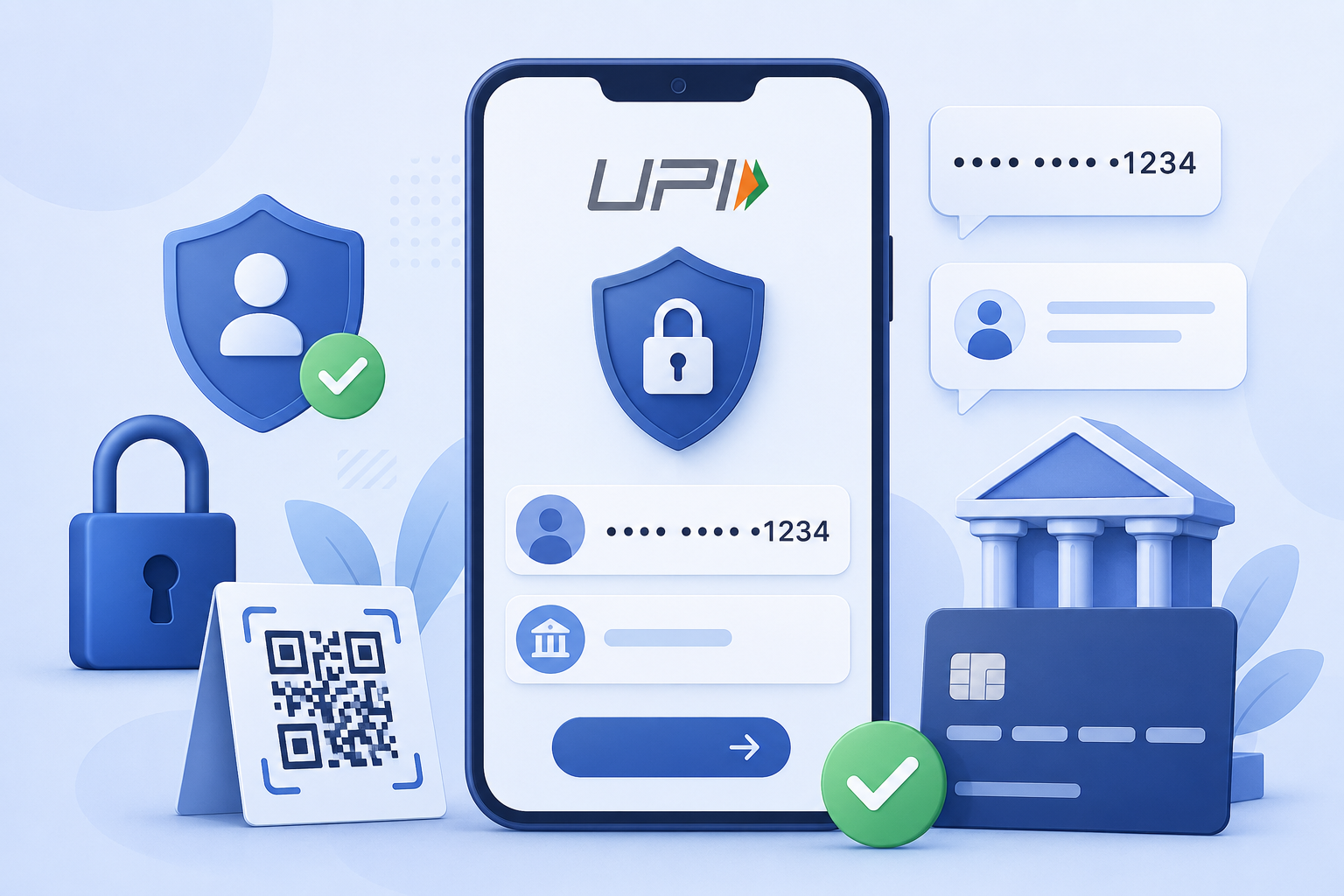
Banks and Payment Apps Asked to Mask Sensitive Information as India Strengthens Digital Privacy Framework Under the DPDP Act
India's digital payments ecosystem is set for a significant privacy overhaul as the National Payments Corporation of India (NPCI) introduces measures aimed at reducing the exposure of users' personal information during Unified Payments Interface (UPI) transactions. The proposed changes are expected to make digital payments more secure by masking users' mobile numbers and encouraging the use of username-based Virtual Payment Addresses (VPAs) instead of mobile number-based payment IDs.
The initiative comes amid rising concerns over data privacy, identity exposure and misuse of personal information, particularly as UPI has become the world's largest real-time payment system. Industry reports suggest that payment service providers and banks have been asked to implement the new privacy standards by September 4, aligning the UPI ecosystem with the requirements of India's Digital Personal Data Protection (DPDP) Act.
The move is expected to significantly enhance user confidence in digital payments while preserving the speed, simplicity and convenience that have made UPI one of India's most successful financial innovations.
Why NPCI Is Strengthening UPI Privacy
UPI has transformed the way Indians transfer money, enabling instant payments between individuals, businesses and merchants using mobile phones.
However, many UPI applications currently display information such as:
-
Registered mobile numbers
-
Customer names
-
Mobile number-based UPI IDs
-
Partial banking details
While these details help verify transactions, they also expose sensitive personal information that may be vulnerable to misuse.
The issue has gained increasing attention following complaints from users, particularly women, regarding unsolicited calls, harassment and privacy concerns after completing payments to unknown individuals or merchants.
NPCI's latest initiative seeks to minimise these risks by ensuring that only essential transaction information remains visible.
Digital Personal Data Protection Act Driving the Change
The privacy initiative is closely aligned with India's Digital Personal Data Protection (DPDP) Act, which has introduced a stronger legal framework governing the collection, storage and processing of personal information.
Under the legislation, organisations handling customer data are expected to:
-
Protect sensitive personal information.
-
Minimise unnecessary data sharing.
-
Strengthen cybersecurity practices.
-
Improve transparency in data handling.
-
Reduce the risk of data misuse.
Since mobile numbers are considered personal data, payment service providers are expected to redesign their systems to comply with the evolving regulatory framework.
The move represents one of the most significant privacy-focused reforms in India's digital payments infrastructure.
Phone Numbers to Be Masked During Transactions
One of the most noticeable changes for users will be the masking of registered mobile numbers during UPI transactions.
Under NPCI's proposed guidelines:
-
Only the last four digits of a user's mobile number will remain visible.
-
Full phone numbers will no longer be displayed to the payer or recipient.
-
Mobile numbers will also be hidden during QR code-based payments.
The objective is to prevent users' personal contact information from being unnecessarily exposed during routine digital transactions.
This measure is expected to significantly reduce the risk of misuse of mobile numbers while maintaining transaction transparency.
Username-Based UPI IDs to Become the Default
Another key reform focuses on the Virtual Payment Address (VPA), commonly referred to as the UPI ID.
Although users have always had the option of creating personalised UPI IDs such as:
-
amit@bank
-
priya@upi
-
businessname@pay
many first-time users automatically receive mobile number-based payment IDs because these are commonly suggested during registration.
NPCI now wants payment applications to encourage users to create username-based VPAs as the default option.
This change will:
-
Reduce dependence on mobile number-based identities.
-
Improve user privacy.
-
Make personal information less accessible during transactions.
-
Strengthen confidence in digital payments.
What Is a Virtual Payment Address (VPA)?
A Virtual Payment Address acts as a unique digital identity that allows users to send and receive money without revealing their bank account details.
Instead of sharing:
-
Bank account number
-
IFSC code
-
Mobile number
users simply share a customised UPI ID.
Moving towards username-based VPAs enables safer transactions while protecting personal information.
What Changes Will Users Notice?
The privacy update is designed to improve security without changing the user experience.
Customers will continue to enjoy:
-
Instant fund transfers.
-
QR code payments.
-
Merchant payments.
-
Peer-to-peer transfers.
-
Bill payments.
-
AutoPay mandates.
The key difference will be the reduced visibility of personal information throughout the payment journey.
For most users, transactions will continue exactly as before, but with significantly stronger privacy safeguards.
Banks and Fintech Companies Face Major System Upgrades
To comply with NPCI's revised standards, banks and payment service providers will need to make several technical modifications.
Expected changes include:
-
Updating customer interfaces.
-
Masking personal information.
-
Modifying payment confirmation screens.
-
Introducing username-first onboarding.
-
Revising database structures.
-
Enhancing privacy controls.
-
Strengthening cybersecurity systems.
These upgrades will require coordination across banks, fintech firms and payment infrastructure providers before the implementation deadline.
Benefits for Consumers
The proposed reforms offer several important advantages for users.
Key Consumer Benefits
-
Better protection of personal information.
-
Reduced identity exposure.
-
Lower risk of fraud.
-
Greater protection against harassment.
-
Improved confidence in digital payments.
-
Stronger compliance with data privacy laws.
The changes are expected to be particularly beneficial for users who frequently transact with unknown merchants or individuals.
Challenges During Implementation
Although the reforms are widely viewed as positive, implementation may involve certain operational challenges.
Banks and payment providers will need to:
-
Upgrade legacy systems.
-
Educate customers about new UPI IDs.
-
Ensure compatibility across multiple UPI platforms.
-
Prevent service disruptions during migration.
-
Maintain transaction speed despite additional privacy measures.
The success of the initiative will depend on seamless coordination across India's rapidly expanding digital payments ecosystem.
India's Digital Payments Ecosystem Continues to Mature
India has emerged as the global leader in real-time digital payments, with UPI processing billions of transactions every month.
The latest initiative reflects the next phase of the ecosystem's evolution—from expanding access and convenience to strengthening:
-
Data privacy.
-
Cybersecurity.
-
Consumer protection.
-
Regulatory compliance.
-
Digital trust.
As digital payments continue to replace cash across urban and rural India, privacy-focused innovations are expected to become an increasingly important feature of the country's financial infrastructure.
Impact on the Fintech Industry
The proposed privacy reforms could also reshape the competitive landscape for India's fintech sector.
Companies investing in:
-
Privacy-enhancing technologies.
-
Digital identity solutions.
-
Cybersecurity infrastructure.
-
Secure authentication systems.
-
AI-driven fraud prevention.
may benefit from rising demand as financial institutions strengthen compliance with evolving regulations.
The initiative also reinforces India's commitment to building a secure, globally competitive digital financial ecosystem.
Key Highlights
| Particular | Latest Update |
|---|---|
| Regulator | National Payments Corporation of India (NPCI) |
| Objective | Enhance UPI user privacy |
| Key Reform | Phone numbers to be masked |
| Mobile Number Visibility | Only last four digits displayed |
| QR Code Payments | Phone numbers hidden |
| Default UPI ID | Username-based Virtual Payment Address (VPA) |
| Compliance Timeline | Implementation targeted by September 4 |
| Regulatory Support | Digital Personal Data Protection (DPDP) Act |
Market Outlook
companies invest in privacy-focused infrastructure, cybersecurity and regulatory compliance, the reforms are expected to enhance trust in UPI while supporting sustained growth in digital transactions. Over the longer term, improved data protection standards could strengthen India's position as a global leader in digital payments and create new opportunities for fintech companies specialising in identity management, cybersecurity and secure financial technology solutions.