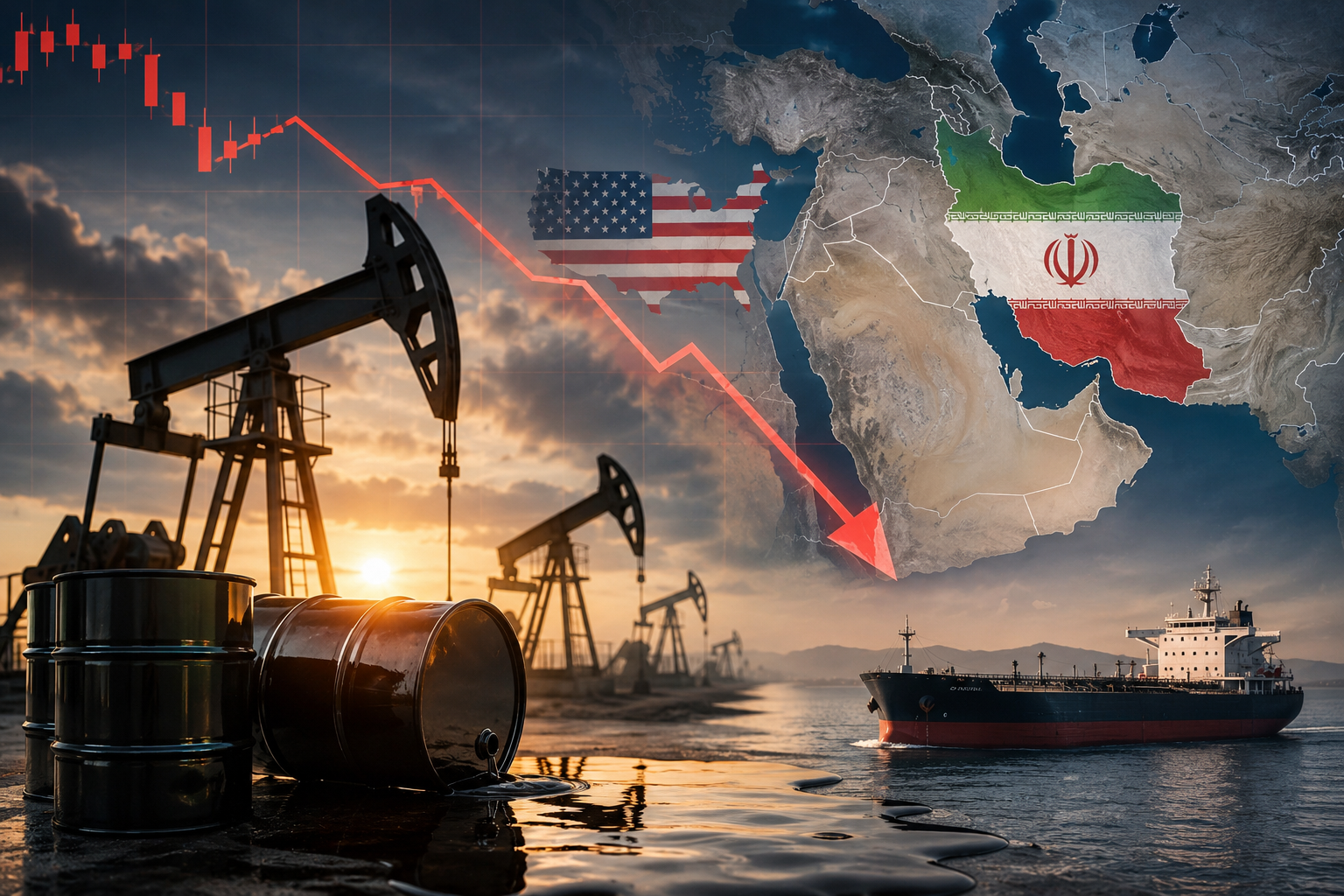
Brent Slips Below $88 a Barrel, WTI Extends Losses as Investors Monitor Middle East Talks, Shipping Routes and US Inventory Data
Global crude oil prices retreated on Tuesday after signs of renewed diplomatic engagement between the United States and Iran eased immediate concerns over disruptions to Middle East oil supplies. The decline reflects a reduction in the geopolitical risk premium that had supported crude prices in recent weeks, although market participants remain cautious as negotiations are still at a delicate stage.
Brent crude futures fell $0.54, or 0.6%, to $87.82 per barrel, while US West Texas Intermediate (WTI) crude declined $0.66, or 0.8%, to $81.95 per barrel during early Asian trading. Both benchmark contracts had dropped by around 1% earlier in the session, marking their lowest levels in more than a week.
The latest movement highlights the sensitivity of energy markets to geopolitical developments, with traders balancing hopes for diplomacy against the possibility of renewed military action in one of the world's most critical oil-producing regions.
Diplomatic Progress Lowers Geopolitical Risk Premium
Investor sentiment improved after US President Donald Trump stated that Washington was holding "good talks" with Iran, raising expectations that negotiations could help de-escalate tensions.
While Trump cautioned that military strikes could resume if discussions failed, the market interpreted the comments as a sign that both nations are willing to keep diplomatic channels open. Iranian officials also signalled that future actions would depend on the outcome of negotiations, reducing fears of an immediate escalation.
The prospect of diplomacy has prompted traders to unwind some of the risk premium that had lifted crude prices following earlier military tensions.
Brent and WTI Retreat After Recent Rally
Oil benchmarks have experienced heightened volatility over recent weeks as investors reacted to geopolitical headlines.
Tuesday's decline pushed:
-
Brent Crude: Down to $87.82 per barrel
-
WTI Crude: Down to $81.95 per barrel
Although prices remain elevated compared with historical averages, the latest correction suggests that markets are becoming more optimistic about the possibility of stable energy supplies from the Gulf region.
Middle East Shipping Routes Remain a Major Concern
Despite easing prices, energy traders continue to closely monitor shipping activity through the Strait of Hormuz and the Bab el-Mandeb Strait, two of the world's most strategically important maritime corridors.
The Strait of Hormuz carries a significant share of globally traded crude oil, making any disruption a major concern for international energy markets. Similarly, the Bab el-Mandeb Strait serves as a vital gateway linking the Red Sea with the Gulf of Aden and the Suez Canal.
Even without a complete blockade, security risks in these waterways have led to reduced shipping traffic, higher insurance costs and longer delivery routes for energy cargoes.
Houthi Threat Continues to Influence Market Sentiment
Adding to geopolitical uncertainty, Afrah al-Zouba, the foreign minister-designate of Yemen's internationally recognised Saudi-backed government, warned that Yemen's Houthi movement continues to seek greater influence over maritime trade routes.
Although market analysts believe the Houthis may not possess the capability to completely shut down shipping lanes, the ongoing security threat has discouraged commercial vessels from using certain routes.
Edward Meir, analyst at Marex, noted that shipping volumes through both the Red Sea and the Strait of Hormuz remain well below normal levels, reflecting continued caution among international shipping companies.
Demand Weakness in Asia Limits Further Price Gains
While geopolitical risks continue to support crude prices, weaker demand from Asia has prevented a sharper rally.
Analysts say slower industrial activity, cautious refinery purchases and softer economic growth across several Asian economies have reduced global fuel consumption.
This moderation in demand has offset concerns over supply disruptions, keeping oil prices below the highs that many investors had expected during periods of heightened geopolitical tension.
The balance between supply risks and demand weakness is expected to remain one of the key drivers of crude oil prices in the coming weeks.
Barclays Highlights Sharp Decline in Oil Flows Through Hormuz
According to Barclays, exports moving through the Strait of Hormuz have dropped significantly.
For the week ending 24 July, crude oil and refined product exports averaged approximately 2.9 million barrels per day, compared with nearly 5.9 million barrels per day during the previous week.
The decline illustrates how geopolitical uncertainty alone can alter global trade flows, even without physical disruptions to production or infrastructure.
Reduced tanker movements have also contributed to higher freight rates and increased operational costs for energy companies.
US Inventory Data in Focus
Apart from geopolitical developments, investors are awaiting fresh inventory data from the United States to gauge domestic demand.
According to a Reuters survey, analysts expect:
-
US crude oil inventories to decline.
-
Gasoline stockpiles to fall, indicating resilient fuel demand.
-
Distillate inventories, including diesel and heating oil, to register a modest increase.
The upcoming reports from the American Petroleum Institute (API) and the US Energy Information Administration (EIA) are expected to provide further direction for oil prices later this week.
Impact on Inflation and Global Financial Markets
Lower crude oil prices are generally viewed as positive for the global economy, as they help reduce transportation costs, manufacturing expenses and inflationary pressures.
For major oil-importing countries such as India, softer crude prices can support:
-
Lower import bills.
-
Improved current account balances.
-
Reduced inflation risks.
-
Greater flexibility for central bank monetary policy.
-
Better profitability for sectors such as aviation, paints, chemicals and logistics.
However, sustained geopolitical uncertainty continues to limit the extent of any price correction.
What Investors Should Watch
Energy markets remain highly sensitive to geopolitical headlines. Key developments likely to influence crude prices include:
-
Progress in US-Iran diplomatic negotiations.
-
Any renewed military activity in the Middle East.
-
Security conditions around the Strait of Hormuz and the Red Sea.
-
Weekly US crude inventory reports.
-
Global demand trends, particularly from China and other Asian economies.
-
OPEC+ production strategy and export levels.
Market Outlook
The latest decline in oil prices reflects cautious optimism that diplomacy may help stabilise one of the world's most important energy-producing regions. However, the geopolitical situation remains fragile, and any deterioration in negotiations could quickly restore the risk premium in crude markets.
For investors, crude oil will remain one of the most closely watched global indicators in the coming weeks, with its direction likely to influence inflation expectations, equity markets, currency movements and central bank policy across major economies. As diplomatic talks continue and inventory data emerge, volatility in the energy market is expected to remain elevated.