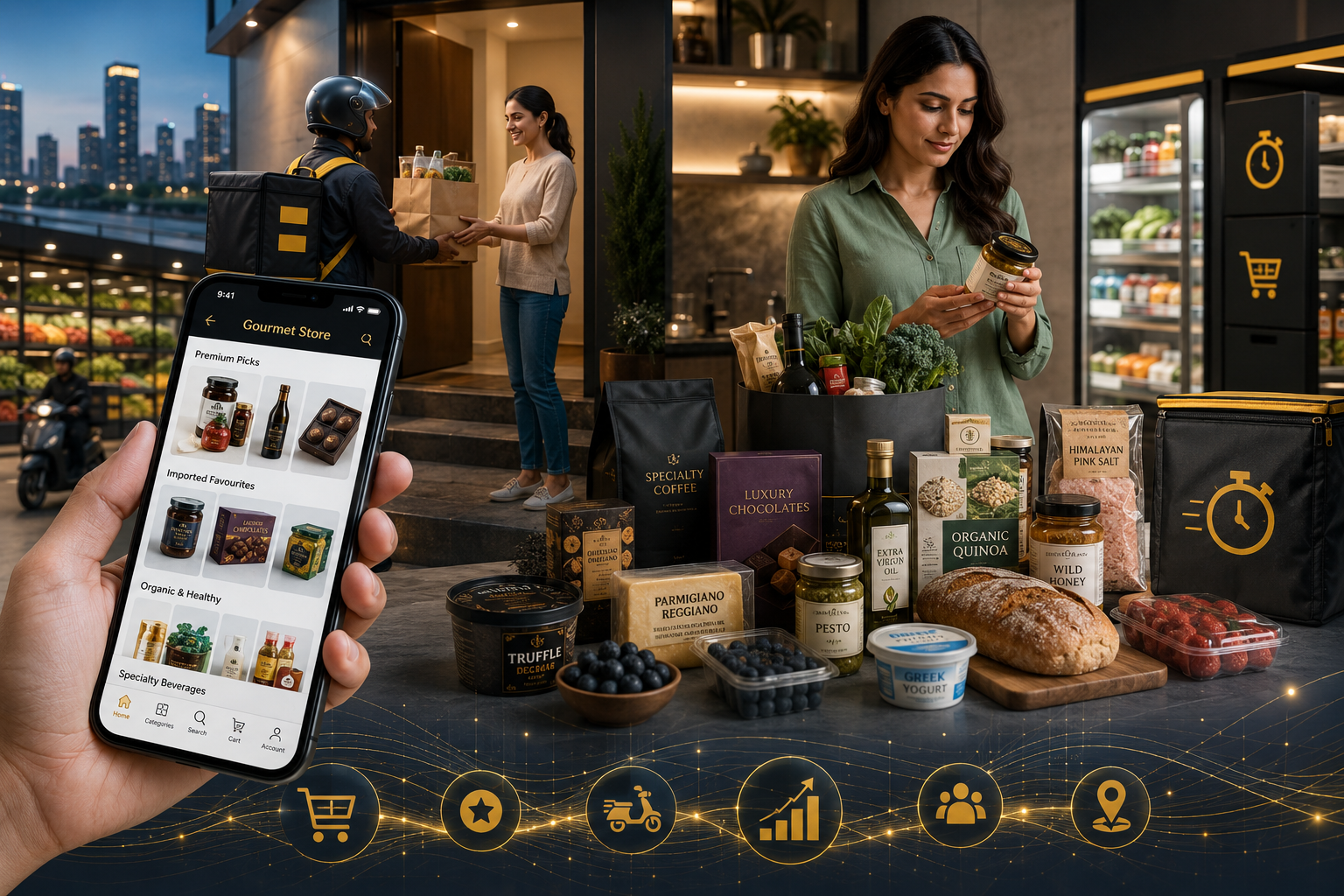
As Growth Slows in Traditional Grocery Delivery, Blinkit, Zepto, Instamart and Others Bet on Premium Products to Boost Profits and Customer Loyalty
India's quick commerce industry is entering a new era where success is no longer measured solely by delivery speed. After transforming the way consumers buy everyday essentials, leading platforms are now shifting their focus toward premium grocery products, imported foods, gourmet brands and specialty consumer goods to improve profitability and capture higher-spending customers.
The move marks a significant evolution in India's online retail landscape. While the first phase of quick commerce was dominated by customer acquisition and rapid expansion, the next phase is centered on increasing average order values (AOV), improving contribution margins, and building long-term customer loyalty through premium offerings.
Companies including Blinkit, Zepto, Swiggy Instamart, Flipkart Minutes, Amazon Now, and niche players like FirstClub and Handpickd are expanding their premium grocery portfolios as competition intensifies in one of India's fastest-growing digital commerce sectors.
According to industry estimates, India's quick commerce market, currently valued at nearly $10–11 billion, is expected to expand to $65–70 billion by 2030, making premium grocery retail one of the sector's most promising growth opportunities.
The Industry Is Moving Beyond Speed to Value
When quick commerce first emerged, companies competed primarily on one promise—delivering groceries in 10 to 20 minutes. Massive investments in dark stores, logistics networks, and rider fleets enabled platforms to redefine convenience for urban consumers.
Today, however, delivery speed has become a standard expectation rather than a competitive advantage. As most major platforms offer similar delivery times, companies are looking for new ways to differentiate themselves.
The focus has shifted from simply delivering faster to increasing the value of each transaction. Platforms are now investing in curated product assortments, exclusive premium brands, personalized shopping experiences, and higher-margin categories that encourage customers to spend more during every purchase.
This strategic shift reflects the industry's growing emphasis on sustainable profitability rather than growth at any cost.
Premium Grocery Is Becoming the New Battleground
Several leading quick commerce companies have already begun building specialized premium grocery offerings.
Zepto is preparing to launch Zepto Select, a dedicated premium grocery service designed for affluent consumers. Blinkit has expanded its Gourmet Store, offering imported snacks, luxury chocolates, specialty coffee, international sauces, organic products and premium dairy.
Reports indicate that Flipkart Minutes is also planning a premium grocery range, while Amazon Now has started piloting its "Gourmet Picks" selection. Meanwhile, specialist platforms such as FirstClub and Handpickd continue to focus exclusively on premium groceries and fresh produce.
Rather than competing on discounts, these platforms aim to offer curated product collections, exclusive launches, and premium shopping experiences that appeal to urban households with higher disposable incomes.
Why Affluent Consumers Matter More Than Ever
India's affluent consumer base has grown significantly over the past decade, driven by rising incomes, urbanization, and increasing digital adoption.
These consumers were among the earliest users of quick commerce services due to their willingness to pay for convenience and premium experiences. Today, they remain some of the industry's most valuable customers because they shop frequently, spend significantly more per order, and exhibit stronger brand loyalty.
Unlike value-conscious shoppers who primarily seek discounts, premium consumers are often willing to pay extra for imported foods, organic products, healthier alternatives, and exclusive international brands.
For quick commerce companies, this customer segment represents an opportunity to increase revenue without proportionately increasing operating costs.
Average Order Value Has Become the Most Important Profitability Metric
One of the biggest challenges facing quick commerce companies is the fixed cost associated with every delivery.
Whether a customer purchases groceries worth ₹300 or ₹2,000, the delivery expense—including rider compensation and logistics—remains largely unchanged.
As a result, increasing Average Order Value (AOV) has become one of the industry's most closely monitored financial metrics.
Currently, most leading platforms report average order values ranging between ₹500 and ₹700.
Industry experts believe premium grocery customers can generate orders worth ₹1,500–2,000 or more, significantly improving delivery economics by spreading fixed costs over much larger transaction values.
Higher basket sizes also contribute to stronger gross margins and faster paths toward profitability.
Premium Products Deliver Better Margins
Unlike everyday grocery staples, premium products typically command higher prices and better margins.
Categories experiencing strong demand include:
-
Imported chocolates and confectionery
-
Specialty coffee and tea
-
Organic grains and healthy foods
-
Artisanal bakery products
-
Imported cheeses and dairy products
-
Gourmet sauces and condiments
-
Premium cooking ingredients
-
International beverages
-
Health-focused snacks
-
Luxury personal care products
Consumers purchasing these products often buy complementary items together, naturally increasing basket sizes and improving revenue per transaction.
This makes premium grocery retail significantly more attractive from a business perspective than competing solely on low-margin essential products.
Customer Loyalty Improves with Premium Experiences
Premium consumers tend to remain loyal when platforms consistently offer high-quality products, reliable availability, and personalized recommendations.
Quick commerce companies are increasingly introducing:
-
Curated premium collections
-
Early access to product launches
-
Subscription-based loyalty programs
-
Exclusive imported brands
-
Personalized shopping recommendations
-
Seasonal gourmet selections
These initiatives encourage repeat purchases while reducing customer acquisition costs over time.
As customer lifetime value becomes more important for investors, loyalty-driven premium experiences are expected to play a much larger role in future growth strategies.
Data Is Becoming a Powerful Competitive Advantage
One of the most valuable assets quick commerce companies possess is detailed first-party consumer data.
Every transaction provides insights into:
-
Buying behavior
-
Brand preferences
-
Shopping frequency
-
Price sensitivity
-
Dietary preferences
-
Neighborhood-level demand patterns
Unlike traditional retail, quick commerce platforms can identify consumer trends almost instantly.
This information enables companies to optimize inventory, personalize recommendations, and collaborate with FMCG brands to develop products that closely match consumer demand.
The ability to leverage data effectively could become one of the industry's strongest competitive advantages.
FMCG Companies Are Rethinking Product Launch Strategies
The rise of premium grocery on quick commerce platforms is also changing how FMCG companies introduce new products.
Historically, launching a premium product required substantial investments in retail distribution, shelf placement, advertising, and marketing before companies could understand consumer response.
Quick commerce significantly shortens this process.
Brands can now introduce products on selected digital platforms, monitor real-time purchasing behavior, receive immediate customer feedback, and refine offerings before expanding into supermarkets and general trade.
This faster innovation cycle reduces risk while improving product-market fit.
Premium categories such as gourmet coffee, imported foods, specialty dairy, healthy snacks, premium beauty products, and organic groceries are particularly well suited to this model.
Advertising Opportunities Are Expanding
Premium brands typically allocate larger marketing budgets than mass-market consumer goods companies.
Quick commerce platforms are increasingly monetizing this opportunity through:
-
Sponsored product listings
-
Featured brand placements
-
Exclusive launch campaigns
-
Digital storefronts
-
Personalized promotions
-
Consumer engagement programs
These advertising revenues provide an additional income stream beyond product sales, further strengthening platform economics.
As premium grocery categories expand, advertising partnerships are expected to become increasingly important contributors to overall profitability.
Operational Challenges Cannot Be Ignored
Despite the attractive economics, premium grocery retail presents several operational challenges.
Limited Market Size
Premium consumers currently represent a relatively small share of India's total population, with demand concentrated primarily in metropolitan cities and affluent urban neighborhoods.
Inventory Complexity
Imported foods and specialty products generally experience slower inventory turnover compared to everyday groceries, increasing the risk of excess stock.
Cold Chain Infrastructure
Many premium food products—including dairy, meats, frozen items, chocolates, and fresh produce—require temperature-controlled storage and transportation, increasing operational costs.
Economic Sensitivity
Premium grocery purchases are largely discretionary. During periods of economic uncertainty, consumers may reduce spending on imported and luxury food products before cutting expenditure on essential groceries.
Successfully balancing inventory efficiency with premium customer expectations will remain a key challenge for the industry.
Competition Is Intensifying Across the Sector
India's quick commerce market is rapidly becoming more competitive as major technology companies expand their presence.
Established leaders such as Blinkit, Zepto, and Swiggy Instamart continue to dominate order volumes, while Amazon, Flipkart, and BigBasket are investing aggressively to capture market share.
At the same time, niche premium platforms are demonstrating that affluent consumers are willing to pay for curated shopping experiences, encouraging larger players to develop dedicated premium verticals.
The next phase of competition is expected to revolve around assortment quality, exclusive product availability, personalized recommendations, and customer retention rather than simply faster delivery times.
Outlook: Premiumization Could Define the Next Chapter of Quick Commerce
India's quick commerce industry is transitioning from a high-growth, volume-driven business to a more mature model focused on profitability, customer value, and operational efficiency.
Premium grocery retail aligns well with this objective by increasing basket sizes, improving margins, enhancing customer loyalty, and creating new revenue opportunities through advertising and brand partnerships.
As disposable incomes continue to rise and urban consumers seek greater convenience and higher-quality products, premium grocery categories are expected to become a significant contributor to the industry's long-term growth.
Companies that successfully combine technology, efficient supply chains, curated assortments, and data-driven personalization are likely to emerge as leaders in India's next generation of digital retail.
Investment Perspective
The premiumization of quick commerce represents more than just a product expansion—it signals a structural shift in India's digital retail ecosystem. Platforms that can attract affluent consumers, increase average order values, and build sustainable profit models are likely to command stronger valuations over the long term.
For investors, this trend could create opportunities across quick commerce platforms, premium FMCG companies, imported food distributors, specialty beverage manufacturers, cold-chain logistics providers, organic food brands, and technology companies enabling retail analytics. As competition moves beyond speed toward value creation, premium grocery retail may become one of the most profitable segments within India's rapidly expanding e-commerce industry.
Key Takeaways
-
India's quick commerce market is projected to reach $65–70 billion by 2030, driven by premiumization and higher consumer spending.
-
Platforms are expanding gourmet grocery offerings to improve profitability through larger basket sizes and better margins.
-
Premium consumers generate higher average order values, stronger loyalty, and greater lifetime value than traditional grocery shoppers.
-
First-party consumer data is enabling FMCG companies to launch and refine premium products more efficiently.
-
While operational challenges remain, premium grocery retail is poised to become a key growth engine for India's evolving quick commerce landscape.