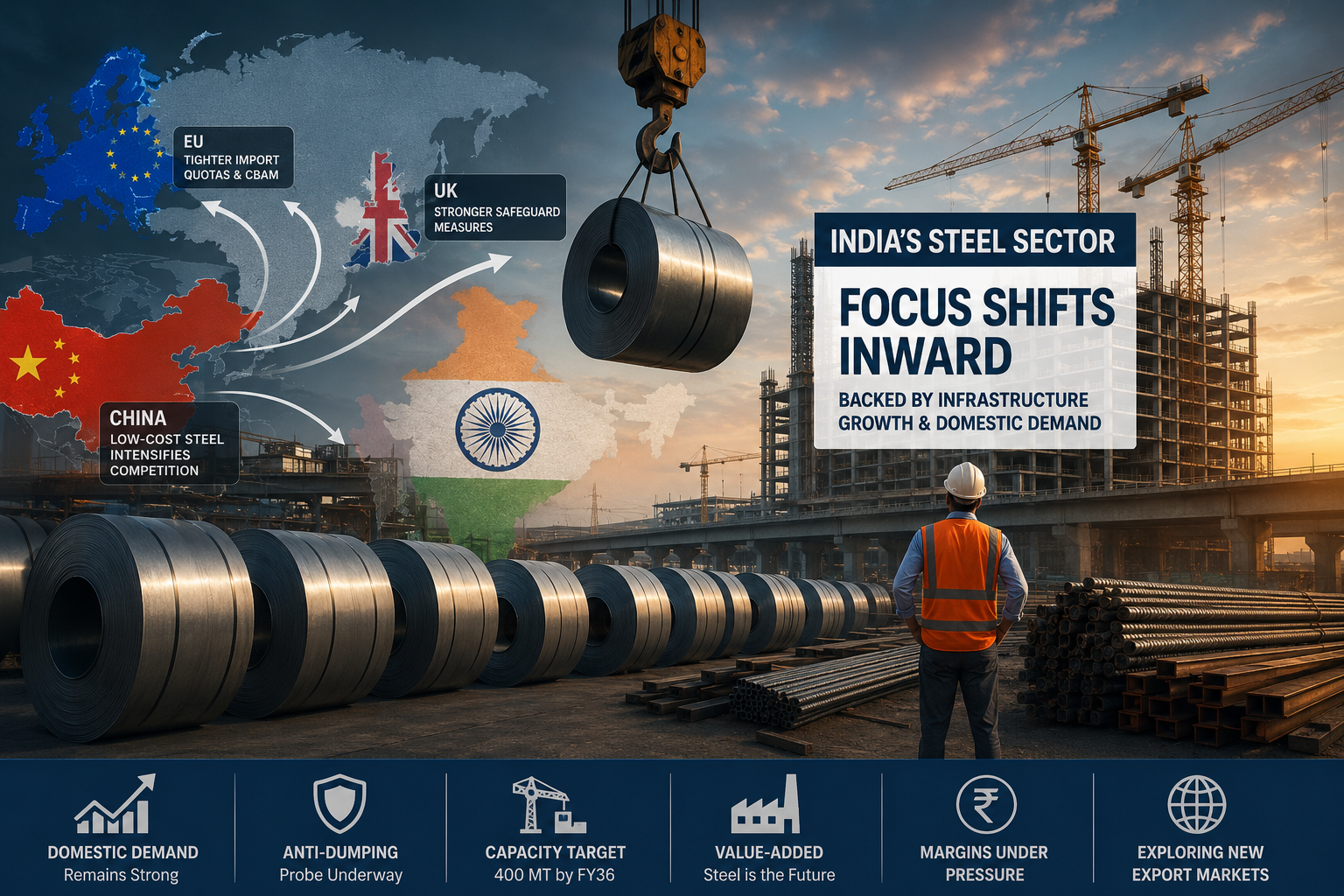
Europe’s Tougher Import Rules, UK Safeguards and Low-Cost Chinese Steel Push Domestic Producers to Rely on India’s Infrastructure Boom for Future Growth
India’s steel industry is witnessing a major strategic shift as manufacturers increasingly prioritise the domestic market amid rising protectionist policies across global markets. Tightened import regulations in Europe and the United Kingdom, coupled with aggressive pricing by Chinese steel exporters, are forcing Indian steelmakers to rethink their export strategies and focus on capitalising on the country's robust infrastructure-led demand.
Industry experts believe that while India's domestic steel consumption continues to grow at one of the fastest rates globally, profitability could remain under pressure unless the government introduces stronger safeguards against cheap imports. The changing trade environment also highlights the growing importance of self-reliance, value-added steel production and market diversification for Indian manufacturers.
Europe Tightens Import Rules, Impacting Indian Steel Exports
Europe has long been one of the largest overseas markets for Indian steel producers. However, recent regulatory changes are expected to significantly reduce export opportunities.
The European Union has introduced stricter steel import quotas alongside the implementation of the Carbon Border Adjustment Mechanism (CBAM), which imposes carbon-related costs on imported products. These measures are aimed at protecting European manufacturers while encouraging lower-carbon production methods.
With these new rules coming into effect, industry executives estimate that Indian steel exports to the European Union and the United Kingdom could decline by nearly 40% during the current financial year, creating fresh challenges for exporters that have traditionally relied on these premium markets.
United Kingdom Also Strengthens Safeguard Measures
The United Kingdom has also revised its tariff-free steel import framework, introducing tighter safeguard measures to protect domestic producers.
Although India's recently concluded Free Trade Agreement with the UK provides certain preferential access for Indian steel products, exporters still expect overall shipments to slow as import restrictions become more stringent.
These developments are prompting steel companies to diversify both their customer base and geographical markets.
Export Numbers Already Reflect Weakening Demand
Recent trade data indicates that export momentum has already started slowing.
India exported approximately 6.6 million tonnes of finished steel during FY26. However, shipments declined sharply in May, falling to nearly 0.5 million tonnes, well below the average monthly exports recorded over the previous six months.
The decline suggests that global trade barriers and slowing international demand are beginning to impact Indian steel exports.
Domestic Demand Becomes the Primary Growth Driver
As overseas opportunities become more challenging, Indian steel manufacturers are increasingly relying on the domestic market for future growth.
India remains one of the world's fastest-growing steel-consuming nations, supported by:
-
Massive infrastructure development.
-
Rapid urbanisation.
-
Affordable housing projects.
-
Railway modernisation.
-
Industrial expansion.
-
Renewable energy investments.
-
Automobile manufacturing.
Government-led capital expenditure continues to generate sustained demand for structural steel, flat steel and specialty steel products across multiple industries.
China's Cheap Steel Continues to Pressure Domestic Prices
While domestic demand remains healthy, Indian producers face intense competition from low-priced imports, particularly from China.
Chinese steel is reportedly being sold at prices $50–60 per tonne lower than comparable Indian products.
This pricing advantage creates significant pressure on domestic manufacturers by:
-
Limiting pricing power.
-
Compressing operating margins.
-
Increasing competition in the domestic market.
-
Making it difficult to absorb steel originally intended for export.
The influx of cheaper imports has become one of the biggest concerns for India's steel industry.
Government Steps Up Anti-Dumping Investigation
In response to growing industry concerns, the Government of India has initiated an anti-dumping investigation covering selected steel imports from:
-
China
-
Japan
-
Russia
The investigation will determine whether imported steel products are being sold below fair market value, causing injury to domestic manufacturers.
If sufficient evidence is found, anti-dumping duties could be imposed to protect Indian producers and restore competitive balance within the domestic market.
Infrastructure Spending Continues to Support Long-Term Growth
Despite global headwinds, India's long-term steel demand outlook remains exceptionally strong.
Large public infrastructure programmes continue driving steel consumption across sectors including:
-
National highways.
-
High-speed rail corridors.
-
Metro rail projects.
-
Airports.
-
Ports.
-
Defence manufacturing.
-
Renewable energy infrastructure.
-
Smart city developments.
These investments provide stable long-term demand visibility for domestic steel manufacturers.
Capacity Expansion Reflects Confidence in India's Growth Story
Leading Indian steel companies continue investing aggressively in new production facilities.
The Government has set an ambitious target of increasing India's crude steel production capacity from around 168 million tonnes currently to 400 million tonnes by FY36.
Unlike earlier expansion cycles that were partly driven by export expectations, much of the new capacity is now being planned primarily to meet rising domestic demand.
This reflects growing confidence in India's long-term economic and industrial development.
Major Steel Companies Continue Investing
Leading producers including Tata Steel, JSW Steel and Jindal Stainless continue expanding their domestic manufacturing capabilities.
Industry analysts believe India offers one of the most attractive long-term demand opportunities globally due to:
-
Rising manufacturing activity.
-
Government infrastructure spending.
-
Urban population growth.
-
Expanding industrial production.
-
Increasing automobile demand.
These structural drivers continue to support investment despite short-term margin pressures.
Consumption Growth Outpaces Production
One of the strongest indicators supporting the industry's long-term prospects is India's rapid increase in steel consumption.
Over the last five years:
-
Steel consumption has increased by approximately 55%.
-
Steel production has grown around 42%.
The faster pace of consumption growth demonstrates that domestic demand continues to absorb additional production capacity, reducing dependence on export markets.
Alternative Export Destinations Under Consideration
To offset declining European shipments, Indian steel companies are exploring opportunities in other international markets.
Potential destinations include:
East Asia
Growing industrialisation and infrastructure development continue to create demand for steel products.
West Asia
Rapid urban development and construction activity offer export opportunities, although competition remains intense.
However, Indian producers will face strong competition from Chinese exporters as well as local manufacturers in these regions.
Margin Pressure Remains a Key Concern
Although demand fundamentals remain encouraging, profitability is likely to remain under pressure.
Major challenges include:
Low-Priced Imports
Cheap imported steel limits domestic pricing flexibility.
Rising Trade Protectionism
Global safeguard measures continue restricting export opportunities.
Carbon Compliance Costs
New environmental regulations increase export-related expenses.
Competitive Global Markets
Steel producers worldwide continue competing aggressively for shrinking export demand.
Analysts believe meaningful improvement in margins may depend on stronger trade protection measures and improved global pricing conditions.
Industry Focus Shifts Towards Value-Added Steel
As competition intensifies, many Indian producers are gradually increasing their focus on higher-value steel products.
These include:
-
Stainless steel.
-
Automotive steel.
-
Electrical steel.
-
High-strength construction steel.
-
Speciality alloys.
-
Engineering-grade steel.
Value-added products generally command higher margins and are less vulnerable to commodity price competition.
Outlook
India's steel industry is entering a period of strategic transformation. While exports face increasing uncertainty due to global protectionism and environmental regulations, the country's rapidly expanding domestic economy continues to provide one of the strongest long-term demand stories in the global steel sector.
The combination of government infrastructure spending, manufacturing growth and urbanisation offers substantial opportunities for Indian producers. However, low-cost Chinese imports remain a significant challenge, making policy support and trade protection important factors in determining industry profitability over the coming years.
Companies that successfully balance domestic expansion, operational efficiency and value-added product development are expected to emerge as long-term beneficiaries of India's structural growth story.