Pharma Major Spins Off Two Promising Oncology Programmes into Independent Biotech Venture, Retains Strategic Equity Stake and Focuses on Long-Term Innovation
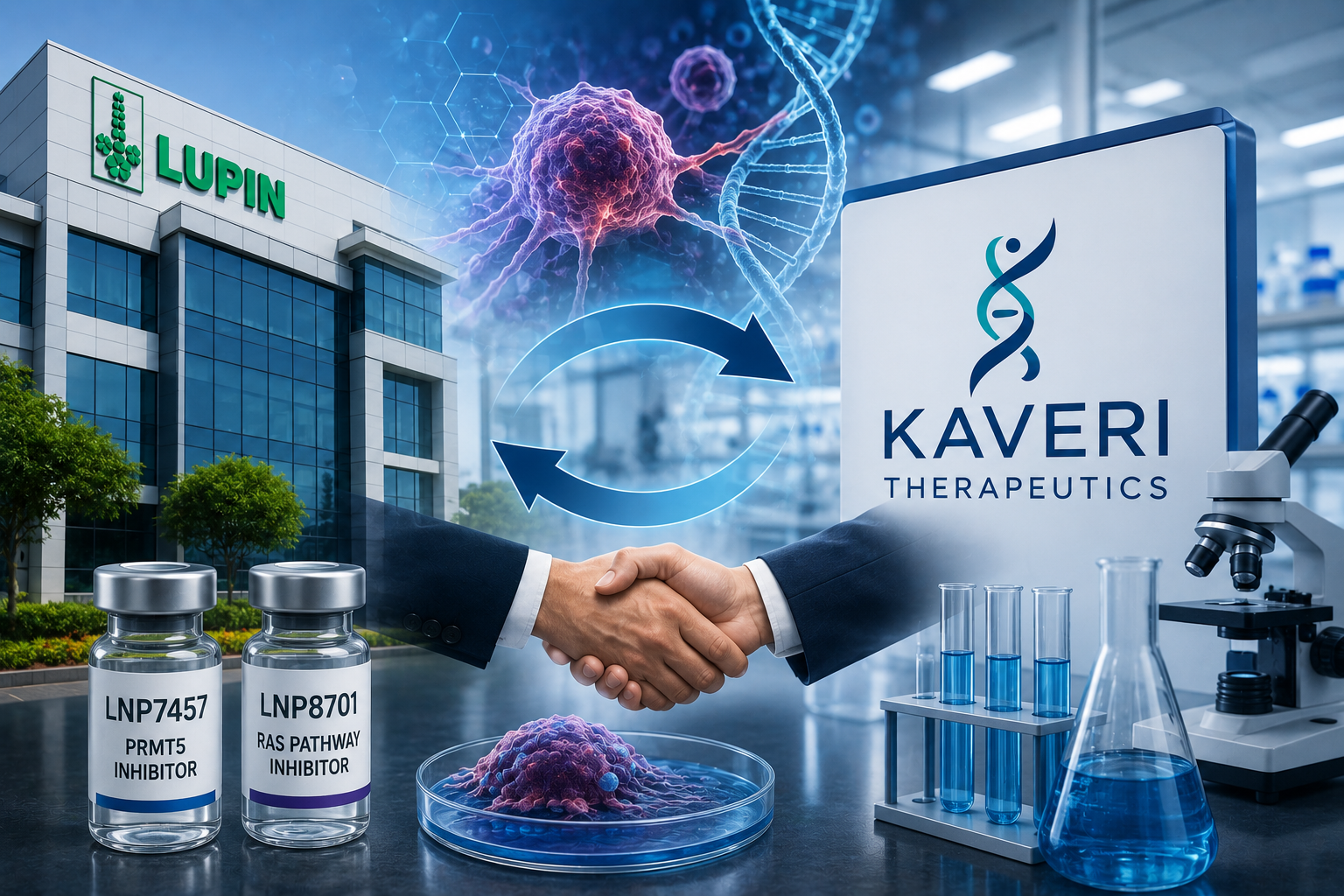
Indian pharmaceutical major Lupin Limited has announced a significant strategic restructuring of its innovation business by spinning off two promising oncology drug candidates into Kaveri Therapeutics, a newly established US-based clinical-stage biotechnology company. The move is aimed at accelerating the development of advanced cancer therapies while enabling the new venture to raise international capital for large-scale global clinical trials.
The transaction allows Lupin to retain a substantial ownership interest in the new company while transferring the responsibility of capital-intensive drug development to a specialised biotech platform focused exclusively on oncology innovation. Industry experts view the move as another example of Indian pharmaceutical companies adopting global innovation models to unlock the value of their research pipelines.
The announcement was well received by investors, with Lupin's shares trading higher following the news, reflecting confidence in the company's long-term innovation strategy.
Strategic Restructuring to Unlock Innovation Value
Drug discovery has become one of the most expensive and time-consuming areas within the pharmaceutical industry. Bringing a novel medicine from laboratory research to commercial launch often requires investments running into billions of dollars and clinical development spanning several years.
To manage these challenges more efficiently, Lupin has chosen to separate two of its most promising oncology assets into an independent biotechnology company that can focus exclusively on advancing cancer treatments while attracting dedicated global investors.
This strategy enables Lupin to continue benefiting from the future success of these therapies while reducing the financial burden associated with advanced-stage clinical research.
Two Novel Cancer Therapies Form the Foundation of Kaveri Therapeutics
Kaveri Therapeutics will initially focus on developing two investigational cancer medicines originating from Lupin's research pipeline.
LNP7457
The first candidate, LNP7457, targets the PRMT5 protein, which plays an important role in the growth and survival of several types of cancer cells.
Scientists believe inhibiting this protein may help slow tumour progression and improve treatment outcomes in patients with advanced cancers.
LNP8701
The second programme, LNP8701, focuses on the RAS signalling pathway, one of the most significant biological pathways involved in cancer development.
RAS mutations are commonly found in aggressive cancers and remain one of the most challenging areas in modern oncology research, making targeted therapies highly valuable.
Targeting High-Unmet Medical Needs
Kaveri Therapeutics plans to concentrate its clinical development efforts on cancers where treatment options remain limited.
Initial research programmes will target:
-
Lung cancer
-
Pancreatic cancer
-
Ovarian cancer
-
Central nervous system (CNS) tumours
-
Advanced solid tumours
These disease areas represent some of the largest unmet needs in global oncology and continue to attract significant investment from pharmaceutical companies worldwide.
Independent Biotech Structure Designed for Faster Growth
Under the new structure, Kaveri Therapeutics will operate independently while maintaining close strategic ties with Lupin.
The company will be responsible for:
-
Conducting international clinical trials
-
Raising institutional and venture capital
-
Expanding research collaborations
-
Managing regulatory approvals
-
Developing commercial partnerships
Operating as a dedicated biotechnology company provides greater flexibility to attract specialised investors focused on innovative drug development.
Lupin Retains Long-Term Economic Interest
Although Kaveri Therapeutics will function independently, Lupin is not exiting the business.
The pharmaceutical company will:
-
Retain a significant equity stake
-
Provide initial seed funding
-
Grant exclusive development rights for both oncology programmes
-
Participate in future value creation
The company has not disclosed the financial terms of the agreement, including the exact ownership percentage or funding commitment.
By maintaining ownership, Lupin preserves the opportunity to benefit financially if either drug candidate reaches commercialisation.
Experienced Leadership to Drive Clinical Development
Kaveri Therapeutics will be led by an experienced management team with strong expertise in biotechnology and oncology.
Kristi Jones – Chief Executive Officer
The company will be headed by Kristi Jones, an experienced biotechnology executive known for leading innovative pharmaceutical ventures.
Dr Robert Pierce – Chief Medical Officer
Clinical development will be supervised by Dr Robert Pierce, who will oversee the design and execution of global clinical trials.
Strong leadership is expected to improve the company's ability to attract strategic investors and successfully advance its oncology programmes.
Clinical Development Already Underway
Both investigational therapies have already entered clinical evaluation.
According to Lupin:
-
LNP7457 presented encouraging clinical findings during the 2025 American Society of Clinical Oncology (ASCO) Annual Meeting.
-
LNP8701 reported positive early-stage clinical data during the 2026 ASCO conference.
Although detailed efficacy and safety data have not yet been released publicly, the presentation of encouraging results at one of the world's leading oncology conferences highlights the potential of both programmes.
Precision Medicine Strategy to Improve Treatment Outcomes
Kaveri Therapeutics intends to adopt a biomarker-driven precision oncology approach.
The development strategy will include:
-
Identifying patients most likely to benefit from treatment
-
Personalised medicine
-
Combination therapy studies
-
Targeted treatment protocols
-
Precision clinical trials
Precision oncology has become one of the fastest-growing areas of pharmaceutical innovation as researchers increasingly focus on therapies tailored to specific genetic characteristics of cancer.
Following a Growing Trend Among Indian Pharma Companies
Lupin's strategy reflects an increasingly popular model among Indian pharmaceutical companies seeking to commercialise innovative research.
Several major companies have adopted similar approaches.
Glenmark Pharmaceuticals
Created Ichnos Sciences to house its innovative oncology pipeline.
Biocon
Established Bicara Therapeutics, which later attracted substantial global investment and successfully listed on the Nasdaq stock exchange.
Dr Reddy's Laboratories
Previously formed Perlecan Pharma to advance selected research assets with external funding support.
These initiatives demonstrate India's growing ambitions in innovative drug discovery beyond traditional generic pharmaceuticals.
Why Spin-Off Models Are Becoming Popular
Innovative drug development involves significant financial and scientific risks.
Creating independent biotechnology companies offers several advantages:
Dedicated Capital
Specialised biotech firms can raise funding specifically for research programmes.
Focused Management
Leadership teams concentrate entirely on innovation rather than balancing multiple business segments.
Global Partnerships
Independent entities often find it easier to collaborate with international pharmaceutical companies.
Better Valuation
Investors can separately value innovative research assets without them being overshadowed by mature generic businesses.
Reduced Financial Burden
Parent companies avoid carrying the full cost of expensive clinical development.
Investor Confidence Strengthened
The market responded positively to Lupin's announcement.
Investors interpreted the restructuring as a disciplined capital allocation strategy that balances innovation with financial prudence.
The positive share price movement reflects expectations that the spin-off could unlock hidden value within Lupin's research portfolio while preserving long-term shareholder participation.
Challenges Still Lie Ahead
Despite encouraging early progress, oncology drug development remains one of the highest-risk segments in pharmaceuticals.
Key risks include:
-
Clinical trial failures
-
Regulatory delays
-
Funding challenges
-
Commercial competition
-
Scientific uncertainty
-
Pricing pressures
Only a small percentage of investigational oncology medicines ultimately receive regulatory approval and reach commercial markets.
Long-Term Growth Opportunity
If successful, Kaveri Therapeutics could become an important value creator for Lupin.
Potential long-term benefits include:
-
Appreciation in Lupin's equity investment
-
Licensing revenues
-
Commercial milestone payments
-
Global strategic partnerships
-
Strengthening Lupin's innovation credentials
The strategy also positions Lupin alongside global pharmaceutical companies increasingly using specialised biotech ventures to commercialise breakthrough research.
Outlook
The creation of Kaveri Therapeutics marks another important step in Lupin's transition from a predominantly generic drug manufacturer to a globally recognised innovation-driven pharmaceutical company. By combining scientific expertise with an independent funding model, the company aims to accelerate the development of novel cancer therapies while maintaining long-term participation in their commercial success.
Although substantial clinical and regulatory challenges remain, the strategy reflects the increasing sophistication of India's pharmaceutical innovation ecosystem and highlights the growing role of Indian companies in global oncology research.