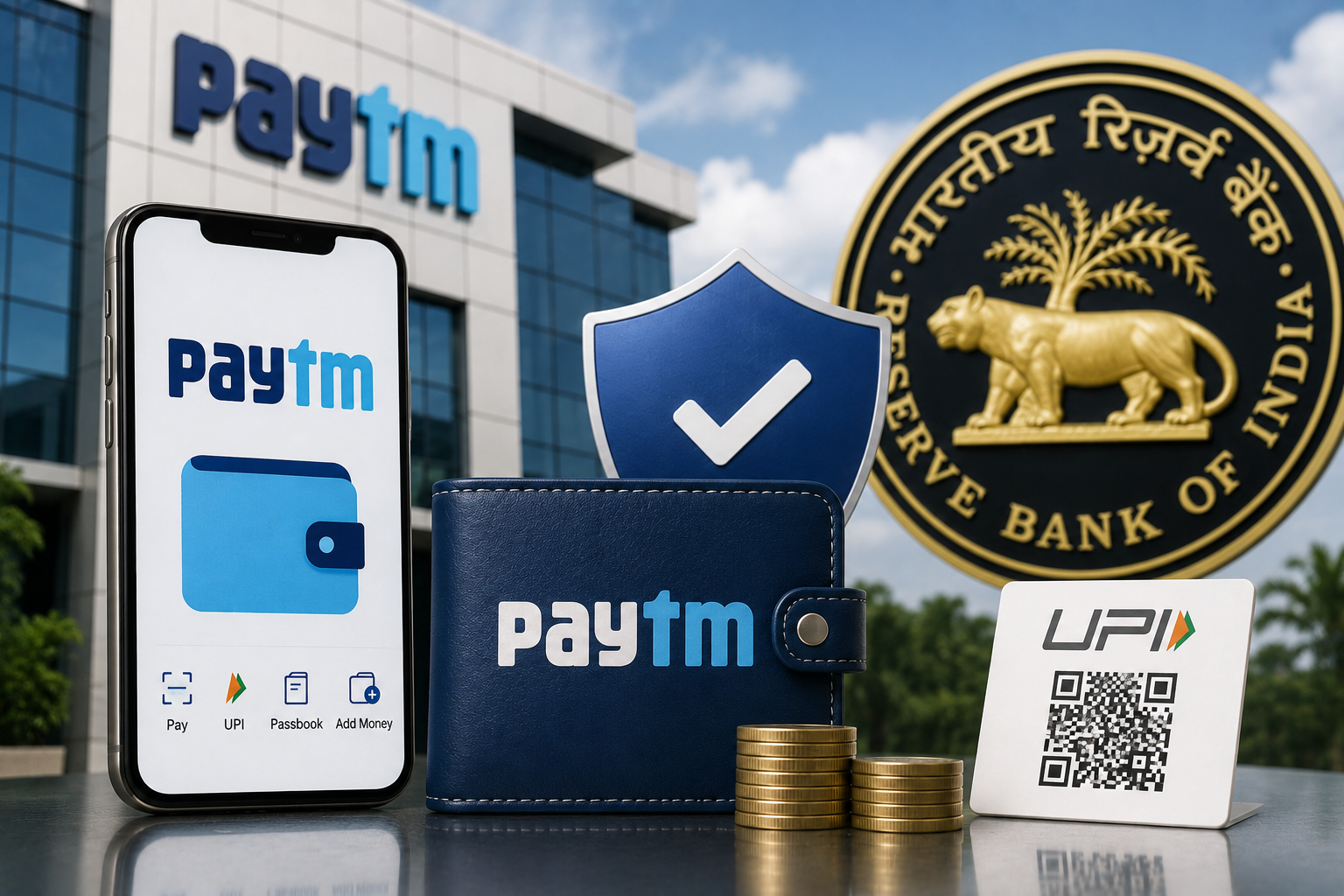
One97 Communications Applies for Fresh PPI Licence to Relaunch Digital Wallet Services, Strengthen Payments Ecosystem and Reduce Dependence on Banking Partners
One97 Communications, the parent company of Paytm, has initiated a fresh chapter in its digital payments journey by applying to the Reserve Bank of India (RBI) for a Prepaid Payment Instrument (PPI) licence. The application is widely viewed as a strategic move to revive Paytm's once-dominant digital wallet business after the closure of Paytm Payments Bank, which significantly disrupted the company's payment ecosystem.
If approved, the licence would enable Paytm to once again offer digital wallet services directly under One97 Communications, allowing customers to store money, make payments, pay utility bills and complete transactions without depending solely on UPI-linked bank accounts.
The move represents a significant milestone in Paytm's ongoing efforts to rebuild its financial services platform, diversify revenue streams and strengthen its position in India's rapidly expanding digital payments market.
A Major Step Toward Rebuilding Paytm's Payments Ecosystem
Before the widespread adoption of UPI, Paytm Wallet was one of India's most widely used digital payment solutions, enabling millions of users to make cashless transactions across merchants, retailers and service providers.
However, following regulatory action against Paytm Payments Bank, the wallet business was effectively suspended, forcing the company to rely primarily on UPI partnerships with external banks.
The fresh licence application demonstrates Paytm's commitment to restoring a key pillar of its original business model while creating a more diversified payment platform capable of serving multiple customer preferences.
Understanding the PPI Licence
A Prepaid Payment Instrument (PPI) licence allows authorised companies to issue digital wallets and other prepaid payment instruments under RBI regulations.
With a valid PPI licence, customers can generally:
-
Add money to a digital wallet.
-
Make payments at online and offline merchants.
-
Pay utility bills.
-
Recharge mobile and DTH services.
-
Transfer funds within prescribed limits.
-
Conduct secure digital transactions without carrying physical cash.
Unlike traditional savings accounts, prepaid wallets store funds that users voluntarily load into the account before making payments.
Why Paytm Is Applying Again
The company believes that restoring wallet functionality will significantly enhance its digital payments ecosystem.
Although Paytm has successfully maintained its UPI services through partnerships with multiple banks, the absence of an integrated wallet has limited the range of payment options available within its platform.
If the new licence is granted, Paytm would regain the ability to:
-
Relaunch wallet services.
-
Offer seamless prepaid payments.
-
Improve customer retention.
-
Increase transaction frequency.
-
Strengthen merchant engagement.
-
Expand financial product distribution.
The wallet would complement rather than replace UPI by offering customers an additional payment option suited to specific use cases.
How Regulatory Changes Reshaped Paytm
Paytm's journey over the past few years has been marked by significant regulatory developments.
Paytm Payments Bank initially faced restrictions on onboarding new customers, followed by tighter regulatory supervision. Eventually, the RBI cancelled the bank's licence after identifying continued compliance-related concerns.
As a result:
-
Wallet operations ceased.
-
Banking activities were wound down.
-
Customers migrated to partner-bank UPI infrastructure.
-
Merchant payment services continued through alternative banking arrangements.
Despite these challenges, Paytm successfully retained its position as one of India's largest digital payment platforms by rapidly strengthening partnerships with multiple banks.
UPI Helped Maintain Business Continuity
One of Paytm's biggest achievements following the regulatory action was ensuring uninterrupted UPI services.
The company worked closely with partner banks to continue offering:
-
QR code payments.
-
Merchant collections.
-
Peer-to-peer transfers.
-
Online payments.
-
Bill payments.
This helped preserve customer confidence and prevented major disruption to its payment ecosystem.
However, management has consistently indicated that adding wallet functionality would create a more complete digital payments experience.
How a Revived Wallet Could Benefit Customers
If approved, the new wallet could offer several practical advantages.
More Payment Choices
Customers would have access to both wallet-based payments and UPI transactions within the same application.
Faster Everyday Transactions
Small-value payments can often be completed quickly using prepaid wallet balances.
Better Spending Management
Wallets allow users to maintain separate balances for routine expenses.
Enhanced Merchant Offers
Wallets frequently support cashback programmes, loyalty rewards and promotional campaigns.
Greater Convenience
Customers would be able to transact even without directly accessing their primary bank account for every payment.
Benefits for Merchants
A revived wallet ecosystem could also strengthen Paytm's merchant business.
Merchants may benefit from:
-
Additional payment acceptance options.
-
Increased transaction frequency.
-
Improved customer engagement.
-
Better promotional campaigns.
-
Higher repeat purchases.
Since Paytm operates one of India's largest merchant networks, integrating wallet functionality could further strengthen its commercial ecosystem.
Expanding Beyond Payments
Paytm has gradually evolved from being a payment platform into a broader financial services company.
Today, the company offers:
-
Digital payments.
-
Merchant solutions.
-
Lending partnerships.
-
Insurance distribution.
-
Wealth management.
-
Ticket booking.
-
Bill payments.
Reintroducing wallet services could create additional opportunities to cross-sell these financial products to a highly engaged customer base.
India's Digital Payments Market Continues to Expand
India remains one of the fastest-growing digital payments markets globally.
Several structural factors continue to support long-term industry growth.
These include:
-
Rapid smartphone adoption.
-
Expanding internet access.
-
Government support for digital payments.
-
Increasing merchant digitisation.
-
Growth in e-commerce.
-
Rising consumer preference for cashless transactions.
Although UPI dominates payment volumes, digital wallets continue to serve important roles across retail commerce, transportation, subscriptions and loyalty programmes.
Competition in the Fintech Industry
The Indian fintech sector remains intensely competitive.
Paytm competes across multiple business segments, including:
-
UPI payments.
-
Digital wallets.
-
Merchant acquiring.
-
Financial services.
-
Consumer lending.
-
Wealth management.
A successful wallet relaunch would strengthen Paytm's competitive positioning by allowing it to offer a broader range of integrated payment solutions.
Regulatory Approval Remains Crucial
While the application represents a positive strategic development, approval remains subject to RBI's regulatory review.
The central bank is expected to evaluate:
-
Governance standards.
-
Compliance framework.
-
Technology infrastructure.
-
Operational capabilities.
-
Risk management.
-
Consumer protection mechanisms.
Only after regulatory clearance would Paytm be able to officially relaunch wallet services.
Until then, the company will continue operating its UPI ecosystem through existing banking partnerships.
Potential Financial Impact
Although the immediate revenue contribution from wallet services may be modest, the long-term strategic value could be substantial.
A successful relaunch may lead to:
-
Higher customer engagement.
-
Increased payment volumes.
-
Greater merchant activity.
-
Better ecosystem monetisation.
-
Improved cross-selling opportunities.
-
Enhanced platform stickiness.
Over time, stronger customer engagement could support higher transaction revenues and improved profitability across Paytm's broader financial services business.
Management Focuses on Consumer Choice
The company has consistently maintained that customers benefit from having multiple payment methods available within a single digital platform.
Adding wallet functionality alongside UPI would allow consumers to choose the payment option most suitable for different transaction types while strengthening Paytm's overall value proposition.
This strategy aligns with the company's long-term objective of becoming a comprehensive digital financial ecosystem serving both consumers and merchants.
Outlook
Paytm's application for a fresh PPI licence represents a major strategic initiative aimed at restoring one of the company's most recognisable products. If approved, the move could significantly strengthen its digital payments ecosystem, improve customer engagement and enhance merchant relationships while reducing dependence on external banking partnerships.
Although regulatory approval remains pending, the initiative reflects Paytm's continued efforts to rebuild its fintech franchise through stronger compliance, diversified payment solutions and customer-centric innovation. The RBI's decision will be closely watched by investors, fintech companies and the broader financial services industry, as it could shape the next phase of Paytm's growth story.