Employees No Longer Need to Submit Separate Transfer Requests in Eligible Cases, but Aadhaar Linking, KYC Compliance and Accurate Employment Records Remain Essential for Seamless Provident Fund Transfers
The Employees' Provident Fund Organisation (EPFO) has significantly simplified the process of transferring Employees' Provident Fund (EPF) balances after a job change by introducing an automatic transfer mechanism for eligible members. The initiative aims to reduce paperwork, speed up fund transfers, and ensure uninterrupted accumulation of retirement savings for millions of salaried employees across India.
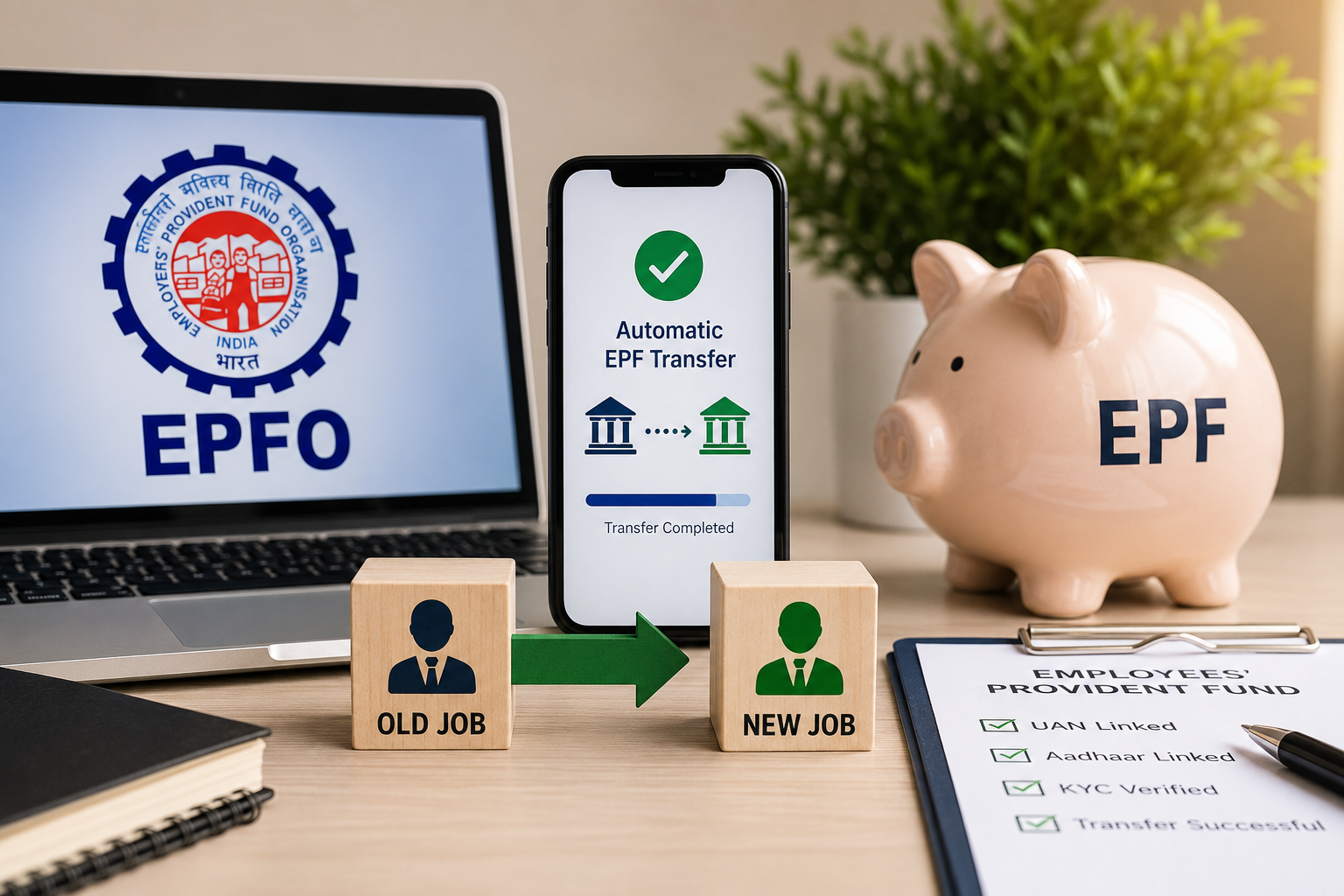
Under the new system, employees who meet the prescribed eligibility criteria no longer need to submit a separate transfer application after joining a new employer. Instead, the EPFO automatically initiates the transfer of the accumulated provident fund balance once the new employer deposits the employee's first monthly EPF contribution.
While the automation marks a major improvement in India's retirement savings ecosystem, employees should not assume the transfer will happen in every case. Incomplete KYC, Aadhaar-related issues, multiple Universal Account Numbers (UANs), incorrect employment records, or delays in updating the date of exit can still prevent automatic transfers.
Understanding the eligibility conditions and keeping EPFO records updated has therefore become more important than ever for salaried professionals.
What Is the Automatic EPF Transfer Facility?
The EPFO's automatic transfer system enables eligible employees to carry forward their provident fund balance to a new employer without filing a separate online transfer request.
When an employee joins a new organisation covered under the EPF scheme:
-
A new PF Member ID is generated.
-
The Member ID is linked to the employee's existing Universal Account Number (UAN).
-
Once the first month's EPF contribution is deposited by the new employer, EPFO automatically initiates the transfer of the accumulated balance from the previous PF account.
This digital process eliminates much of the manual intervention that previously delayed transfers.
How the Earlier Process Worked
Before the introduction of automatic transfers, employees generally had to submit Form 13 or file an online transfer request through the EPFO portal.
The process involved multiple stages:
-
Filing a transfer application.
-
Verification by the previous employer.
-
Verification by the new employer.
-
Processing by EPFO.
This often resulted in delays due to pending approvals, documentation errors, or employer-related issues.
The new automated system significantly streamlines the process for eligible members.
Who Is Eligible for Automatic EPF Transfer?
Automatic transfers are available only to members who satisfy specific EPFO conditions.
Eligibility Criteria
Employees generally qualify if:
-
UAN is linked with Aadhaar.
-
UAN is fully KYC compliant.
-
EPF accounts are directly managed by EPFO.
-
Only one active UAN exists.
-
The first month's contribution is received from the new employer.
Once these conditions are fulfilled, the transfer request is automatically generated without requiring additional action from the employee.
Who Cannot Avail This Facility?
Not every employee changing jobs will qualify for automatic transfer.
The facility generally does not apply if:
-
Previous employer operates an exempted PF trust.
-
Current employer operates an exempted PF trust.
-
Aadhaar is not linked with UAN.
-
KYC verification is incomplete.
-
Multiple UANs exist.
-
Member records contain inconsistencies.
-
Other EPFO eligibility conditions are not satisfied.
In such cases, employees may still need to submit transfer requests manually.
Understanding Exempted PF Trusts
Several large organisations maintain their own recognised provident fund trusts instead of participating directly in EPFO-managed accounts.
Although these trusts operate under EPF regulations, transfers involving exempted establishments generally follow a separate process and are not covered under the automatic transfer mechanism.
Employees joining or leaving such organisations should consult their HR department regarding the applicable transfer procedure.
Why Aadhaar Linking Is Critical
Aadhaar has become the foundation of EPFO's digital ecosystem.
Linking Aadhaar with UAN enables:
-
Automatic PF transfer.
-
Online claim settlement.
-
Identity verification.
-
OTP authentication.
-
Faster digital services.
Without Aadhaar linkage, the automatic transfer process cannot proceed in most cases.
Importance of KYC Compliance
Complete KYC verification remains another essential requirement.
Employees should ensure that the following details are verified:
-
Aadhaar
-
PAN
-
Bank account
-
Mobile number
-
Personal information
Incomplete or unverified KYC is among the most common reasons for delays in EPF services.
Date of Exit Can Determine Whether Transfer Happens
One frequently overlooked requirement is the Date of Exit from the previous employer.
The previous employer must update the employee's exit date in the EPFO system.
If the date of exit is missing:
-
Automatic transfer may not begin.
-
Claims may remain pending.
-
Employment records remain incomplete.
Employees should verify this information immediately after leaving their previous organisation.
Why Multiple UANs Create Problems
Every employee should ideally have only one Universal Account Number throughout their career.
However, duplicate UANs sometimes get generated due to administrative errors or incomplete employer verification.
Multiple UANs can:
-
Delay transfers.
-
Interrupt contribution records.
-
Create complications during withdrawals.
-
Affect pension records.
Employees should immediately request EPFO to merge duplicate UANs if identified.
How to Check Your Employment History
EPFO allows members to review their employment records online through the Unified Member Portal.
After logging in using:
-
UAN
-
Password
-
OTP authentication
members can access the Service History section to verify:
-
Previous employers.
-
Date of joining.
-
Date of exit.
-
Member IDs.
-
Employment timeline.
Regularly reviewing these records helps identify discrepancies before they delay transfers.
Checklist Before Switching Jobs
Employees should verify several details before changing employers.
Essential Checklist
✔ UAN activated
✔ Aadhaar linked
✔ Mobile number active
✔ Bank account verified
✔ Employer-approved e-KYC completed
✔ Personal information accurate
✔ Previous employer updated Date of Exit
✔ New employer deposited first EPF contribution
Completing this checklist significantly improves the chances of a smooth transfer.
Common Reasons Why Transfers Get Delayed
Despite automation, several issues can interrupt the process.
Most Common Reasons
-
Aadhaar not linked.
-
Incomplete KYC.
-
Incorrect personal details.
-
Duplicate UAN.
-
Missing Date of Exit.
-
Incorrect bank account.
-
Delay in employer contribution.
-
Verification pending.
Most of these issues can be resolved through the EPFO portal or with assistance from the employer.
Benefits of the New Automatic Transfer System
The automated framework offers several advantages for employees.
Major Benefits
-
Eliminates separate transfer applications.
-
Reduces paperwork.
-
Faster processing.
-
Better continuity of retirement savings.
-
Lower administrative burden.
-
Fewer dormant PF accounts.
-
Improved digital governance.
The system represents another step in EPFO's ongoing digital transformation.
How Employees Can Track Their PF Transfer
Employees should continue monitoring their EPF account even after changing jobs.
Useful checks include:
-
Monthly contribution updates.
-
Transfer status.
-
Service history.
-
Passbook entries.
-
Employer details.
-
UAN profile.
Early detection of discrepancies can help avoid prolonged delays.
Why This Reform Matters
India's workforce is becoming increasingly mobile, with professionals changing jobs more frequently than ever before.
An efficient provident fund transfer system:
-
Preserves retirement savings.
-
Prevents fragmented PF accounts.
-
Encourages formal employment.
-
Improves financial planning.
-
Strengthens social security coverage.
The automation initiative aligns with the government's broader efforts to modernise employee welfare systems through digital infrastructure.
Future of Digital EPF Services
EPFO continues expanding digital services for members.
Future improvements are expected to include:
-
Faster online claim settlement.
-
AI-assisted grievance resolution.
-
Improved mobile services.
-
Real-time contribution tracking.
-
Enhanced employer integration.
-
Better member verification systems.
These initiatives aim to create a more seamless retirement savings experience for India's growing workforce.