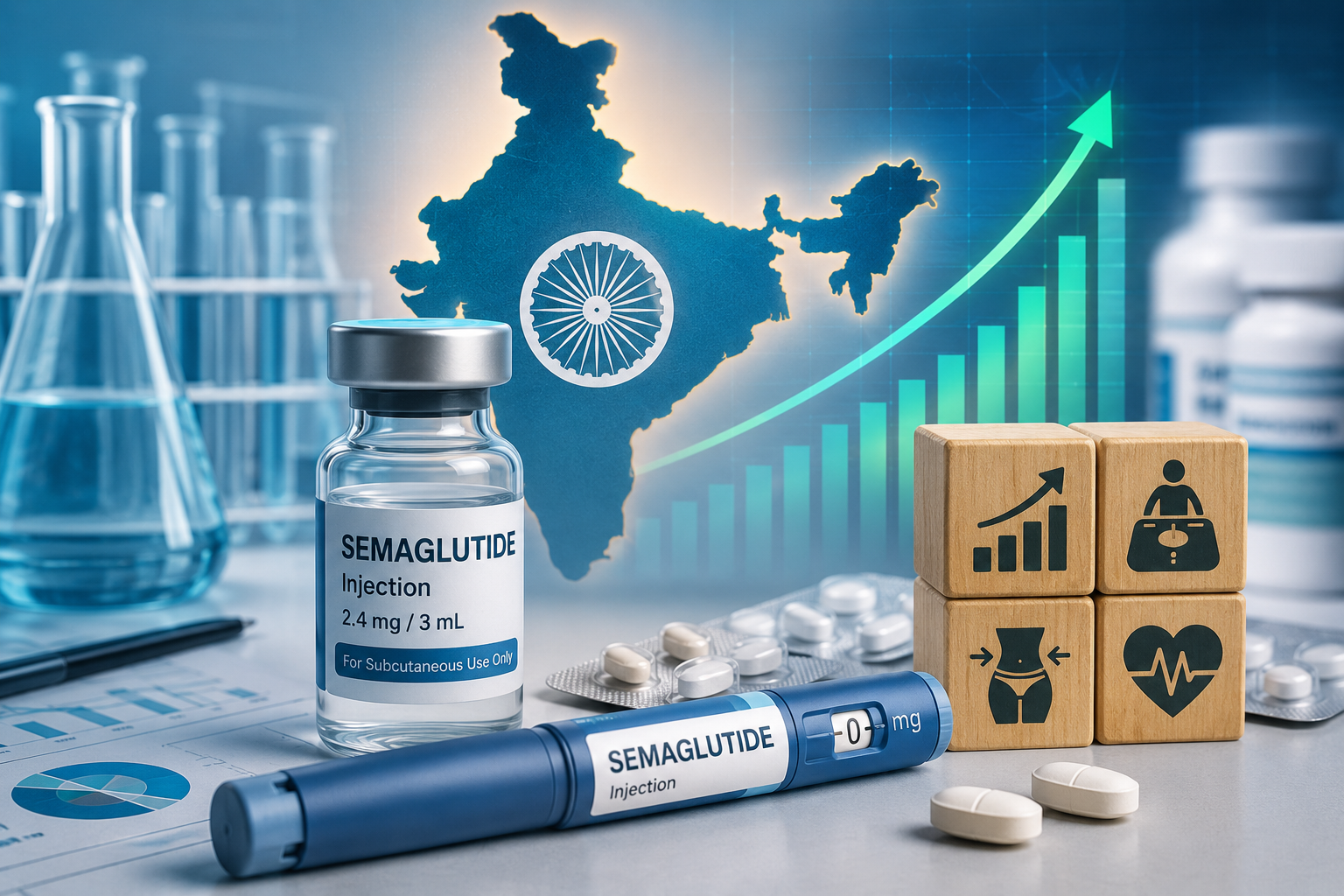
Domestic Semaglutide Market Emerges as a Key Earnings Driver for Cipla, Dr Reddy's and Other Drugmakers Amid US Revenue Pressure
Indian Pharma Finds Growth Beyond the US
India's pharmaceutical industry is entering a new growth phase as the domestic market for GLP-1 (Glucagon-Like Peptide-1) medicines gains momentum. These drugs, led by semaglutide, are transforming the treatment landscape for diabetes and obesity, creating a multi-billion-rupee opportunity for Indian pharmaceutical companies.
The rapid adoption of weight-loss therapies in India is expected to provide a fresh revenue stream for leading companies such as Cipla and Dr Reddy's Laboratories, helping them offset the slowdown in their US generics business. As healthcare awareness improves and obesity rates continue to rise, analysts believe the GLP-1 segment could become one of the fastest-growing categories in India's pharmaceutical market over the next decade.
US Market Headwinds Continue
While domestic prospects are improving, Indian pharmaceutical exporters continue to face significant challenges in the United States.
Earlier this year, the loss of exclusivity for Revlimid, a blockbuster cancer treatment, resulted in intensified competition from multiple generic manufacturers. Increased supply has triggered price erosion, reducing profitability for companies that previously enjoyed strong margins from the drug.
Market estimates suggest that US revenues for several major Indian pharmaceutical companies may remain under pressure during FY27 as competition intensifies across multiple generic products. Although a weaker Indian rupee provides some support to export earnings, it is unlikely to fully compensate for declining prices in the US market.
The shift highlights the importance of diversifying revenue sources and strengthening domestic operations.
Semaglutide Opens a New Domestic Opportunity
One of the biggest catalysts for India's pharmaceutical sector has been the expiry of semaglutide's patent in the domestic market earlier this year.
With patent restrictions removed, Indian pharmaceutical companies can now introduce their own formulations at more affordable prices, significantly expanding patient access.
Initially, the market witnessed a sharp spike in demand as doctors and patients explored newer treatment options. Although the early surge has moderated, prescription trends remain healthy, indicating sustained long-term demand rather than a short-lived spike.
Industry experts believe semaglutide could reshape India's obesity treatment market much like statins transformed cholesterol management decades ago.
Obesity Treatment Becoming a Major Healthcare Theme
India is witnessing a steady increase in obesity and lifestyle-related diseases due to changing dietary habits, urbanisation, and sedentary lifestyles.
Medical experts increasingly view obesity as a chronic disease rather than merely a lifestyle issue. As awareness grows, demand for clinically proven weight-management therapies is expected to rise.
GLP-1 medicines work by regulating appetite, improving insulin secretion, slowing gastric emptying, and helping patients maintain healthier blood sugar levels. Their dual benefit for diabetes management and weight reduction has made them one of the most sought-after drug classes globally.
This trend is expected to drive sustained prescription growth across India's urban healthcare market.
Dr Reddy's Production Update Remains in Focus
Investors are closely monitoring developments at Dr Reddy's Laboratories, which temporarily halted production at one of its semaglutide manufacturing facilities after detecting impurities during quality checks.
The company's ability to resolve manufacturing issues and resume commercial production will be closely watched in upcoming quarterly earnings.
Brokerage estimates indicate that injectable semaglutide products could contribute 13% to 14% of Dr Reddy's overall earnings during the next three years, making the segment strategically important for future growth.
Domestic Business Offers Earnings Cushion
Unlike the highly competitive US generics market, India's branded pharmaceutical business offers relatively better pricing power and stronger customer loyalty.
Companies with extensive doctor networks, established distribution channels, and recognised brands are expected to benefit the most from increasing demand for GLP-1 therapies.
The domestic market is also witnessing healthy volume growth across chronic therapies, including diabetes, cardiovascular care, respiratory medicines, and gastrointestinal treatments. This diversified growth provides a stable earnings base while export markets remain volatile.
Industry Outlook: A Structural Growth Story
The global market for obesity drugs is projected to expand rapidly over the coming decade, driven by rising healthcare spending and increasing adoption of advanced therapies. India is expected to become an important contributor to this growth as affordability improves and local manufacturing expands.
For Indian pharmaceutical companies, GLP-1 medicines represent more than just another product launch—they mark the beginning of a structural shift toward high-value specialty therapies with better margins and long-term demand.
If companies successfully scale manufacturing capacity, maintain product quality, and build strong physician engagement, the domestic GLP-1 market could become one of the most important earnings drivers for the sector over the next several years.
Take
The decline in US generic pricing continues to weigh on Indian pharmaceutical exporters, but the expanding domestic GLP-1 opportunity provides a strong counterbalance. Companies with early market entry, robust manufacturing capabilities, and strong domestic distribution networks are likely to emerge as long-term winners.
Investors should closely track quarterly commentary on semaglutide production, market share gains, regulatory approvals, and capacity expansion plans, as these factors could significantly influence earnings growth and stock performance in the coming years.