British Maritime Agency Confirms Attack Near Oman; Vessel Suffers Minor Damage While Global Markets Monitor Potential Impact on Oil Supply
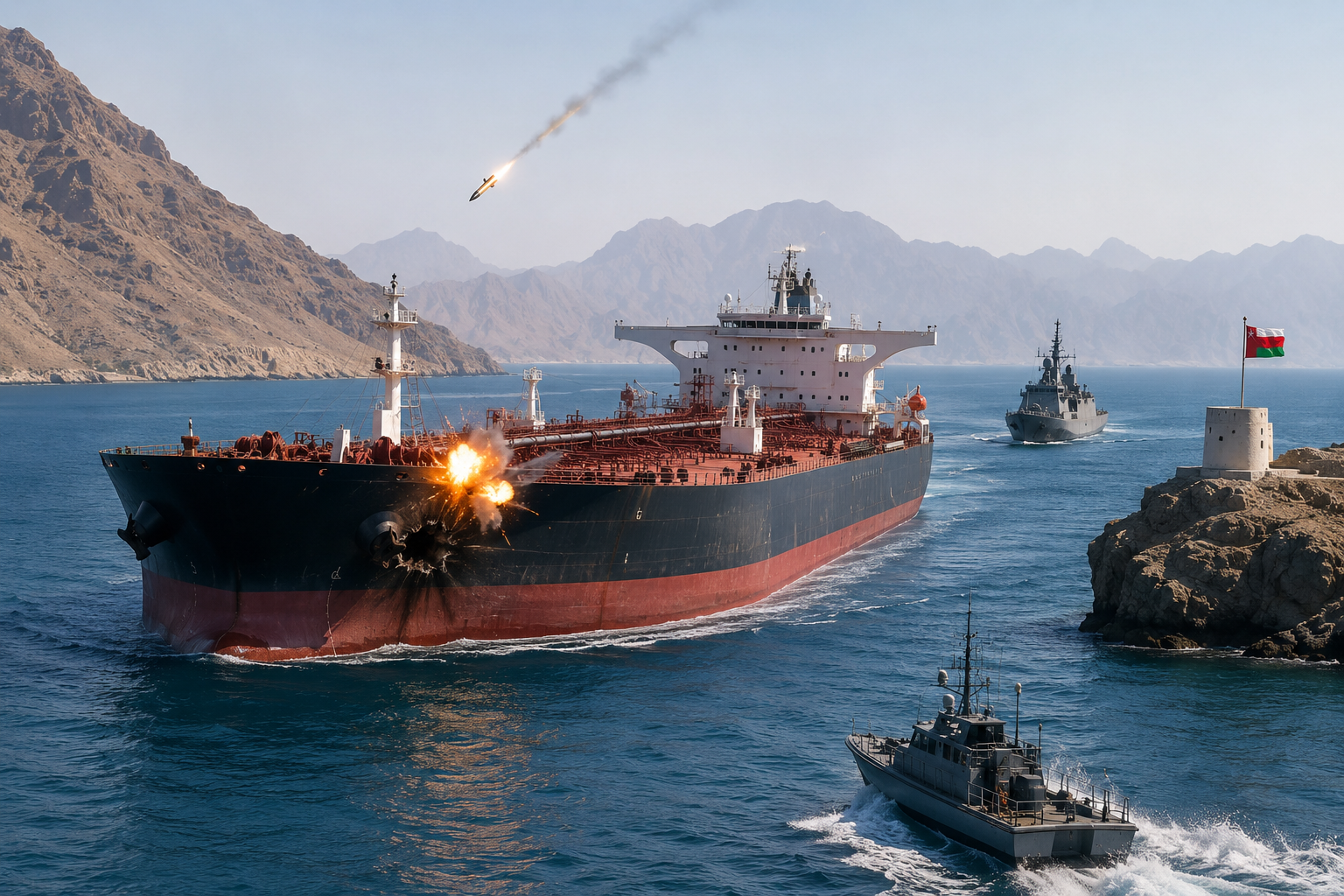
A commercial tanker navigating the strategically significant Strait of Hormuz came under attack after being struck by a projectile near the Omani coastline, according to the United Kingdom Maritime Trade Operations (UKMTO). While the vessel sustained only minor damage and safely continued its journey, the incident has once again highlighted the growing security risks facing one of the world's most critical energy transit routes.
The attack comes amid heightened geopolitical tensions across West Asia, where repeated threats to commercial shipping have increased concerns over global oil supplies and maritime security. Although no casualties or environmental damage were reported, the incident has intensified fears that continued instability in the region could disrupt energy markets, increase shipping costs, and further fuel global inflation.
As governments, shipping companies, and investors closely monitor developments, the Strait of Hormuz remains at the center of international attention due to its vital role in global crude oil and liquefied natural gas (LNG) transportation.
Projectile Strike Reported on Commercial Tanker
According to the UK Maritime Trade Operations centre, the attack occurred during the early hours while the vessel was sailing through the section of the Strait of Hormuz closest to Oman.
Initial assessments indicate:
-
The tanker was struck by a projectile.
-
Minor damage was reported on the port side of the vessel.
-
All crew members were safe.
-
No injuries were reported.
-
No oil spill or environmental damage occurred.
-
The vessel remained operational and continued toward its next destination.
The incident is being closely monitored by international maritime authorities responsible for ensuring safe navigation through the region.
Why the Strait of Hormuz Is Globally Important
The Strait of Hormuz is one of the world's most strategically important maritime chokepoints.
Located between Iran and Oman, the narrow waterway connects the Persian Gulf with the Arabian Sea, serving as the primary export route for crude oil and natural gas produced by Gulf nations.
Approximately one-fifth of global crude oil consumption passes through the Strait of Hormuz every day.
Major energy exporters using the route include:
-
Saudi Arabia
-
United Arab Emirates
-
Kuwait
-
Iraq
-
Qatar
-
Iran
Any disruption to shipping through this corridor can significantly impact global energy markets.
Maritime Security Challenges Continue to Grow
The latest attack reflects the increasing security risks faced by commercial vessels operating in West Asian waters.
Over the past several years, the region has witnessed:
-
Missile attacks
-
Drone strikes
-
Vessel seizures
-
Electronic interference
-
Naval confrontations
-
Suspicious maritime incidents
Shipping operators have responded by strengthening onboard security measures and coordinating more closely with international naval forces operating in the area.
Insurance providers have also revised risk assessments, increasing premiums for vessels transiting the region.
Impact on Global Oil Markets
Although the latest attack caused only limited physical damage, it has reinforced concerns surrounding the security of global energy supplies.
Energy traders remain cautious because even isolated attacks can:
-
Increase crude oil prices
-
Raise freight costs
-
Tighten shipping capacity
-
Increase supply chain uncertainty
-
Trigger higher market volatility
Brent crude has already been trading at elevated levels amid ongoing geopolitical tensions across West Asia.
Any prolonged disruption in shipping could place additional upward pressure on oil prices.
Shipping Industry Faces Rising Costs
Maritime security concerns directly affect global shipping operations.
Shipping companies operating through the Strait of Hormuz may now face:
-
Higher insurance premiums
-
Increased security expenses
-
Route adjustments
-
Longer transit times
-
Elevated operating costs
These additional costs may ultimately be passed on through higher transportation charges and increased prices for imported goods.
India Closely Monitoring Developments
India has a significant stake in the stability of the Strait of Hormuz due to its dependence on imported crude oil.
A substantial portion of India's energy imports originates from Gulf countries and passes through this strategic waterway.
Any prolonged disruption could affect:
-
Crude oil import costs
-
Domestic fuel prices
-
Inflation
-
Trade balance
-
Rupee stability
-
Corporate profitability in energy-intensive sectors
Indian authorities continue to monitor developments closely while maintaining engagement with international partners regarding maritime security.
Global Inflation Could Face Fresh Pressure
Higher oil prices resulting from geopolitical tensions often translate into broader inflationary pressures.
Rising energy costs affect:
-
Transportation
-
Manufacturing
-
Agriculture
-
Logistics
-
Aviation
-
Consumer goods
Central banks around the world may face additional challenges if energy-driven inflation persists.
This could influence future monetary policy decisions and financial market sentiment.
Energy Security Remains a Global Priority
The latest incident highlights the importance of strengthening global energy security.
Many countries are increasingly focusing on:
-
Diversifying energy import sources
-
Expanding strategic petroleum reserves
-
Investing in renewable energy
-
Enhancing domestic energy production
-
Improving supply chain resilience
Reducing dependence on a limited number of transport corridors remains a long-term strategic objective for many economies.
Financial Markets React to Geopolitical Risks
Geopolitical events in energy-producing regions often trigger increased volatility across financial markets.
Investors typically respond by shifting toward:
-
Safe-haven assets
-
Gold
-
Defensive equities
-
Government bonds
-
Energy stocks
At the same time, sectors dependent on lower fuel costs, including airlines, logistics companies, and chemical manufacturers, may face increased pressure if crude prices continue rising.
Maritime Trade Under Greater Surveillance
International naval forces continue to enhance surveillance and security operations across the Gulf region.
Governments are working together to:
-
Protect commercial shipping
-
Ensure uninterrupted energy supplies
-
Deter maritime attacks
-
Maintain freedom of navigation
-
Strengthen intelligence sharing
Continued cooperation among regional and international stakeholders will remain essential in maintaining stability along global shipping routes.
Market Outlook
The reported attack on a commercial tanker reinforces the growing geopolitical risks facing global energy markets. While the immediate operational impact has remained limited, repeated incidents in the Strait of Hormuz have the potential to increase crude oil prices, raise shipping costs, and heighten market volatility. Investors are expected to closely monitor further developments, particularly any escalation that could threaten uninterrupted oil exports from the Gulf region.
For India and other major energy-importing nations, stability in the Strait of Hormuz remains critical to maintaining affordable energy supplies and controlling inflation. Continued geopolitical uncertainty is likely to keep commodity markets sensitive to developments in West Asia over the coming months.
Investor Takeaway
The latest tanker attack serves as a reminder that geopolitical events can quickly influence global financial markets, especially when they involve strategically important energy corridors such as the Strait of Hormuz. Although the vessel suffered only minor damage and safely continued its journey, the incident highlights the vulnerability of international shipping routes during periods of heightened regional conflict.
For investors, sustained geopolitical tensions could support higher crude oil prices, benefiting upstream energy companies while creating challenges for fuel-intensive industries. Maintaining diversified portfolios and closely tracking developments in global energy markets will remain important as geopolitical risks continue to shape market sentiment and economic outlook.