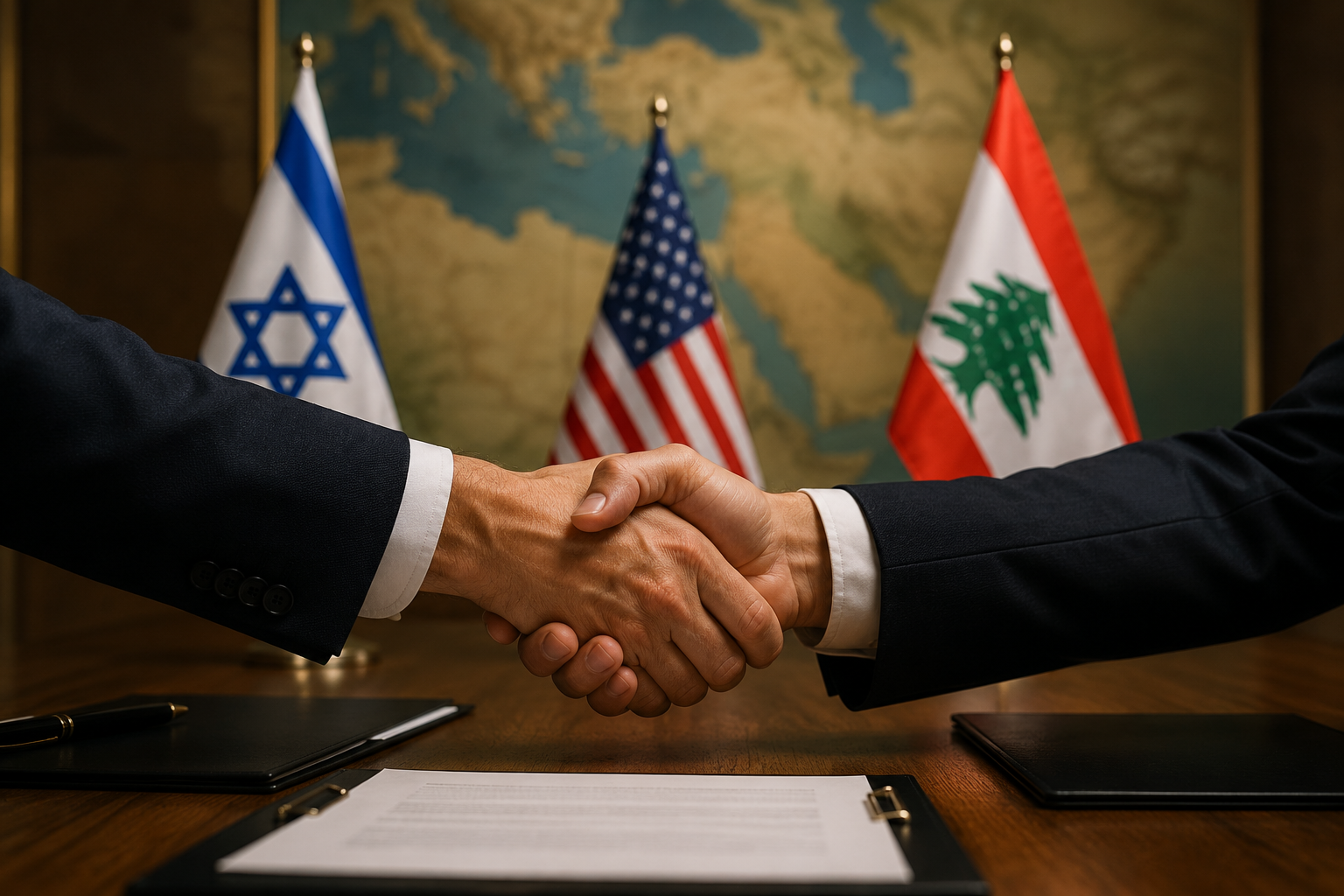
Fresh diplomatic talks focus on phased Israeli withdrawal, Lebanese Army deployment and long-term regional stability
Israel and Lebanon have initiated a new round of high-level discussions aimed at easing tensions along their shared border, with both sides considering a US-backed proposal that could lead to the transfer of certain territories currently occupied by Israeli forces to the Lebanese Army.
The discussions, taking place in Washington, are viewed as part of broader efforts to consolidate the fragile ceasefire that has largely held since recent hostilities between Israel and Hezbollah subsided.
Pilot Plan Under Discussion
According to officials familiar with the negotiations, the proposal involves a pilot initiative under which Israeli troops would gradually hand over control of select border areas to the Lebanese Armed Forces. The plan is intended to test whether the Lebanese military can effectively maintain security and prevent militant activity in sensitive regions.
Israeli officials have reportedly proposed that Lebanese troops assigned to these zones undergo training and screening under US supervision. The objective is to ensure that the forces deployed remain independent and are not influenced by armed non-state actors operating in the region.
At the same time, Israel is seeking to retain a limited presence in designated buffer areas near the border to address its security concerns and prevent future cross-border attacks.
Focus on Withdrawal Timeline
Lebanese security officials have confirmed that military representatives from both countries are engaged in discussions on operational details, including a possible timeline for Israeli troop withdrawal and the mechanism for transferring control of border regions.
While negotiations are progressing, officials cautioned that no final agreement has been reached. Any arrangement is expected to emerge only after the completion of the current round of talks and further consultations with international stakeholders.
The negotiations are also expected to address monitoring mechanisms and security guarantees aimed at preserving peace along the frontier.
Ceasefire Holds Despite Continued Military Presence
The latest conflict between Israel and Hezbollah significantly heightened tensions across the Middle East. Although a ceasefire has largely held in recent days, Israeli forces continue to maintain positions in parts of southern Lebanon, citing the need to protect northern Israeli communities from potential security threats.
The continued deployment of Israeli troops remains a contentious issue in Lebanon, where political leaders have repeatedly called for the complete restoration of Lebanese sovereignty over all national territory.
Regional Diplomacy Gains Momentum
The diplomatic initiative comes amid wider regional efforts to reduce tensions following recent confrontations involving Iran, Israel and allied groups across the Middle East. Lebanon has increasingly become an important element in broader geopolitical discussions involving Washington, Tehran and regional actors.
The interim understanding reached between Iran and the United States last week has further intensified efforts to secure lasting stability across multiple conflict zones, including Lebanon.
Analysts believe that a successful agreement between Israel and Lebanon could reduce the risk of renewed hostilities, strengthen state institutions in Lebanon and create conditions for longer-term peace and economic recovery in the region.
However, experts caution that significant challenges remain, particularly given Hezbollah's influence in Lebanon's political and security landscape and the deep-rooted mistrust between the two neighbouring countries.
If implemented successfully, the proposed arrangement could mark one of the most significant security understandings between Israel and Lebanon in recent years and potentially lay the groundwork for broader diplomatic engagement in the future.