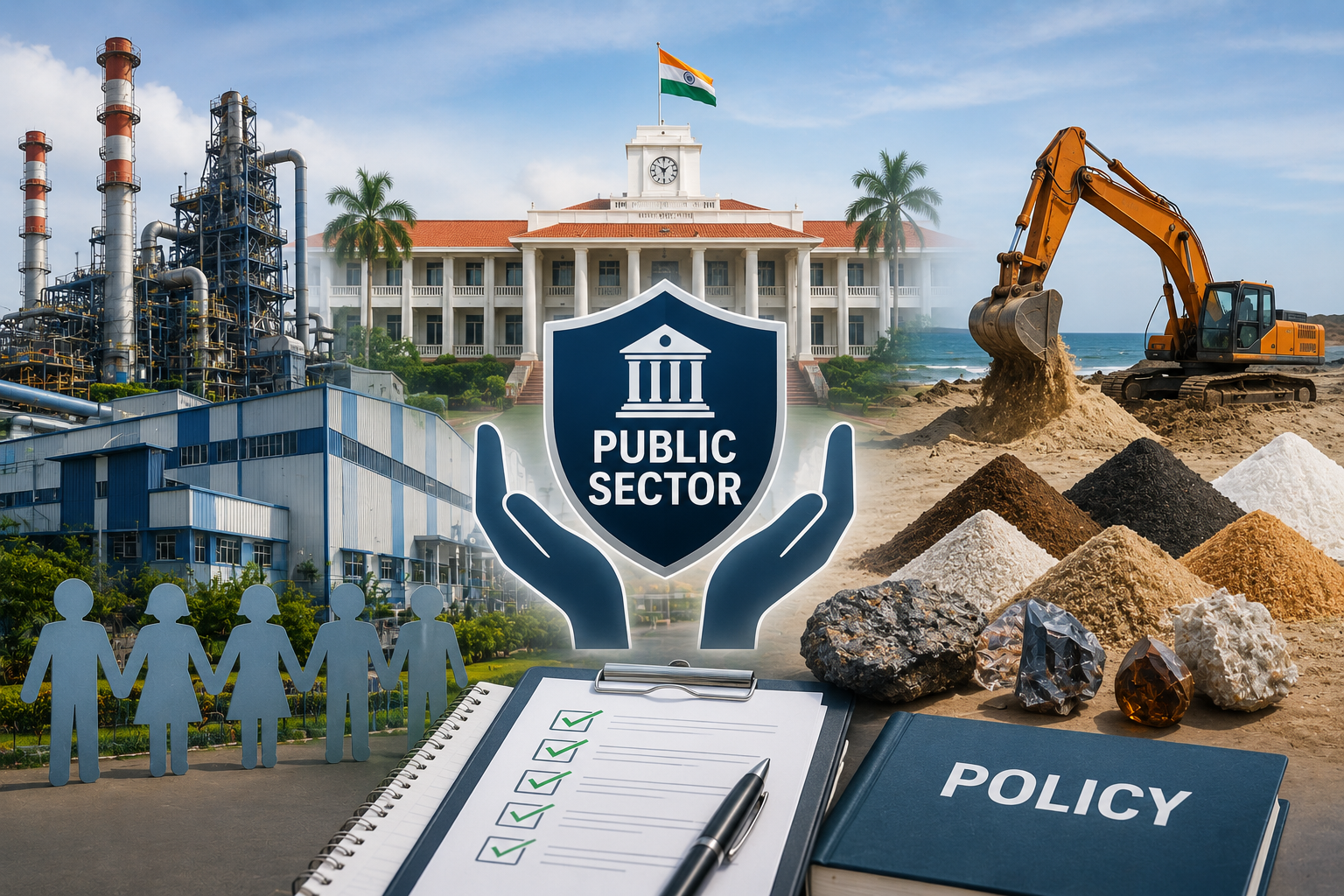
Chief Minister Clarifies No Proposal Exists to Sell State-Owned Enterprises or Alter Mineral Sands Policy
The Kerala government has firmly rejected allegations that it intends to privatise public sector undertakings (PSUs) or open the state's strategically important mineral sands sector to private control, reaffirming its commitment to strengthening public institutions through reforms and modernization.
Responding to the three-day Budget debate in the State Assembly, Chief Minister V D Satheesan categorically stated that there is no proposal in the Budget to privatise any public sector enterprise. He emphasized that the government's priority is to improve the performance and competitiveness of state-owned companies while retaining public ownership.
The statement comes amid political debate and concerns raised by opposition parties regarding the future of Kerala's public sector ecosystem and natural resource management policies.
Government Dismisses Privatisation Concerns
During his address in the Assembly, the Chief Minister challenged claims that the government was moving toward privatization, stating that no such provision exists in the Budget document.
According to the government, public sector enterprises remain an important component of Kerala's economic and industrial framework. Rather than pursuing disinvestment or strategic sales, the administration intends to focus on operational improvements, financial restructuring, and modernization initiatives.
The clarification is expected to reassure employees, labour unions, and stakeholders who have expressed concerns about the future of state-owned enterprises.
Public Sector Enterprises Seen as Growth Engines
Kerala's public sector companies operate across multiple sectors including manufacturing, engineering, transportation, infrastructure, healthcare, and industrial development.
Many of these enterprises provide direct and indirect employment opportunities while contributing to regional economic development. The government believes that with improved governance and better financial management, several PSUs can become more efficient and financially sustainable.
Officials argue that public ownership can coexist with modernization and profitability, provided institutions adopt contemporary business practices and technological advancements.
Focus on Reforms Rather Than Ownership Changes
The government's strategy appears to center on transforming public enterprises through structural reforms rather than transferring ownership to private players.
Key areas of focus include:
Operational Efficiency
Efforts are expected to concentrate on reducing inefficiencies, improving productivity, and enhancing competitiveness.
Technology Upgradation
Several state-owned entities may receive support for modernization, automation, and digital transformation initiatives.
Financial Restructuring
Improving balance sheets, reducing losses, and strengthening financial performance remain key priorities.
Governance Improvements
The government is likely to push for greater transparency, accountability, and professional management practices within public sector organizations.
Such measures are aimed at ensuring long-term viability without compromising public ownership.
Mineral Sands Policy to Remain Unchanged
The Chief Minister also addressed concerns regarding Kerala's mineral sands industry, making it clear that the state has no plans to alter the existing policy framework governing the sector.
Kerala is home to significant deposits of valuable beach sand minerals including ilmenite, rutile, zircon, sillimanite, and monazite. These minerals are widely used in industries ranging from aerospace and defense to electronics, ceramics, pigments, renewable energy, and advanced manufacturing.
Given their strategic importance, mineral sands remain a critical component of Kerala's industrial resource base.
The government's assurance of policy continuity is expected to provide stability for companies, workers, and investors associated with the sector.
Strategic Importance of Kerala's Mineral Wealth
Mineral sands represent one of Kerala's most valuable natural resources and contribute significantly to industrial activity and exports.
The sector supports a broad value chain involving mining, processing, manufacturing, logistics, and exports. Demand for critical minerals is expected to rise globally due to the growing adoption of electric vehicles, renewable energy technologies, and advanced industrial applications.
Maintaining policy stability in this sector could help Kerala attract long-term investments while ensuring responsible resource management.
Budget Debate Highlights Economic Policy Direction
The issue gained prominence during discussions on the state's Budget, which outlines the government's roadmap for economic growth, industrial development, infrastructure spending, and fiscal management.
Political parties and industry stakeholders have closely scrutinized the Budget for indications of policy changes affecting public assets and strategic industries.
By providing clear assurances regarding public sector enterprises and mineral resources, the government appears focused on reducing uncertainty and reinforcing confidence among workers, investors, and businesses.
Implications for Industry and Investors
The government's position signals continuity in Kerala's economic policy framework and may provide greater predictability for businesses operating in sectors linked to public enterprises and mineral resources.
For investors, policy stability often serves as a positive factor when evaluating long-term opportunities, particularly in industries that require significant capital investment and extended project timelines.
The reaffirmation of public ownership also suggests that future reforms are likely to emphasize operational performance rather than ownership restructuring.
Challenges Ahead for Public Sector Enterprises
While the government's commitment to retaining public ownership is clear, several state-owned enterprises continue to face challenges including:
- Rising operating costs
- Market competition
- Technology gaps
- Financial constraints
- Workforce productivity issues
Successfully addressing these challenges will be crucial to ensuring that PSUs remain relevant and financially sustainable in an increasingly competitive business environment.
Outlook
Kerala's decision to reject privatization proposals and maintain its mineral sands policy reflects a broader strategy focused on reform-led growth and public sector strengthening.
Going forward, the effectiveness of modernization efforts, governance reforms, and financial restructuring initiatives will determine whether public sector enterprises can improve profitability and contribute more significantly to the state's economic development.
As policymakers seek to balance social objectives with economic efficiency, Kerala's approach may emerge as an important case study in public sector transformation without privatization.