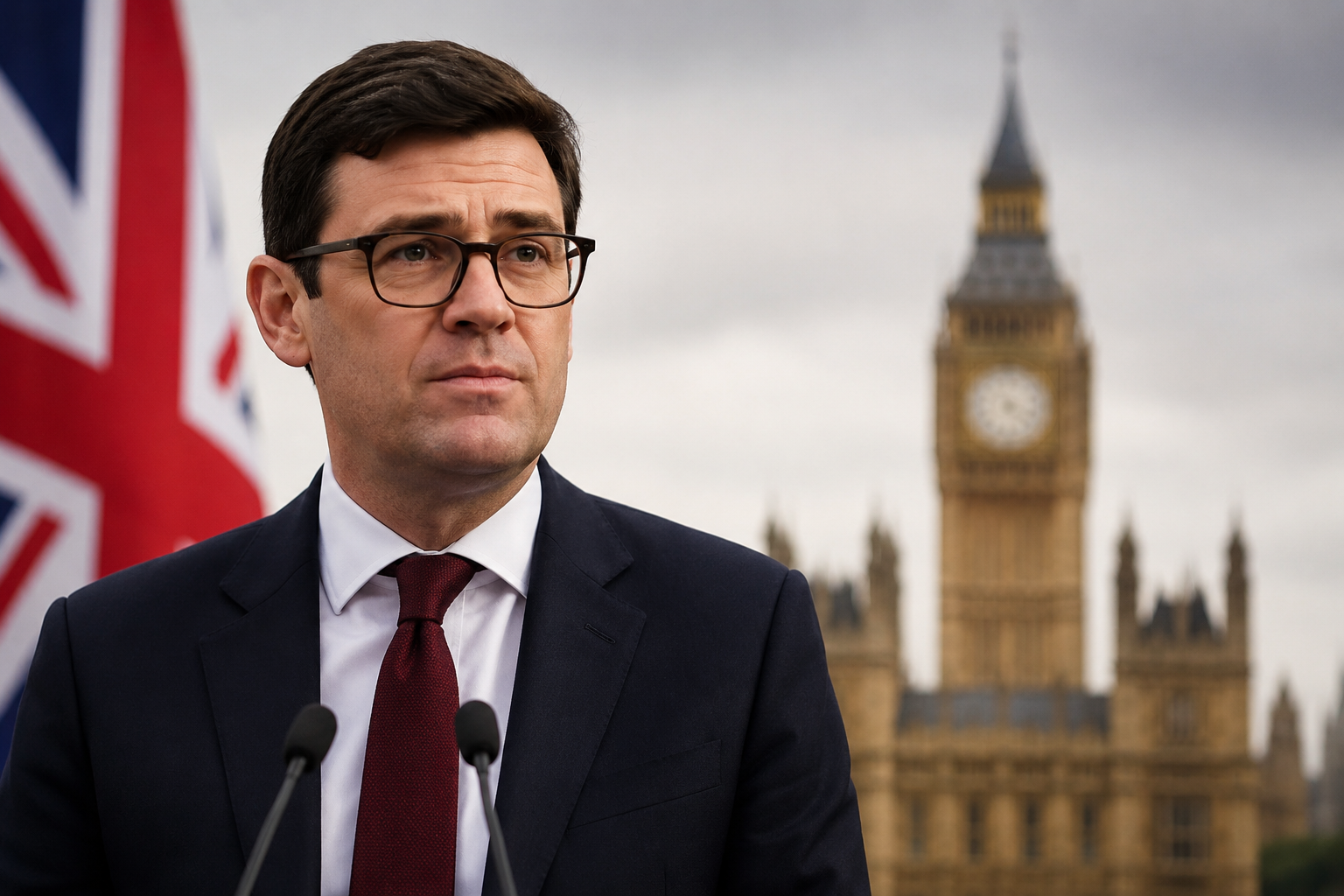
Former Manchester Mayor Emerges as Leading Contender in Labour Leadership Race
Britain's political landscape is set for a major shake-up after former Greater Manchester Mayor Andy Burnham officially announced his bid to succeed Keir Starmer as leader of the Labour Party and Prime Minister of the United Kingdom.
Burnham confirmed his candidacy through a social media statement, declaring that he would “put myself forward as part of this process” as Labour begins the search for its next leader following Starmer's resignation.
The announcement marks the beginning of what could become one of the most closely watched leadership contests in recent British political history, with implications for economic policy, international relations, and investor sentiment.
Wes Streeting Backs Burnham, Strengthening His Position
In a significant boost to Burnham's campaign, former Health Secretary Wes Streeting announced that he would not enter the leadership race and would instead support Burnham's candidacy.
Streeting, who was widely viewed as one of the strongest potential challengers, said Burnham possesses the experience and leadership qualities needed to unite the Labour Party and lead the country through a challenging economic environment.
His endorsement immediately strengthens Burnham's standing among Labour members and lawmakers, potentially consolidating support around a single candidate early in the contest.
Leadership Change Comes at a Critical Economic Juncture
The Labour leadership transition comes at a sensitive time for the British economy.
The UK continues to grapple with sluggish economic growth, elevated public debt, persistent inflationary pressures, and ongoing concerns regarding productivity and investment. Financial markets will closely monitor the leadership race for signals about future fiscal policy, taxation, infrastructure spending, and industrial strategy.
Political analysts believe the next Labour leader will face mounting pressure to balance economic growth initiatives with fiscal discipline while addressing public concerns over healthcare, housing affordability, and cost-of-living challenges.
Burnham's Track Record Could Appeal to Voters
Burnham has built a strong political profile over the past decade through his leadership of Greater Manchester.
Known for advocating regional development, public transport expansion, and greater devolution of powers from Westminster, Burnham has often positioned himself as a champion of local governance and economic empowerment.
His tenure as mayor earned him recognition for managing regional challenges during the COVID-19 pandemic and for pushing investment into infrastructure and urban regeneration projects.
Supporters argue that his experience in local government provides practical leadership credentials that could resonate with both Labour members and the wider electorate.
Potential Impact on Markets and Businesses
Investors and businesses are expected to closely watch policy proposals emerging from the leadership race.
Key areas of interest include:
Fiscal Policy
Markets will seek clarity on Labour's plans regarding government spending, taxation, and debt management.
Infrastructure Investments
Burnham has historically supported significant infrastructure development, which could create opportunities in construction, transportation, and renewable energy sectors.
Regional Economic Growth
His focus on decentralization and regional development could lead to increased public investment outside London, potentially benefiting regional businesses and employment.
Green Economy Initiatives
Labour's broader commitment to renewable energy and sustainability is likely to remain a central policy theme regardless of the leadership outcome.
Labour Begins Formal Succession Process
The Labour Party is expected to announce the timetable for nominations and voting in the coming weeks.
Party members, affiliated organizations, and lawmakers will play a key role in selecting the next leader. If additional candidates enter the race, Labour members across the country will ultimately decide who takes the helm.
Until a successor is chosen, Keir Starmer is expected to continue serving in a caretaker capacity.
Political Analysts See Burnham as Early Favourite
With Streeting stepping aside and endorsing Burnham, many political observers now view the former mayor as the early frontrunner.
However, leadership contests have historically produced surprises, and several senior Labour figures could still enter the race before nominations close.
The coming weeks are expected to feature intense debate over the party's future direction, economic priorities, and strategy for maintaining public support.
Why Investors Should Watch
Political transitions often influence market sentiment, particularly when they involve major economies such as the United Kingdom.
Investors will be watching for:
- Changes in economic and fiscal policy direction.
- Labour's approach toward business and investment.
- Infrastructure and renewable energy spending commitments.
- Taxation proposals affecting corporations and high-income earners.
- UK growth and productivity initiatives.
The leadership race could provide important clues about Britain's economic roadmap and investment climate over the next several years.
Outlook
Andy Burnham's entry into the Labour leadership contest marks the start of a new chapter in British politics. Backed by a growing number of senior party figures, he enters the race as one of the strongest contenders to become the next Prime Minister.
As Labour prepares to select its next leader, businesses, investors, and global markets will closely monitor developments that could shape the future trajectory of the UK economy and government policy.