Subsidised Pricing, Groundwater Depletion and Rising Industrial Demand Could Intensify Water Stress
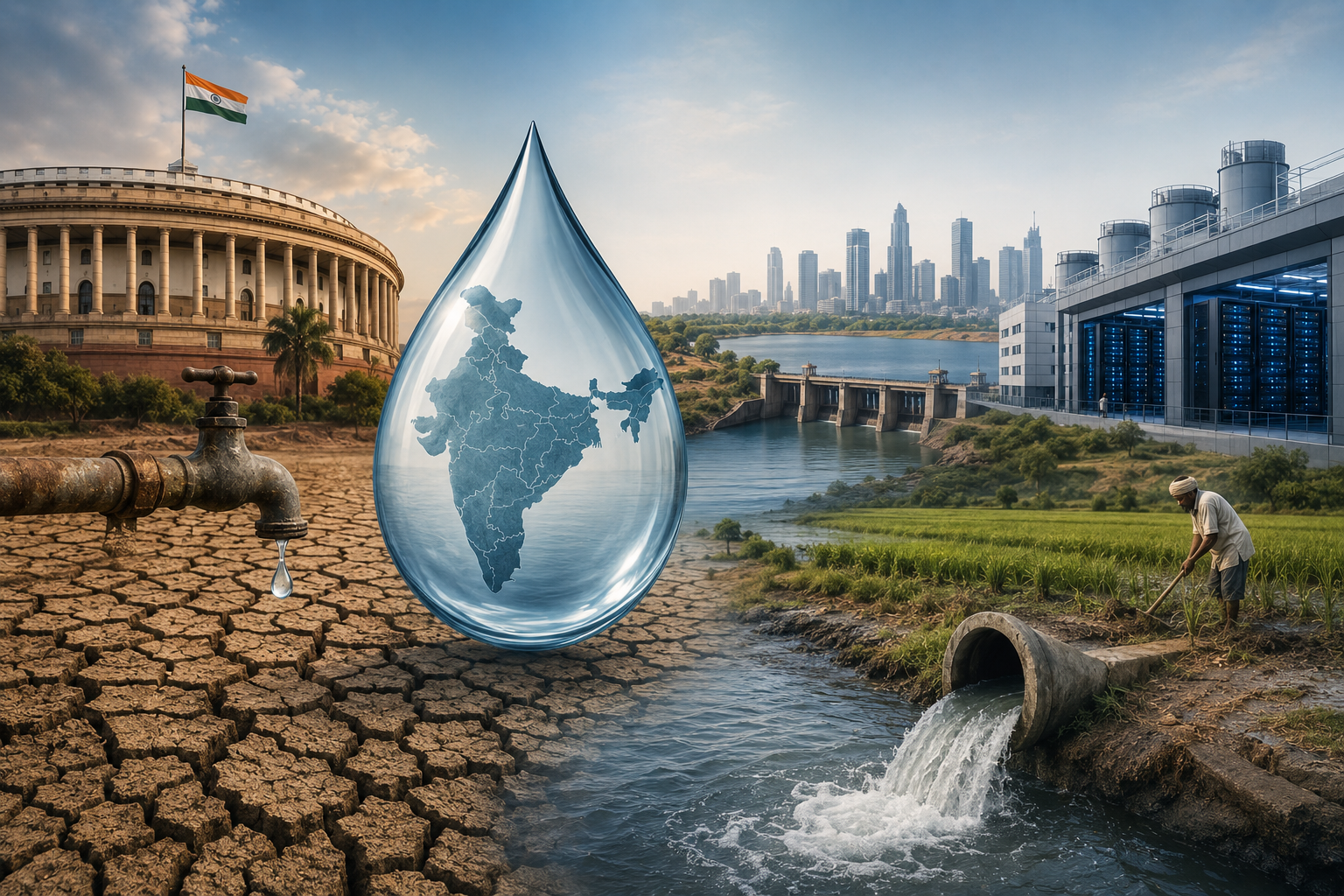
India’s fragmented water governance structure could pose growing fiscal and credit risks in the years ahead, according to a new report by Moody’s Ratings. The global ratings agency has flagged concerns over dispersed policy-making, heavily subsidised water pricing, slow resource reallocation and inadequate infrastructure investment, warning that these challenges could leave the country increasingly vulnerable to water shortages and economic disruptions.
The report comes at a time when climate change, urbanisation and rapid industrial expansion are placing unprecedented pressure on India’s already strained water resources.
Water Management Becoming a Key Economic Resilience Factor
Moody’s noted that water allocation frameworks are becoming increasingly important in determining the resilience of economies facing water stress. These frameworks govern how water is distributed among households, agriculture, industries and public services, and influence how effectively regions can respond to shortages.
Countries with flexible and well-coordinated water management systems are generally better positioned to absorb supply shocks and minimise economic disruptions. In contrast, fragmented governance structures often result in inefficient resource allocation, prolonged shortages and mounting fiscal costs.
For India, where water governance is largely controlled by state governments, policy coordination remains a significant challenge.
Fragmented Governance Across States Raises Concerns
Unlike many countries with centralised water management systems, India’s water governance is spread across more than 28 states, each with its own regulations, priorities and allocation mechanisms.
According to Moody’s, this fragmented approach can slow decision-making and hinder the efficient transfer of water resources between sectors during periods of stress.
The agency highlighted that many states continue to face challenges related to ageing water infrastructure, inadequate storage capacity and limited investment resources, making it difficult to address rising demand and climate-related pressures.
Agriculture Remains the Largest Consumer
One of the biggest concerns highlighted in the report is India’s highly subsidised water pricing structure, particularly in the agricultural sector.
Agriculture accounts for nearly 80 per cent of India’s freshwater consumption, yet water usage remains largely disconnected from pricing signals. Subsidised electricity for groundwater pumping and limited incentives for water conservation have contributed to excessive groundwater extraction in several regions.
Experts warn that continued depletion of groundwater reserves could create long-term sustainability challenges for both agricultural productivity and rural livelihoods.
Data Centres and AI Expansion Add New Demand Pressure
Moody’s also pointed to a rapidly emerging challenge: the growing water requirements of data centres.
The explosive growth of cloud computing, artificial intelligence applications and digital infrastructure is creating a new source of water-intensive industrial demand. Data centres require substantial quantities of water for cooling systems, particularly in warmer climates.
As India positions itself as a global digital infrastructure hub, balancing industrial expansion with sustainable water management will become increasingly important for policymakers.
Climate Risks Amplify Water Challenges
The report referenced findings from the World Resources Institute, which indicate that India faces significant exposure to climate-related risks, including heat stress, flooding and increasingly unpredictable monsoon patterns.
Erratic rainfall distribution, prolonged droughts and extreme weather events are likely to further strain water resources, increasing the urgency for coordinated policy responses and infrastructure upgrades.
These climate pressures could affect agricultural output, industrial operations, power generation and urban water supply systems, creating broader economic consequences.
Potential Impact on Public Finances and Credit Quality
Moody’s warned that ineffective water governance frameworks can translate into higher fiscal burdens for governments. Increased spending on emergency water supply measures, infrastructure repairs and drought-relief programmes could put pressure on state finances.
For businesses, water shortages may lead to operational disruptions, higher production costs and delayed investment decisions. Sectors heavily dependent on water—including agriculture, manufacturing, power generation and chemicals—could face heightened risks if water stress intensifies.
The ratings agency noted that prolonged water shortages may ultimately affect credit profiles of both public-sector entities and private companies operating in water-stressed regions.
Infrastructure Investment Seen as Critical Solution
Experts believe that addressing India's water challenges will require substantial investments in storage facilities, irrigation modernisation, wastewater recycling, desalination projects and smart water distribution networks.
Greater coordination between the central and state governments, improved pricing mechanisms and stronger incentives for water conservation are also expected to play a crucial role in enhancing long-term water security.
With climate risks rising and industrial demand accelerating, water management is increasingly emerging as a critical economic issue rather than simply an environmental concern.
Outlook: Water Security Could Become a Key Investment Theme
Moody’s assessment highlights how water governance is becoming an important factor for economic competitiveness, infrastructure planning and credit quality. As investors increasingly evaluate environmental and resource-related risks, water security may emerge as a major consideration in assessing long-term investment opportunities.
For India, strengthening governance frameworks and accelerating infrastructure development will be essential to ensure sustainable growth while meeting the needs of a rapidly expanding economy.