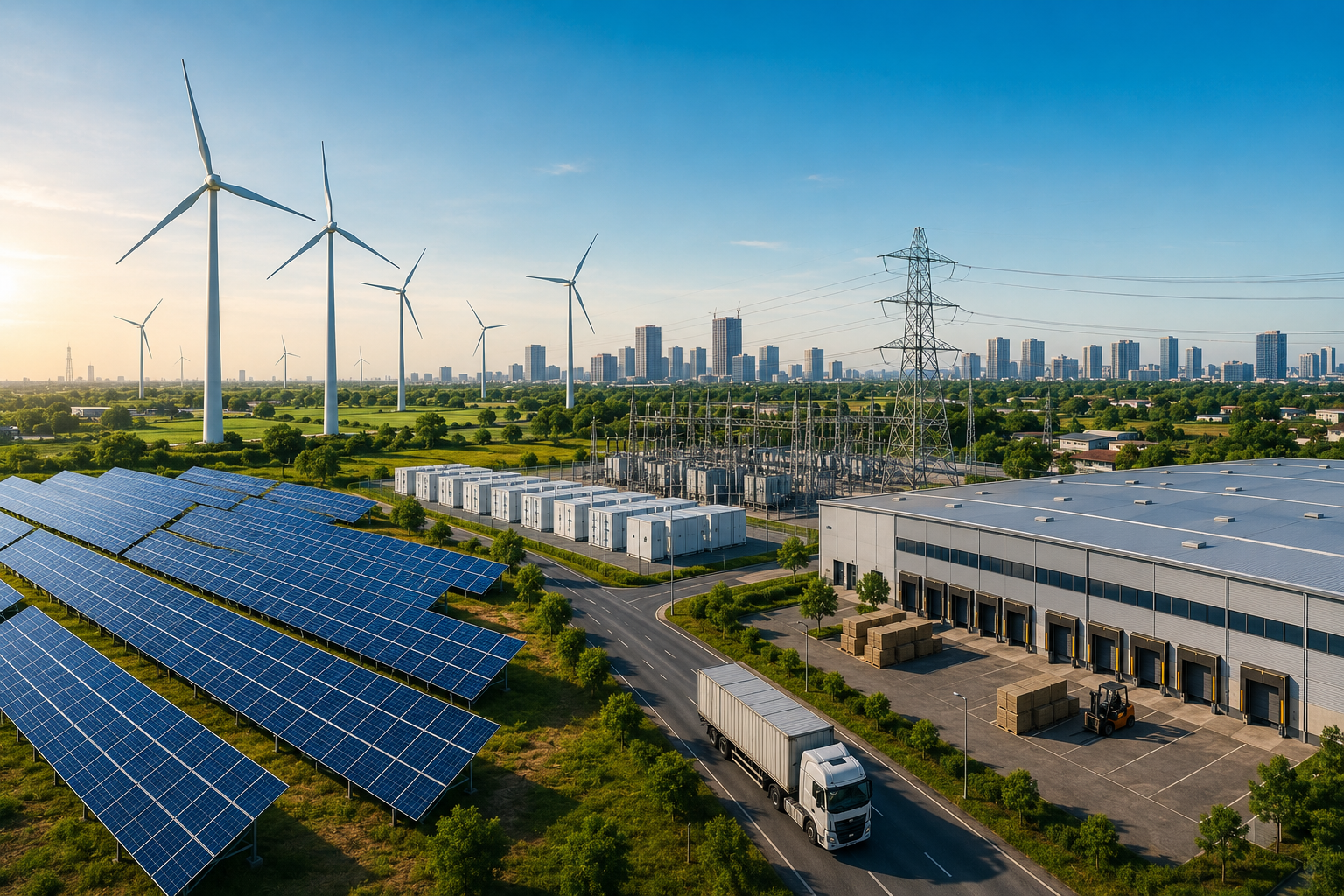
Clean Energy Expansion Could Unlock $10–15 Billion in Land Investments, Says Colliers India
India’s aggressive push toward renewable energy is emerging as a major growth engine for the country’s real estate, warehousing and industrial infrastructure sectors.
According to a report by Colliers India, the rapid expansion of solar and wind energy projects could generate nearly $10–15 billion worth of land-related investments by 2030, creating significant opportunities for developers, logistics operators and infrastructure firms.
The report highlights that India’s clean energy transition is no longer limited to the power sector alone. Instead, it is increasingly shaping demand across industrial parks, warehousing, worker housing, manufacturing hubs and supporting urban infrastructure.
With the country accelerating its renewable energy targets, experts believe the sector could become one of the biggest long-term drivers of real estate demand over the next decade.
India Accelerates Renewable Energy Targets
India’s installed renewable energy capacity reached around 251 gigawatts (GW) in 2025, with solar and wind energy accounting for nearly three-fourths of total renewable capacity.
The government has set an ambitious target of achieving:
- 500 GW of non-fossil fuel capacity by 2030
To meet this goal, India is expected to add another:
- 270–300 GW of solar and wind power capacity
- Large battery storage facilities
- Transmission infrastructure
- Renewable manufacturing ecosystems
Industry analysts say this large-scale transition will require enormous investments not only in energy infrastructure but also in land acquisition, logistics and industrial development.
Renewable Projects Could Require Nearly 7 Lakh Acres
One of the biggest opportunities emerging from the clean energy boom is land development and aggregation.
According to Colliers India, upcoming renewable energy projects could require nearly:
- 7 lakh acres of land by 2030
This is expected to create strong demand for:
- Land aggregators
- Industrial developers
- Infrastructure companies
- Warehousing operators
- Logistics firms
Land acquisition and aggregation typically account for around:
- 10–12 per cent of total renewable project costs
Based on projected renewable energy investments of nearly:
- $110–120 billion over the next few years
the land-related component alone could generate a multi-billion-dollar investment opportunity.
Warehousing and Industrial Real Estate to Benefit
The report states that industrial and warehousing real estate is likely to emerge as one of the biggest beneficiaries of India’s renewable energy expansion.
Renewable energy original equipment manufacturers (OEMs) leased nearly:
- 6.1 million square feet (msf) of Grade A industrial and warehousing space across major Indian cities between 2021 and 2025
Their share in total industrial leasing demand reportedly increased from:
- 3 per cent in 2021
to - 8 per cent in 2025
The growth is being driven by rising domestic manufacturing of:
- Solar modules
- Wind turbines
- Battery storage systems
- Semiconductor components
- Green energy equipment
According to Colliers, annual warehousing demand from renewable energy companies could rise to:
- 4–7 msf annually by 2030
This may account for nearly:
- 10–15 per cent of total industrial and warehousing demand in India.
Chennai and Pune Emerging as Key Hubs
Several cities are rapidly emerging as renewable manufacturing and logistics hubs.
The report identifies:
- Chennai
- Pune
as important centres for renewable energy equipment manufacturing, storage and supply-chain operations.
Industry experts believe more tier-II and tier-III cities could also witness rising industrial development as companies expand production capacities and establish renewable energy clusters across multiple states.
The expansion is expected to support:
- Industrial corridors
- Logistics parks
- Smart infrastructure projects
- Transportation networks
Affordable Housing and Urban Development Demand Likely to Rise
Beyond industrial infrastructure, the renewable energy boom is also expected to create significant residential and commercial real estate demand.
Large clean-energy projects often require:
- Worker accommodation
- Rental housing
- Office spaces
- Training centres
- Industrial townships
As renewable hubs expand across smaller cities and semi-urban regions, developers may increasingly focus on:
- Affordable housing
- Rental ecosystems
- Social infrastructure
- Mixed-use developments
This trend could provide a major boost to real estate activity in emerging economic zones outside traditional metro markets.
Manufacturing Push Strengthening Sector Growth
Experts say India’s broader push toward domestic manufacturing is further strengthening the renewable ecosystem.
Government initiatives aimed at boosting:
- Solar equipment manufacturing
- Semiconductor production
- Battery storage systems
- Green hydrogen infrastructure
are expected to increase industrial demand across multiple sectors.
According to Colliers India, annual leasing activity by renewable energy companies has already increased nearly four times over the last five years.
The growth reflects rising investor confidence in India’s long-term clean energy roadmap and the increasing localisation of renewable supply chains.
Renewable Energy Becoming a Long-Term Real Estate Driver
Industry analysts believe India’s energy transition could fundamentally reshape the country’s industrial and infrastructure landscape over the next decade.
Key long-term growth drivers include:
- Rapid urbanisation
- Manufacturing expansion
- Energy transition policies
- Infrastructure spending
- Rising private sector investment
As India moves closer toward its 2030 clean energy targets, the renewable sector is expected to emerge as a major catalyst for:
- Industrial real estate growth
- Logistics expansion
- Urban infrastructure development
- Employment generation
For developers, infrastructure firms and investors, the clean energy transition may represent one of the largest new real estate opportunities in India’s next growth cycle.