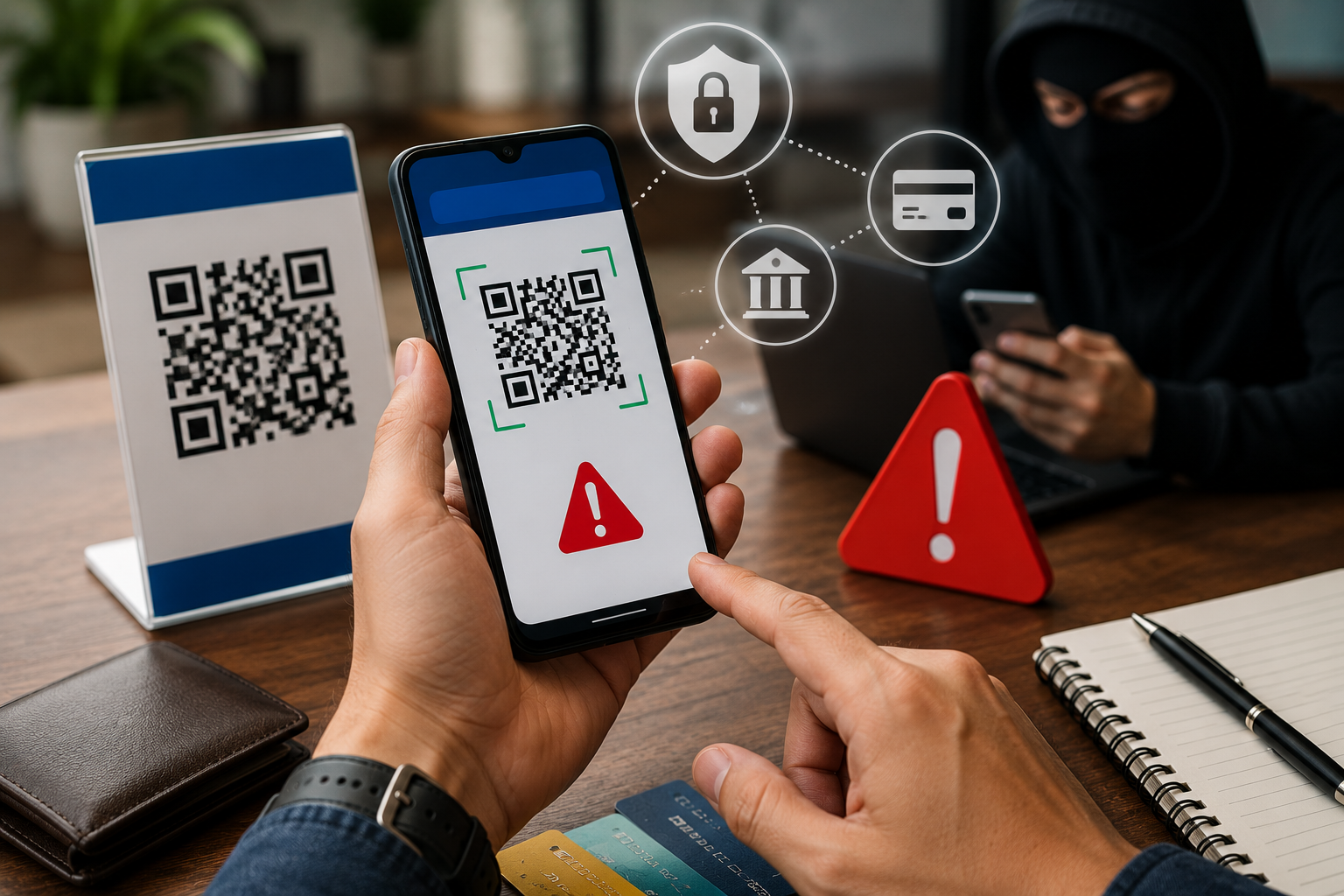
Banks, NPCI and Cybercrime Authorities Warn Users Against Rising UPI Payment Frauds
With UPI transactions becoming a part of everyday life in India, cybercriminals are increasingly exploiting fake QR codes, fraudulent payment requests and impersonation scams to steal money from unsuspecting users. Cybersecurity experts and banking officials say the first few minutes after discovering the fraud are crucial and may significantly improve the chances of recovering stolen funds.
Authorities have repeatedly warned that most UPI frauds are not advanced technical hacks but social engineering scams where users unknowingly authorise payments themselves. Fraudsters typically manipulate victims into scanning fake QR codes or approving payment requests under the pretext of refunds, cashback offers, courier charges or prize claims.
Experts say the biggest mistake users make is assuming that scanning a QR code is harmless. In reality, QR codes are generally designed for making payments, not receiving money.
How Fake QR Code Scams Usually Work
Fraudsters often contact victims through online marketplaces, social media platforms, messaging apps or fake customer support calls. They send QR codes claiming the user must scan them to receive money, process a refund or verify a transaction.
Once the victim scans the code, a payment request is generated from the user’s bank account. If the victim enters the UPI PIN without carefully checking the beneficiary details, the money gets transferred directly to the fraudster.
Cybercrime agencies say scammers usually create urgency, confusion or panic to stop users from verifying transaction details properly before approving payments.
Fake QR stickers pasted over genuine merchant codes at shops and public places have also emerged as a growing concern in several cities.
What Victims Should Do Immediately After Discovering Fraud
Cybersecurity officials say the “golden hour” immediately after the transaction is extremely important. If the money is still present in the fraudster’s account, banks and payment intermediaries may be able to freeze or reverse the transaction before the funds are moved elsewhere.
Step 1: Contact the Bank or UPI App Immediately
Victims should immediately call their bank or payment app customer care and report the transaction as fraudulent. Major UPI platforms and banks operate 24x7 fraud helplines to handle such complaints.
Users should keep the following details ready:
- Transaction ID
- Amount transferred
- Date and time of payment
- Beneficiary name and UPI ID
- Screenshots of the transaction or QR code
Banks may initiate a dispute process or temporarily freeze the recipient account depending on how quickly the complaint is filed.
Step 2: Call the National Cybercrime Helpline
Victims should immediately dial 1930, the national cybercrime financial fraud helpline.
The helpline coordinates with banks, payment gateways and intermediaries to try blocking or freezing the funds before they are withdrawn or transferred across multiple accounts.
Officials say faster reporting greatly improves the possibility of partial or complete fund recovery.
Step 3: File a Complaint Online
Users should also register a complaint on the National Cyber Crime Reporting Portal under the financial fraud section.
Authorities advise victims to save the complaint acknowledgement number carefully for future follow-up with banks, investigators and law enforcement agencies.
Can the Money Actually Be Recovered?
Recovery is possible in some cases, though there is no guarantee.
According to banking officials, successful recovery depends on several factors including:
- How quickly the fraud is reported
- Whether the money is still available in the recipient account
- Coordination between banks through NPCI systems
- Whether the fraudster has already withdrawn or layered the funds across multiple accounts
Experts say complaints filed within the first few hours generally have a much higher success rate than delayed complaints reported days later.
In certain situations, banks may process what is informally referred to as a “shadow reversal” if the transaction can be blocked before further movement of funds.
However, many victims either recover only part of the money or fail to recover anything if the amount has already been dispersed through multiple mule accounts.
Common UPI Fraud Patterns Increasing Across India
Cybercrime agencies are witnessing several recurring digital payment scam patterns apart from fake QR code frauds.
Fake Collect Requests
Fraudsters send collect payment requests disguised as refunds, rewards or cashback offers. Victims unknowingly approve the payment.
Impersonation Calls
Scammers pose as bank officials, police officers or customer care executives and pressure users into making “verification” payments.
Screen-Sharing Scams
Victims are convinced to install remote-access applications, allowing fraudsters to control devices and authorise transactions.
Fake Links and Apps
Users receive text messages or WhatsApp links related to KYC updates, rewards or refunds that redirect them to malicious websites or applications.
SIM Swap Frauds
Fraudsters obtain duplicate SIM cards to intercept OTPs and reset banking credentials.
Experts Advise Strong Digital Payment Precautions
Cybersecurity experts and banks advise users to follow basic precautions while using UPI services:
- Never scan QR codes sent by strangers
- Never enter a UPI PIN to receive money
- Always verify beneficiary names before approving payments
- Reject unknown collect requests
- Never share OTPs or UPI PINs
- Avoid downloading apps suggested by unknown callers
- Use only official banking and payment applications
- Set lower daily transaction limits
- Enable instant SMS and app transaction alerts
Authorities continue to emphasise that UPI technology itself remains secure, but fraudsters exploit human error and lack of awareness to execute scams.
Experts say awareness, caution and quick reporting remain the most effective tools for preventing financial loss in India’s rapidly expanding digital payment ecosystem.