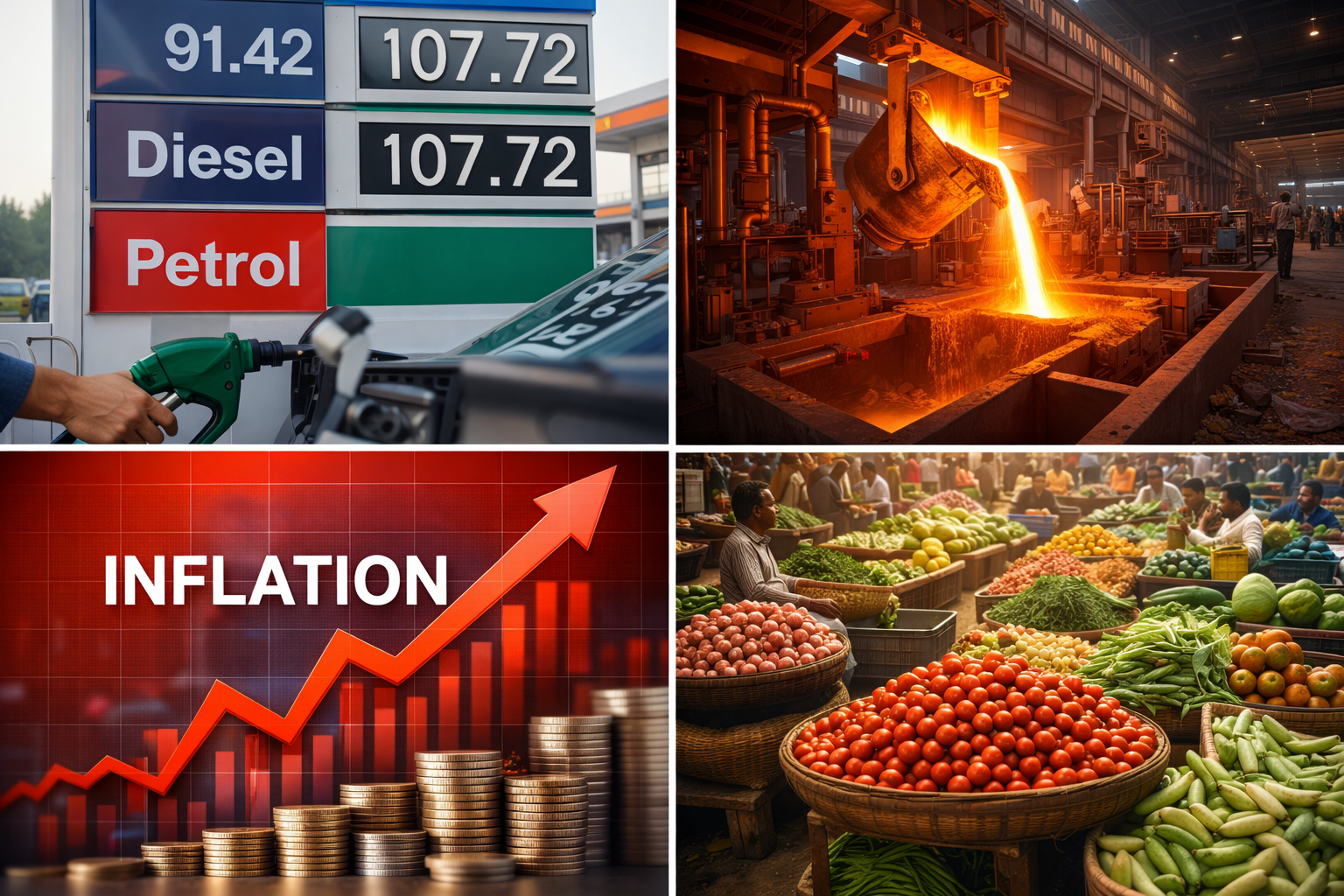
Fuel, Commodities Drive Sharp Spike in Wholesale Inflation
India’s wholesale inflation accelerated sharply to 3.88% in March 2026, marking the highest level in over three years, according to data released by the Ministry of Commerce and Industry. The figure represents a notable jump from 2.13% recorded in February, signaling rising price pressures across key sectors of the economy.
The increase was largely attributed to higher prices of crude petroleum, natural gas, basic metals, non-food articles, and select food items, indicating a broad-based rise in input costs.
Fuel and Power Segment Leads the Surge
The fuel and power category emerged as the primary driver of inflation during the month, recording a 4.13% increase.
- Prices of mineral oils surged 8.77%, reflecting global crude volatility
- Electricity prices declined by 5.07%, offering partial relief
The rise in fuel costs has had a cascading impact on transportation, logistics, and industrial production expenses.
Manufacturing Sector Sees Moderate Price Increase
Inflation in manufactured products rose by 0.88% in March, indicating steady cost escalation across industries.
Out of 22 manufacturing groups:
- 16 groups reported price increases
- 6 groups witnessed price declines
Key contributors included basic metals and other manufacturing segments, which saw input costs rise due to higher raw material prices.
Food Inflation Remains Stable at Wholesale Level
The WPI food index remained unchanged at 1.85% year-on-year, suggesting relative stability in wholesale food prices despite fluctuations in certain commodities.
This stability helped offset some of the upward pressure from fuel and industrial inputs.
Retail Inflation Holds Within Comfort Range
According to the Ministry of Statistics and Programme Implementation, India’s retail inflation (CPI) stood at 3.40% in February 2026, remaining within the central bank’s comfort band.
- Rural inflation: 3.63%
- Urban inflation: 3.11%
The modest increase in retail inflation was mainly driven by food prices and rising jewellery costs, particularly gold and silver.
Outlook: Watch Fuel Prices and Global Trends
The rise in wholesale inflation indicates renewed pressure on input costs, especially from the energy segment. While retail inflation remains relatively controlled, continued increases in fuel and commodity prices could eventually pass through to consumers.
Going ahead, movements in global crude oil prices, supply chain dynamics, and domestic demand conditions will be critical in determining the inflation trajectory.