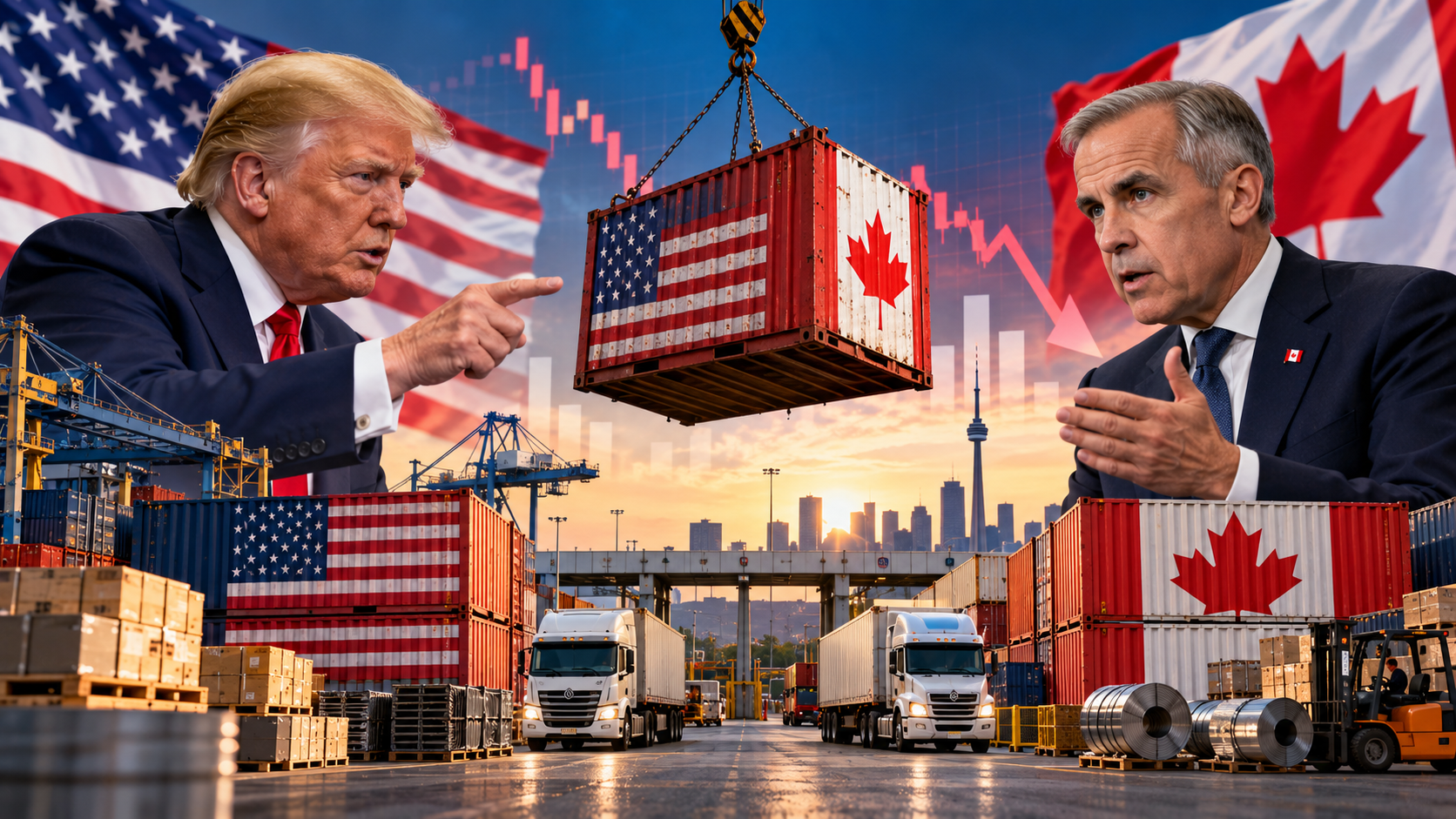
Canadian Prime Minister Mark Carney has announced a multibillion-dollar package to support steelmakers, automakers and critical mineral development, as escalating US tariffs strain decades of cross-border economic integration and increase uncertainty for manufacturers.
Canadian Prime Minister Mark Carney has warned that US President Donald Trump’s tariff policies have fundamentally changed the economic relationship between Canada and the United States. Speaking as Canada unveiled a major support package for its manufacturing sector, Carney said the tariffs were increasing costs for American households while placing Canadian workers and businesses at a disadvantage.
The announcement comes amid growing tensions over trade, automotive production and political relations between the two neighbouring countries. Canada and the United States have maintained deeply integrated industrial supply chains for decades, particularly in the automotive and steel sectors. However, Washington’s protectionist approach has increased uncertainty for businesses operating on both sides of the border.
Carney said Canada remained prepared to negotiate with Washington but emphasised that Ottawa must adapt to the changing trade environment.
Canada Announces C$8.7 Billion Manufacturing Support Package
Carney and Ontario Premier Doug Ford announced a support package worth 8.7 billion Canadian dollars, equivalent to approximately $6.2 billion, aimed at protecting Canada's manufacturing base.
The package focuses on steel production, the automotive industry and the development of critical minerals, all of which are strategically important to Canada's industrial economy.
Key allocations include:
-
Steel industry: C$5.2 billion over five years to support steelmakers.
-
Automotive sector: C$2.5 billion in support for automakers, including C$1.5 billion from the federal government.
-
Critical minerals: Measures intended to strengthen development and support industrial supply chains.
The package is designed to help businesses manage the effects of tariffs, maintain industrial capacity and navigate uncertainty in cross-border trade.
Ontario is a central part of Canada's manufacturing economy, particularly its automotive and steel industries. Any prolonged disruption to exports, production planning or investment decisions could affect employment, suppliers and regional economic activity.
The effectiveness of the support package will depend on how funds are deployed, how companies respond and whether trade conditions improve.
Trump’s Tariffs Strain Decades of Cross-Border Trade
The latest tensions follow the collapse of trade negotiations in August, when the two countries had appeared to be approaching an agreement. Trump subsequently imposed tariffs of 50% on approximately $20 billion worth of Canadian goods, prompting retaliatory measures from Canada.
The dispute has raised concerns about the future of North American supply chains, which rely on the movement of components, raw materials and finished products across national borders.
Carney argued that tariffs weaken industries in both countries by raising costs and limiting consumer choice. He also said Canadian automotive exports to the United States had fallen by more than 10%, while US exports to Canada had declined by more than 20%, according to his remarks.
These figures underscore the potential economic consequences of escalating trade barriers, although the overall impact will also depend on demand, exchange rates, production decisions and conditions in individual industries.
Automotive Industry Faces Growing Uncertainty
The automotive sector is particularly exposed because manufacturing operations in Canada and the United States are closely connected. Vehicles and their components can cross the border multiple times during production, meaning tariffs can increase costs at different stages of the supply chain.
Trump has repeatedly encouraged automakers to shift production from Canada to the United States. Such pressure could influence future investment decisions, factory locations and employment across North America.
For Canadian manufacturers, uncertainty over tariff rates and the future of trade arrangements can complicate long-term planning. Companies may delay capital expenditure, reconsider sourcing strategies or seek to diversify their export markets.
American manufacturers could also face higher input costs if Canadian components become more expensive. Depending on how businesses respond, some of those costs could eventually be passed on to consumers through higher vehicle prices.
The long-term implications will depend on whether the countries reach a negotiated settlement or maintain restrictive trade measures.
Canada Seeks to Reduce Dependence on the US Market
Carney has made export diversification a priority, setting a goal of doubling Canada's exports to markets outside the United States over the next decade.
The strategy reflects concerns about Canada's dependence on its largest trading partner. Expanding access to other markets could help Canadian businesses reduce their exposure to changes in US trade policy and create additional opportunities for exporters.
However, diversification will take time. Companies may need to establish new commercial relationships, meet different regulatory requirements and develop alternative logistics arrangements. Some industries may also find it difficult to replace the scale and proximity of the US market.
The government's latest support package is therefore part of a broader effort to strengthen domestic industrial capacity while encouraging Canadian businesses to explore opportunities beyond their traditional trading relationship.
Cleveland-Cliffs Layoffs Highlight Manufacturing Pressure
The trade dispute is unfolding alongside pressure on individual manufacturing facilities. US-owned steelmaker Cleveland-Cliffs announced layoffs at its Hamilton, Ontario, plant, highlighting concerns about the effects of uncertainty on Canadian industrial employment.
Steel is an important input for construction, machinery, infrastructure and automotive manufacturing. Changes in tariffs and cross-border demand can affect production costs, plant utilisation and investment decisions throughout these industries.
The situation also illustrates the challenge facing policymakers: supporting domestic producers without creating additional costs for downstream businesses that rely on steel and other industrial materials.
Government assistance may help affected companies in the short term, but a more durable recovery would depend on competitive production economics, stable demand and greater clarity over trade rules.
Political Tensions Add Another Layer to the Trade Dispute
Trade tensions have also become entangled with political disagreements. Carney said he had spoken with Trump for an extended period about trade and other international issues, including Iran and the Middle East. He indicated that the conversation had not produced a clear breakthrough but reiterated Canada's willingness to negotiate.
Separately, the US Embassy in Canada accused Canadian politicians of seeking to influence American politics ahead of the November midterm elections. The statement referred to Industry Minister Melanie Joly's comments about possible retaliatory tariffs targeting Republican states and Ontario Premier Doug Ford's use of an advertisement featuring former US President Ronald Reagan criticising tariffs.
Carney said Canada was responding to US trade measures, while Ford denied seeking to interfere in American elections.
The embassy also referred to cases involving Canadians charged with illegally voting in US elections. Those cases were not linked to the Canadian government in the material described, and they do not by themselves establish government-directed interference.
The political dispute adds uncertainty to an already difficult trade environment. However, the direction of future negotiations will depend on policy decisions, economic incentives and the willingness of both governments to reach an agreement.
What the Trade Dispute Means for Businesses and Investors
The evolving US-Canada trade relationship has implications for manufacturers, investors and consumers.
Companies with cross-border supply chains may face higher costs, weaker demand or delays while adjusting to tariff changes. Businesses that depend heavily on exports to the United States may also need to reassess market concentration and long-term investment plans.
For investors, the key considerations include:
-
Automotive manufacturers: Potential changes in production costs, vehicle pricing and factory investment.
-
Steel producers: The effects of tariffs, government support and demand from downstream industries.
-
Industrial suppliers: Possible disruptions to component flows and cross-border procurement.
-
Critical minerals: Opportunities linked to domestic resource development and supply-chain security.
-
Consumer markets: The potential for tariffs to raise prices or reduce product choice.
The impact will vary significantly between companies. Some domestic producers could benefit from protection or government support, while exporters and manufacturers reliant on imported components may face greater pressure.
Investors should therefore evaluate individual companies' exposure to tariffs, pricing power, geographic diversification and ability to adapt rather than assuming the dispute will affect every business in the same way.
Market Outlook
Canada's C$8.7 billion manufacturing support package signals a stronger government response to the economic risks created by US tariffs. The measures may provide financial support to steelmakers and automakers while helping Canada pursue its longer-term goal of diversifying exports.
Nevertheless, government assistance alone cannot eliminate the uncertainty surrounding cross-border trade. The automotive and steel industries will remain sensitive to tariff policy, supply-chain costs and the outcome of negotiations between Ottawa and Washington.
For businesses and investors, the next important developments will include any progress towards a trade agreement, changes in tariff measures, the implementation of Canada's support package and evidence of recovery or further weakness in cross-border exports.
Carney's warning that the relationship has changed reflects a significant shift in the policy environment. Whether this results in a prolonged restructuring of North American manufacturing or eventually leads to a revised trade arrangement will depend on decisions made by both governments in the months ahead.