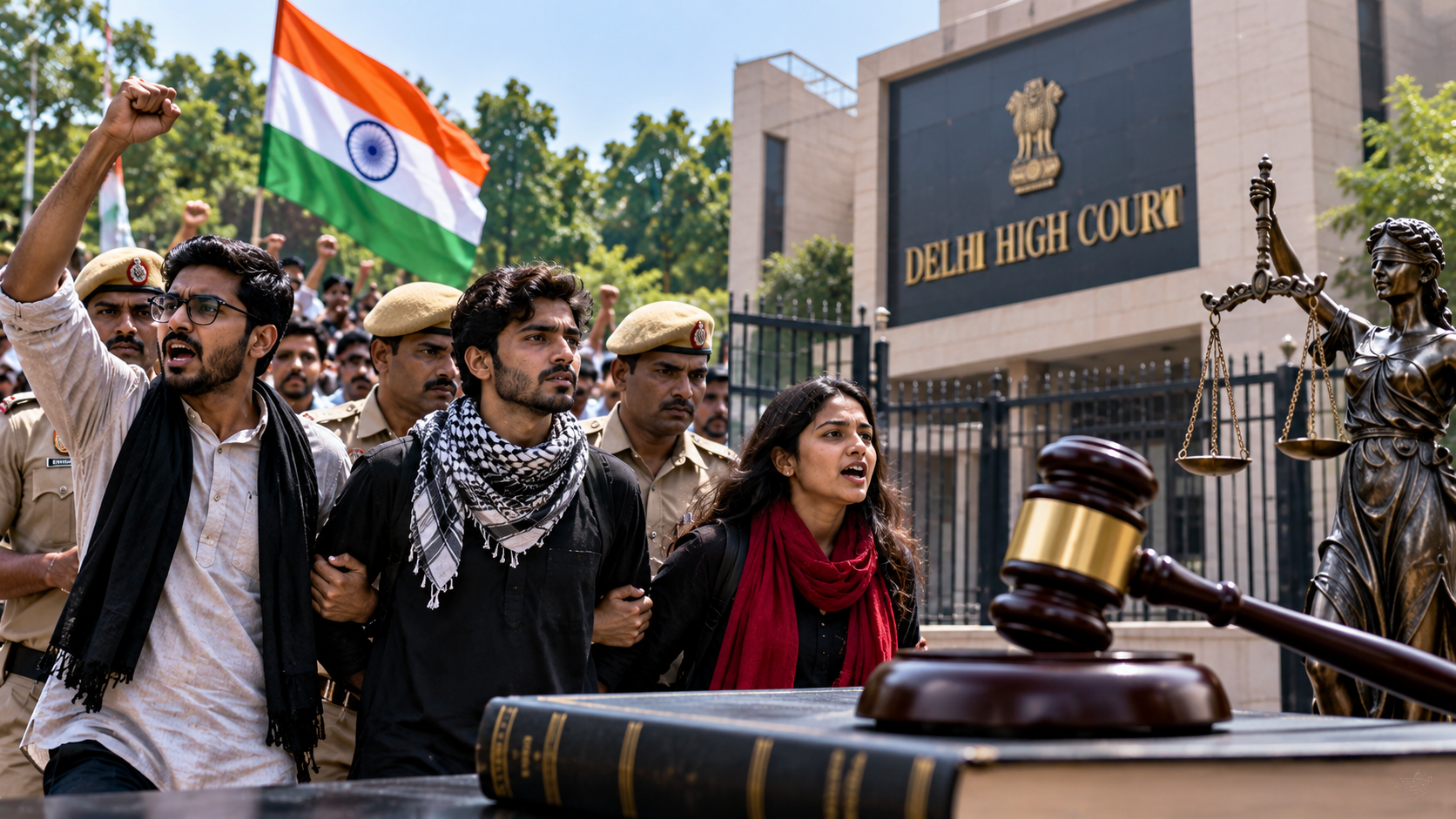
The petitions challenge preventive custody proceedings and a police notice requiring a peace bond, as questions over protest-related detentions and due process come before the Delhi High Court.
Delhi High Court Agrees to Urgent Hearing
The Delhi High Court on Wednesday agreed to urgently hear petitions filed by Cockroach Janata Party (CJP) leaders Saurav Das and Ashutosh Ranka challenging the extension of their judicial custody. The court will also consider a separate petition filed by All India Students' Association (AISA) president Neha Bora against a police notice directing her to appear before a Special Executive Magistrate (SEM) and explain why she should not be required to furnish a bond for maintaining public peace.
Justice Subramonium Prasad is scheduled to take up the matters. The High Court is observing its Dussehra vacation this week, making the decision to hear the petitions urgently significant for the individuals concerned.
The petitions raise questions about the legal basis and procedure surrounding preventive detention, the extension of custody and the use of statutory powers in connection with protests.
CJP Leaders Challenge Judicial Remand
Das and Ranka have approached the High Court against an October 19 order issued by a Special Executive Magistrate remanding them to two days of judicial custody. Their detention followed an incident on October 13 at Jantar Mantar, where they and other CJP workers allegedly entered an area that had previously been denotified as a designated protest site.
According to the police, the protesters allegedly entered the location by trespassing through private premises and obstructed police personnel from performing their official duties. The protesters reportedly displayed the national flag and raised slogans against Chief Election Commissioner Gyanesh Kumar before being detained under preventive provisions.
The two leaders were initially placed in five-day judicial custody on October 14 by a Special Executive Magistrate. A subsequent order issued on October 19 extended their custody until October 21.
The High Court petitions challenge the remand proceedings and seek judicial intervention. The precise relief granted, if any, will depend on the court's consideration of the arguments and applicable law.
CJP Alleges Deliberate Delay in Bail Proceedings
The Cockroach Janata Party has alleged that the bail proceedings involving its two co-convenors have been deliberately delayed to prevent their release. This remains the party's allegation, and the available information does not establish that a court has accepted the claim.
The dispute places attention on the procedural safeguards available to people detained under preventive measures. Such proceedings are distinct from a final determination of criminal liability, and the legal validity of an order depends on the circumstances, statutory requirements and judicial scrutiny applicable to the case.
The High Court's consideration of the petitions may clarify the immediate status of the detention orders and the arguments advanced by the petitioners. No conclusion on the merits should be drawn before the court issues its decision.
Neha Bora Challenges Police Notice Under BNSS
In a separate matter, AISA president Neha Bora has challenged a Delhi Police notice dated October 17 issued under Section 126 of the Bharatiya Nagarik Suraksha Sanhita (BNSS).
The notice asked Bora to appear before a Special Executive Magistrate on October 19 and show cause why she should not execute a personal bond of ₹10,000, supported by one surety, to maintain peace during the period of inquiry.
Bora was taken into preventive detention on October 16 while reportedly on her way to participate in the CJP's 'Lehra Do Tiranga' march. She was released on October 17.
Section 126 of the BNSS empowers an Executive Magistrate to require a person to execute a bond for keeping the peace when information indicates that the person may cause a breach of peace, disturb public tranquillity or commit an act likely to lead to such a disturbance. The provision is preventive in nature and is intended to address potential risks before they escalate.
The legality of any action under the provision depends on compliance with the prescribed procedure and the facts of the individual case. Bora's petition challenges the notice and brings its circumstances before the High Court.
Why Preventive Detention and Peace-Bond Proceedings Matter
Preventive action by the police and Executive Magistrates is intended to maintain public order, particularly when authorities anticipate a risk of violence or disruption. However, these powers operate within a legal framework and are subject to procedural safeguards and judicial review.
The distinction between preventive proceedings and punishment is important. A preventive detention or peace-bond notice does not, by itself, establish that an individual has committed an offence. Authorities must act within the limits of the law, while affected individuals can challenge measures they believe are unlawful.
The cases involving the CJP leaders and Bora therefore concern not only the immediate question of custody or a bond but also the application of preventive powers in the context of political and student protests.
What Happens Next?
The immediate focus is on the High Court's consideration of the three petitions. The court may examine the challenged custody order, the circumstances surrounding the preventive proceedings and the statutory basis of the notice issued to Bora.
The outcome could determine the next legal steps for the petitioners, although the final effect will depend on the court's orders. Any further proceedings will also be shaped by the arguments presented by the parties and the relevant records.
For now, the petitions remain legal challenges to the actions taken by the authorities. The allegations made by the party and the police's account of the incident must be assessed through the applicable legal process.