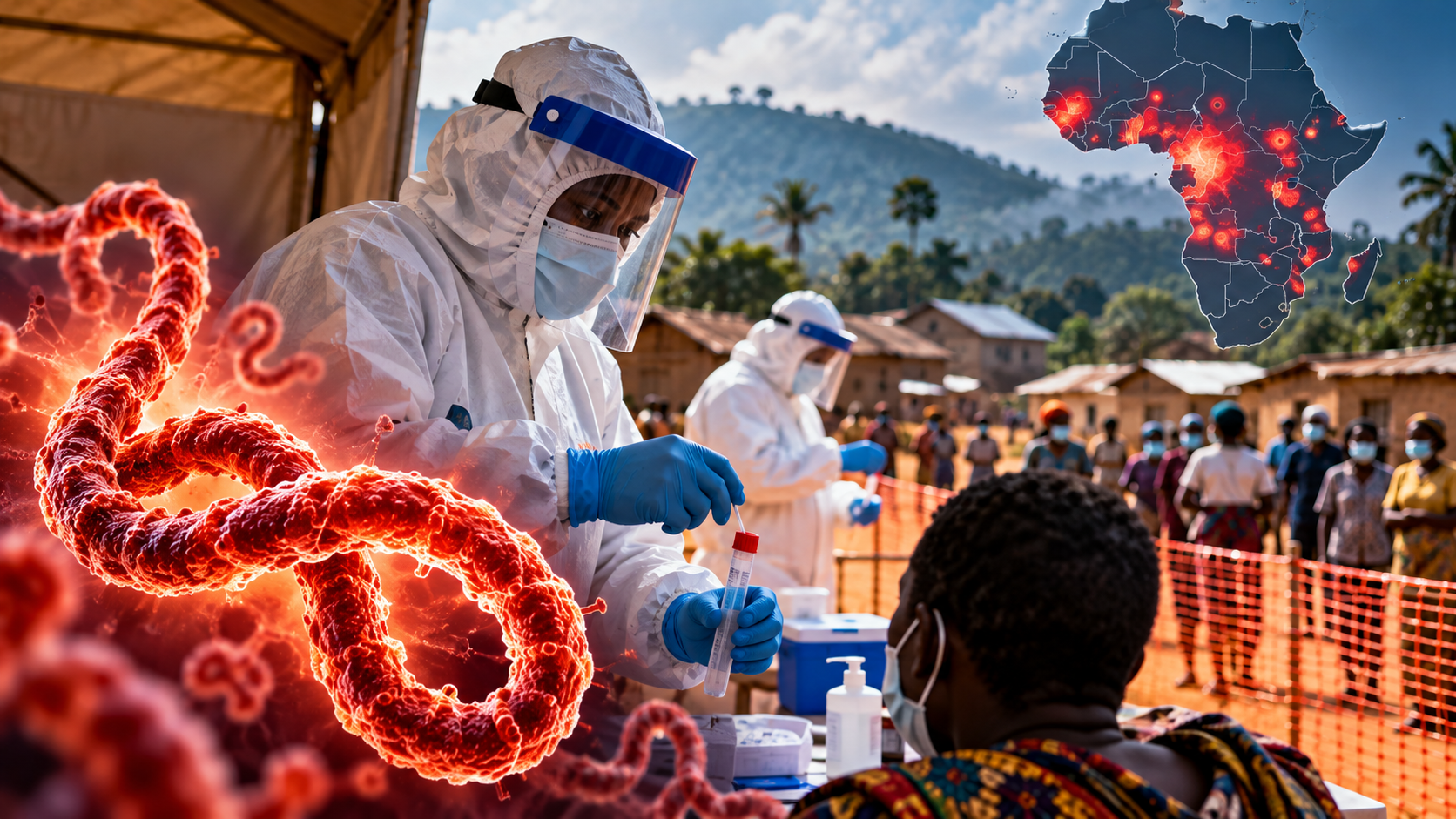
Health Ministry reports 9,066 confirmed infections and 4,381 deaths across seven provinces; community transmission, conflict and shortages of medical supplies complicate the response
The Ebola outbreak in the Democratic Republic of Congo (DRC) has crossed 9,000 confirmed cases, with the death toll rising above 4,300 as health authorities struggle to contain the spread of the virus. According to government figures released on Tuesday, October 13, 2026, the outbreak has resulted in 9,066 confirmed infections and 4,381 deaths, highlighting the scale of the public health emergency.
The outbreak has spread across 65 health zones in seven provinces, creating new hotspots and placing additional pressure on already stretched medical facilities. Authorities have also warned that community transmission remains a concern, while the number of infections recorded officially may represent only a portion of the actual outbreak.
The situation has been complicated by armed conflict, population displacement, shortages of medical supplies and difficulties in ensuring compliance with public health precautions. The growing number of cases has raised concerns about the ability of local and national authorities to bring the outbreak under control, particularly in areas where insecurity limits access to affected communities.
Death Toll Reaches 4,381 as New Cases Continue to Emerge
The Congolese Health Ministry reported 9,066 confirmed cases and 4,381 deaths. The reported fatalities amount to approximately 48% of the confirmed case count, underlining the severity of the outbreak.
However, this ratio should not be interpreted as the final fatality rate. During an ongoing outbreak, confirmed cases and deaths may be reported at different times, and the outcome of patients who are still ill may not yet be known. In addition, limited testing and incomplete reporting can affect the figures.
The latest report recorded 88 new cases and highlighted continuing transmission within communities. Health workers are particularly concerned about infections occurring outside treatment facilities, where patients may not be identified quickly enough to receive specialised care or have their contacts traced.
When infections remain undetected, people may unknowingly expose family members, caregivers and others in their communities. This can make it more difficult for health teams to identify transmission chains and prevent further spread.
Actual Scale of the Outbreak Could Be Higher
Officials have warned that confirmed cases may account for only about one-third of the total number of infections. If surveillance is incomplete, the actual scale of the outbreak could be substantially larger than official figures suggest.
Cases can go unrecorded when people cannot reach medical facilities, symptoms are not recognised promptly or families are reluctant to seek care. Insecurity and population movement can further complicate testing, reporting and follow-up.
A reliable assessment of the outbreak therefore depends not only on the number of confirmed cases but also on improvements in surveillance, laboratory capacity, contact tracing and access to treatment.
Health authorities need timely information about where infections are occurring, how people are being exposed and whether transmission is spreading into new communities. Without that information, resources may not reach the areas with the greatest need quickly enough.
Bundibugyo Virus Presents a Major Medical Challenge
The outbreak involves the Bundibugyo virus, a rare species of Ebola virus. According to the report, there is no approved vaccine or treatment specifically available for this virus, making early detection, infection prevention and supportive medical care particularly important.
Ebola can cause severe illness, with symptoms that may include fever, weakness, muscle pain, headache and gastrointestinal problems. In some cases, the disease can progress rapidly and become life-threatening.
Transmission generally occurs through direct contact with the blood or other bodily fluids of an infected person who is symptomatic, or through contaminated materials. Safe handling of patients, appropriate protective equipment, careful management of medical waste and safe burial practices are therefore essential components of outbreak control.
Although no approved vaccine or specific treatment was reported for the Bundibugyo virus in the supplied account, patients can require intensive supportive care, including fluid and electrolyte management and treatment of complications. Early access to appropriate medical care can be important in improving outcomes.
Armed Conflict and Displacement Undermine Containment
One of the most significant obstacles facing health authorities is the continuing conflict between government forces and rebel groups in parts of the country. Insecurity can prevent medical teams from reaching affected communities, delay the delivery of supplies and disrupt the operation of treatment centres.
The conflict has also contributed to a wider humanitarian crisis, forcing people to move in search of safety. Frequent movement across communities can make it more difficult to identify contacts, monitor exposed individuals and ensure that people receive timely medical attention.
Public health teams must also work with communities where confidence in official instructions may be limited. If residents do not trust health workers or cannot access reliable information, they may delay seeking treatment or avoid reporting possible exposure.
These challenges demonstrate that controlling an outbreak requires more than medical resources alone. Security, transport, community engagement and coordination between local authorities and humanitarian organisations are also critical.
Shortages of Medical Supplies and Treatment Facilities Add Pressure
The report identifies shortages of medical supplies and treatment centres as further obstacles to the response.
An effective Ebola response requires protective equipment for healthcare workers, diagnostic testing, isolation facilities, trained staff and reliable systems for transporting patients. Interruptions in any of these areas can weaken infection control and increase the risk of further transmission.
Treatment facilities must be able to isolate suspected and confirmed cases safely while providing appropriate care. Health workers also need adequate training and protection to reduce the risk of infections occurring during patient care.
Expanding access to testing and care in remote or insecure areas remains especially important. If patients are identified only after their condition has deteriorated, the opportunity to interrupt transmission earlier may be lost.
Outbreak Threatens to Surpass Previous Major Epidemics
The current outbreak has reportedly exceeded the scale of Congo’s 16 previous Ebola outbreaks. It is also being compared with the 2014–2016 West African Ebola epidemic, which killed approximately 11,000 people.
That comparison illustrates the potential seriousness of the situation, but it does not establish that the current outbreak will reach the same final death toll. The trajectory will depend on the speed and effectiveness of containment measures, the extent of undetected transmission and access to affected populations.
Samuel Buju, a resident of Bunia, the provincial capital of Ituri province, expressed concern that the government was struggling to keep pace with developments. He called for the authorities to take full responsibility for ensuring an effective response.
The comments reflect growing anxiety in communities experiencing the outbreak, where residents face both the direct health threat and the wider consequences of insecurity and limited access to essential services.
Imported Case in Kenya Raises Regional Concerns
The report also noted that Kenya had become the second country, after Uganda, to report an Ebola case imported from Congo. The development has increased concerns about the possibility of cross-border transmission.
The movement of people between countries makes regional cooperation important during a major outbreak. Border health screening, rapid information sharing, laboratory testing and the monitoring of people who may have been exposed can help authorities identify potential cases earlier.
However, cross-border detection should not be confused with widespread transmission in neighbouring countries. The risk in each location depends on the circumstances of the case, the identification of contacts and the effectiveness of local public health measures.
Coordination among affected countries and regional health bodies will be important to limit further spread while avoiding unnecessary disruption to travel and trade.
What Is Needed to Contain the Outbreak?
The immediate priorities include expanding surveillance, improving access to diagnostic testing, protecting frontline health workers and ensuring that suspected patients can reach appropriate care quickly.
Contact tracing and community engagement are equally important. Residents need clear information about symptoms, transmission risks and when to seek medical assistance. Communication should be sensitive to local concerns and delivered through trusted community representatives wherever possible.
Humanitarian access must also improve so that medical teams can reach areas affected by conflict and displacement. Adequate supplies, functioning treatment facilities and coordination among health authorities and aid organisations will be essential to strengthening the response.
International support may also be needed to address gaps in funding, equipment, personnel and logistics. The effectiveness of these efforts will depend on whether assistance reaches affected communities promptly and can be sustained.
Global Outlook
Congo’s Ebola outbreak has reached a critical stage, with 9,066 confirmed cases and 4,381 reported deaths across seven provinces. Continuing community transmission, potentially undercounted infections, armed conflict and shortages of medical resources are making containment increasingly difficult.
The reported case imported into Kenya, following an earlier case in Uganda, also underscores the importance of regional surveillance and coordination. Nevertheless, the eventual trajectory of the outbreak remains uncertain and will depend on the effectiveness of the public health response.
The most important indicators to watch are the pace of new infections, the number of deaths, the identification of transmission chains, access to treatment and evidence of spread into additional areas or countries. Strengthening community trust, protecting healthcare workers and improving humanitarian access will be central to limiting further loss of life.