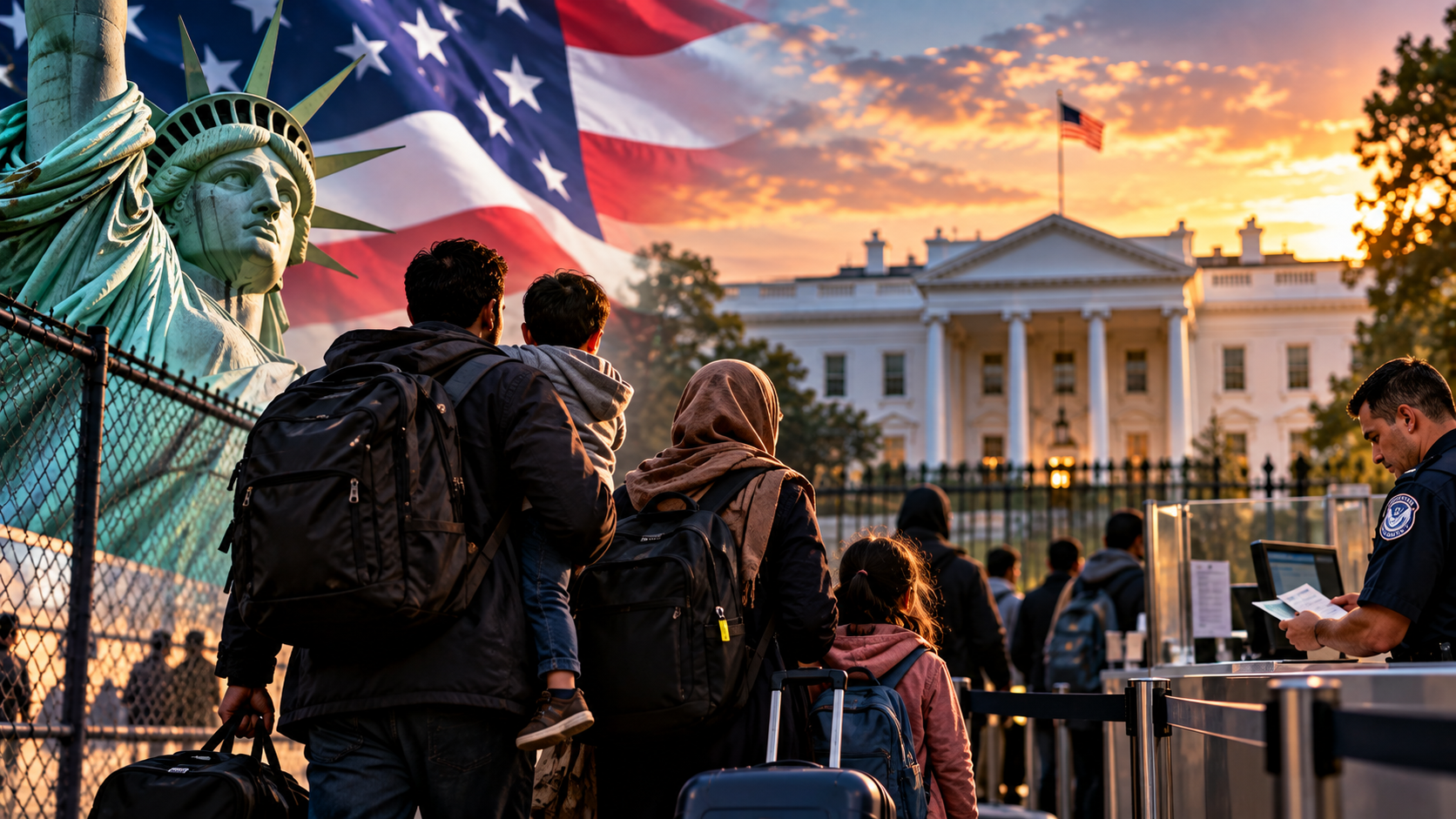
New US policy sharply reduces the time refugees have to challenge the termination of their status, while officials review thousands of cases and resettlement groups warn of risks to vulnerable families
The administration of US President Donald Trump has reduced the time refugees have to challenge the termination of their refugee status from 30 days to just 10, a policy change that has triggered concern among refugee advocacy organisations and resettlement groups. The new rule, which takes effect on Wednesday, October 14, 2026, is part of the administration’s broader effort to tighten scrutiny of the US refugee programme.
Critics warn that the shortened deadline could leave refugees with insufficient time to obtain legal representation, collect supporting documents and respond effectively to government decisions. For people who fled war, persecution and violence, the consequences could be particularly serious if the termination of their status ultimately leads to removal from the United States.
The policy document states that the measure is intended to mitigate potential risks associated with people who were admitted as refugees but may not have been eligible for that status. However, it does not specify the total number of individuals who could be affected. Refugee advocates have challenged the administration’s broader criticism of the programme and raised questions about whether the revised process provides adequate safeguards.
Why Has the US Cut the Appeal Period?
Under the new policy, refugees will have 10 days rather than 30 to contest a decision terminating their refugee status. The shorter window significantly reduces the time available to understand the government’s decision, consult an immigration lawyer, gather evidence and submit a response.
The administration has argued that stronger scrutiny is necessary to address concerns about the integrity of the refugee admission system. The policy specifically refers to refugees admitted during former President Joe Biden’s administration and describes the programme’s oversight as having deteriorated.
Refugee support organisations dispute this characterisation. They argue that people admitted through the programme have generally undergone extensive screening, interviews and background checks before receiving approval to enter the country.
The central issue is whether a 10-day deadline provides a practical opportunity for affected individuals to challenge decisions that could have significant consequences for their future. The ability to respond may depend on access to legal assistance, language services, personal records and evidence from overseas.
At Least 185,000 Cases Under Review
The policy change comes as the Trump administration is reviewing the cases of at least 185,000 refugees admitted during the Biden administration who still have pending applications for green cards, according to the reported figures.
The review has raised concerns among refugees who are waiting for permanent residency and may already be dealing with uncertainty over their immigration status.
The figure does not mean that all 185,000 people will lose refugee status or face deportation. The report does not establish how many cases will result in termination, and the precise number of people affected by the new appeal deadline remains unclear.
Nevertheless, the review indicates that the policy is being introduced amid a wider reassessment of refugee admissions and immigration procedures. Refugees with pending applications may be particularly concerned about how the new process could affect their ability to remain in the United States.
Refugee Organisations Warn of Inadequate Legal Protection
Refugee resettlement groups have criticised the shorter deadline, arguing that complex immigration cases often require more than 10 days to prepare a meaningful response.
Krish O’Mara Vignarajah, president of Global Refuge, said families had undergone interviews, background checks and lengthy waiting periods before receiving permission to enter the United States. She argued that requiring them to defend their status within such a short period could make it difficult to secure lawyers, translate documents and retrieve records from countries they had been forced to leave.
HIAS, a major refugee assistance organisation, also warned that refugees could face removal to countries where they may be exposed to violence, persecution or torture.
Naomi Steimberg, vice president of HIAS, said the policy threatened the principle that refugee resettlement provides lasting protection to people fleeing danger.
These concerns centre on the practical consequences of the reduced deadline. Even where a person has a valid basis to challenge a decision, delays in obtaining documentation or finding legal representation could make it harder to prepare a complete response.
The Department of Homeland Security had not immediately responded to a request for comment, while the State Department referred questions to DHS, according to the report.
A Longstanding Refugee Programme Faces Major Changes
The US refugee programme has historically enjoyed bipartisan support. The Refugee Act of 1980 established a formal framework for refugee admissions and protection, with screening and eligibility procedures designed to assess applications from people fleeing persecution.
The programme has since been subject to changes in annual admission targets and administrative priorities under successive presidential administrations.
During Trump’s first term, the administration sharply reduced the number of refugees admitted annually. The Biden administration subsequently expanded the programme and set a goal of admitting 125,000 refugees during the final year of his term.
After returning to the White House for a second term, Trump suspended the refugee programme, leaving some people who had been approved or were preparing to travel to the United States unable to proceed. The administration later reopened the programme with a much narrower focus.
The latest changes represent another significant shift in how refugee protection is administered, with greater emphasis on eligibility reviews and restrictions.
US Plans to Limit Refugee Admissions in 2027
In September, the administration announced plans to cap refugee admissions at 17,500 for 2027, with the majority of available places intended for white South Africans.
The proposed limit represents a substantial reduction compared with the 125,000-admission target established by the Biden administration for its final year. It also reflects a change in the administration’s priorities regarding which groups should receive access to the refugee resettlement programme.
The admissions cap and the shorter appeal deadline are separate policy measures, but both form part of a broader transformation of the US refugee system.
The implications extend beyond the number of people admitted each year. The way the government reviews existing cases, handles appeals and determines eligibility may affect refugees already living in the country, including those waiting for permanent residency.
What Could Happen Next?
The immediate impact will depend on how the new deadline is applied, how many status-termination notices are issued and whether affected refugees can access timely legal assistance. The policy’s precise reach remains uncertain because the administration has not disclosed the total number of people who could be affected.
Refugee advocacy groups are likely to continue scrutinising the process, particularly the time available to challenge decisions and the risk of returning individuals to places where they could face serious harm.
The issue also raises broader questions about administrative fairness and the balance between government oversight and protection for people admitted under established refugee procedures. Any legal challenges, subsequent guidance or changes to implementation could influence how the policy operates in practice.
Global Outlook
The US decision to cut the refugee appeal period from 30 days to 10 marks a significant tightening of procedures for people whose refugee status is challenged. While the administration says the measure is intended to address eligibility concerns, refugee organisations warn that the reduced timeframe could undermine access to legal representation and increase uncertainty for vulnerable families.
The review of at least 185,000 cases, alongside the planned 2027 admissions cap of 17,500, highlights the scale of the changes taking place within the US refugee system. However, the number of people who will ultimately lose status or face deportation remains unknown.
The key developments to watch are the implementation of the new appeal process, the number of cases reviewed, the response from refugee assistance organisations and any legal or administrative challenges. The outcome will help determine how the new rules affect both refugees already in the United States and people seeking protection in the future.