Proposed framework for pre-owned medical equipment imports remains unresolved as smaller hospitals seek affordable access to advanced diagnostic technology
India's proposed policy for importing refurbished medical devices continues to remain under discussion, nearly a year after the Centre constituted an interministerial committee to examine the issue and frame appropriate guidelines.
The policy debate has become increasingly important as hospitals and diagnostic centres, particularly in smaller cities, look for ways to reduce the capital cost of sophisticated medical equipment. Refurbished machines can provide a lower-cost alternative to new equipment, potentially allowing healthcare providers to expand diagnostic capacity with comparatively lower upfront investment.
At the same time, domestic medical-device manufacturers and other stakeholders have raised concerns about patient safety, equipment quality and the possibility of India becoming a destination for outdated or obsolete medical technology.
The government therefore faces the challenge of creating a framework that improves affordability without compromising safety, quality or the long-term development of India's medical-device manufacturing ecosystem.
Refurbished medical equipment market estimated at ₹1,500 crore
Industry executives estimate India's pre-owned and refurbished medical-device market at approximately ₹1,500 crore, equivalent to nearly 10 per cent of the overall medical-equipment market.
The size of the market indicates that refurbished equipment already plays a meaningful role in India's healthcare infrastructure.
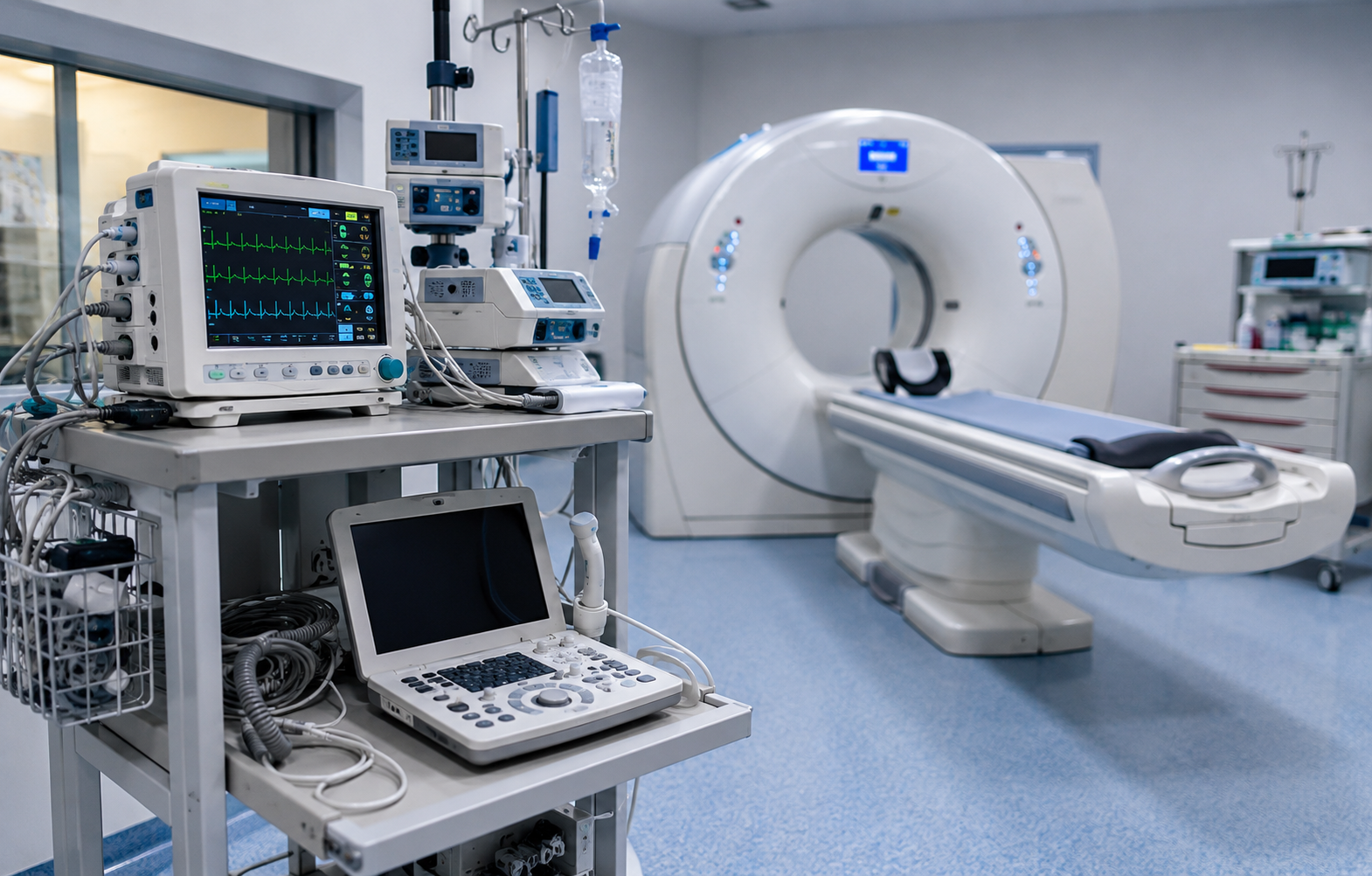
Hospitals and diagnostic centres can use refurbished machines to lower their initial capital expenditure, particularly when purchasing high-value equipment such as CT and MRI scanners.
For smaller healthcare providers, the difference in acquisition cost can have a direct impact on whether a particular diagnostic service is commercially feasible.
Smaller cities could benefit the most
The affordability argument is particularly relevant outside India's major metropolitan centres.
Large hospital chains and premium healthcare institutions generally have greater access to capital and may be better positioned to invest in the latest generation of equipment.
Smaller hospitals and diagnostic centres, however, often operate with tighter capital budgets.
Refurbished equipment can potentially allow such facilities to establish or upgrade diagnostic capabilities without committing the full cost associated with purchasing new machines.
If appropriately regulated, this could support the expansion of advanced diagnostic infrastructure beyond India's largest cities.
CT and MRI equipment remain important to the market
Sophisticated diagnostic equipment represents a major component of the refurbishment opportunity.
CT and MRI scanners require significant expenditure not only for the machine itself but also for installation, supporting infrastructure, maintenance and trained personnel.
A refurbished system can reduce the initial equipment cost, potentially improving the economics of setting up a diagnostic facility.
However, the purchase price is only one component of the overall cost.
Hospitals must also consider servicing, calibration, software upgrades, replacement components, electricity requirements, downtime and technical support.
Lower upfront cost does not always mean lower total cost
The economics of refurbished equipment need to be evaluated over the entire operating life of the machine.
An inexpensive machine can become costly if it requires frequent repairs or if replacement components are difficult to obtain.
Similarly, older systems may have limited compatibility with newer software and hospital information systems.
A proper refurbishment process can address some of these concerns, but hospitals need reliable information about the equipment's history and remaining useful life.
This makes certification and documentation particularly important.
Government faces several unresolved questions
The proposed policy needs to address a number of fundamental questions before a comprehensive framework can be implemented.
Among the most important are which devices can be imported, how old they can be, what refurbishment standards must be met and who will certify their safety and functionality.
The government also needs to establish responsibility when equipment fails after installation.
These questions are particularly important for sophisticated medical devices because malfunction can potentially affect diagnosis, treatment decisions and patient safety.
Equipment age could become a central criterion
The age of imported medical equipment is likely to be one of the most closely watched provisions.
Older machines can face challenges involving component availability, software support, energy efficiency and compatibility with current clinical practices.
At the same time, an excessively restrictive age limit could reduce the supply of affordable refurbished equipment.
The government will therefore need to determine whether age alone should be the deciding factor or whether the remaining useful life, refurbishment quality, safety certification and technological relevance should also be considered.
Refurbished equipment needs to be clearly distinguished from used equipment
A major issue in creating a regulated market is establishing a clear distinction between simply used equipment and professionally refurbished equipment.
A refurbished device should ideally have undergone a defined process of inspection, repair, replacement of defective components, calibration and performance testing.
Without standardised definitions, hospitals may find it difficult to compare equipment from different suppliers.
Clear regulatory terminology could therefore improve transparency and reduce the risk of substandard products being marketed as refurbished machines.
Independent certification could improve confidence
Certification is likely to form the backbone of any successful refurbished-equipment policy.
A standardised certification process could verify the machine's operating condition, safety characteristics and refurbishment history.
Independent testing may also reduce conflicts of interest where the same party is responsible for importing, refurbishing and selling the equipment.
For hospitals, credible certification would make it easier to assess whether a lower-cost machine provides acceptable clinical and operational reliability.
Traceability can strengthen the regulatory framework
The government could also consider stronger traceability requirements for imported refurbished devices.
Documentation could include details such as the original manufacturer, model, manufacturing year, previous operating history, refurbishment work performed, components replaced and certification status.
Maintaining such records could help regulators monitor the market and enable hospitals to make more informed purchasing decisions.
Traceability could also help identify suppliers that repeatedly introduce non-compliant or poor-quality equipment into the country.
Liability after equipment failure needs clarity
Another unresolved issue concerns responsibility when a refurbished machine fails after installation.
The final framework may need to clearly establish the obligations of importers, refurbishers, distributors and healthcare providers.
Warranty periods, service commitments, replacement obligations and liability arrangements could become important elements of the regulatory structure.
For hospitals, the availability of a clear service and warranty mechanism can be as important as the initial purchase price.
Maintenance infrastructure will determine usability
Sophisticated medical equipment requires specialised technical support.
CT and MRI machines, for example, need regular maintenance, calibration and access to trained engineers.
If imported equipment is no longer supported by its original manufacturer, hospitals could face difficulties obtaining components or specialised services.
A regulatory framework may therefore need to consider whether adequate technical support and spare-parts availability exist before allowing certain categories of equipment to be imported.
Domestic manufacturers express concerns
Indian medical-device manufacturers have a different set of concerns.
They fear that unrestricted imports of cheaper pre-owned equipment could put pricing pressure on companies manufacturing new machines domestically.
If hospitals increasingly choose imported refurbished devices because of lower acquisition costs, domestic manufacturers could face difficulties competing on price.
This could potentially affect investments in local research, manufacturing capacity and technology development.
Risk of obsolete equipment entering India
One of the central concerns is the possibility that equipment no longer commercially attractive in developed markets could be redirected to India.
A large price-sensitive market can create demand for machines that may have limited residual value elsewhere.
Without appropriate safeguards, India could potentially receive equipment that lacks adequate manufacturer support or is technologically outdated.
This is why policymakers are considering not just whether equipment works, but whether it remains appropriate for continued use in India's healthcare system.
Policy needs to avoid a blanket approach
A uniform regulatory rule for all medical devices may not be appropriate because different devices present different levels of risk.
A basic, lower-risk device may not require the same level of scrutiny as a sophisticated imaging or life-support system.
A risk-based approach could therefore allow regulators to impose stricter certification and inspection requirements on higher-risk categories while maintaining relatively simpler procedures for lower-risk equipment.
Such a structure could improve access without weakening safety standards.
High-risk devices may require stronger safeguards
Equipment directly involved in critical diagnosis or patient treatment could warrant additional safeguards.
For sophisticated imaging equipment, regulators may need to consider performance accuracy, radiation safety where applicable, software reliability and calibration.
Similarly, equipment used in critical-care settings may require particularly stringent testing before being approved for import.
A differentiated framework could help ensure that regulatory resources are concentrated on areas where failure could have the greatest consequences.
Healthcare affordability remains an important consideration
The government also needs to consider the broader economic impact of equipment costs.
High capital expenditure can ultimately influence the cost of healthcare services.
If diagnostic centres have to recover large equipment investments through patient fees, expensive new machines could contribute to higher diagnostic charges.
Refurbished equipment, when safe and properly maintained, could potentially reduce the capital burden and allow providers to offer services at more accessible prices.
The potential affordability benefit is therefore one of the strongest arguments in favour of allowing a regulated refurbished-equipment market.
Improved diagnostic capacity could support smaller markets
Healthcare providers in smaller cities may find it easier to justify investment in refurbished machines than new equipment.
This could help expand access to advanced diagnostics in locations where patient volumes may not yet support the economics of a new high-cost machine.
Over time, a wider distribution of diagnostic equipment could reduce the need for patients to travel to major cities for certain investigations.
The benefit would depend on equipment quality, trained personnel and appropriate clinical support.
Refurbishment can create a new services ecosystem
A properly regulated market could generate opportunities beyond the import of used machines.
Specialised businesses could emerge around refurbishment, testing, calibration, maintenance, logistics and equipment lifecycle management.
These activities could create an organised secondary market for medical technology.
The development of such an ecosystem could also improve equipment utilisation by extending the productive life of machines that remain clinically and technically suitable.
Potential opportunity for medical-equipment service companies
Service providers could become important beneficiaries if the refurbished market expands.
Hospitals would require technical support for installation, maintenance and periodic certification.
Companies capable of servicing multiple equipment brands could potentially develop a larger market as the installed base of refurbished devices increases.
This could create recurring revenue opportunities through annual maintenance contracts and other service arrangements.
Financing could become easier with regulatory clarity
A clear regulatory framework could also influence the availability of financing for refurbished medical equipment.
Banks and equipment-financing companies may be more comfortable lending against machines with recognised certification, predictable residual value and documented service histories.
At present, uncertainty surrounding the regulatory treatment of certain refurbished devices can increase perceived risk.
Standardised rules could therefore help connect healthcare providers with financing options while making equipment valuation more transparent.
Insurance could become another supporting market
The emergence of a formal refurbished-equipment market could also create demand for specialised insurance and warranty products.
Healthcare providers purchasing expensive equipment may want protection against breakdowns, repair expenses and certain operational risks.
Standardised certification and maintenance records could make it easier for insurers to assess these risks.
Over time, this could contribute to the development of a broader financial ecosystem around refurbished medical technology.
Domestic manufacturing and refurbished imports need a balanced approach
The final policy will have to balance healthcare affordability against India's ambitions to strengthen domestic medical-device manufacturing.
Restricting refurbished imports too heavily could raise equipment costs for hospitals.
Allowing imports without adequate safeguards could undermine patient safety and create competitive pressure on domestic manufacturers.
A balanced framework could potentially allow refurbished equipment that meets defined safety, performance and technological standards while preventing the import of obsolete or unsupported machinery.
Policy clarity could benefit all stakeholders
A transparent framework would provide greater certainty to hospitals, diagnostic centres, manufacturers, importers, refurbishers, financiers and insurers.
Healthcare providers would know which equipment can legally be imported and what certifications they should demand.
Importers would have clearer compliance requirements.
Domestic manufacturers would have greater visibility on the competitive environment.
Regulators would have a defined mechanism for monitoring equipment quality and enforcing standards.
Implementation will be as important as the rules
Even a well-designed policy will require effective implementation.
Regulators will need sufficient technical expertise and inspection capacity to evaluate imported equipment.
Certification bodies will need to operate according to consistent standards.
Hospitals will also need awareness about the documentation and maintenance requirements associated with refurbished machines.
Weak implementation could undermine otherwise strong regulations.
A transparent database could improve market confidence
A central database containing information on certified refurbished equipment could potentially improve transparency.
Such a system could record certification status, equipment model, manufacturing year, refurbishment details and validity periods.
Hospitals could use this information when evaluating purchases, while regulators could use it for monitoring and enforcement.
The approach could also discourage the circulation of equipment that does not meet prescribed requirements.
Final framework could determine the market's future direction
The eventual policy is likely to determine whether India's refurbished medical-device market becomes a more formal and institutionalised segment.
Important provisions are expected to revolve around:
-
Permitted categories of refurbished medical devices.
-
Maximum equipment age or remaining useful-life requirements.
-
Mandatory refurbishment standards.
-
Safety and performance testing.
-
Independent certification.
-
Documentation and traceability.
-
Warranty and after-sales support.
-
Availability of spare parts and technical expertise.
-
Importer and refurbisher responsibilities.
-
Treatment of obsolete or unsupported equipment.
-
Monitoring and enforcement mechanisms.
The clarity and practicality of these provisions will determine the pace at which the market develops.
Policy delay reflects the complexity of the issue
The continued discussions nearly a year after the interministerial committee was established underline the competing interests involved.
On one side is the need to improve access to advanced medical technology at affordable prices.
On the other are patient-safety concerns and the government's broader objective of encouraging a strong domestic medical-device industry.
The final framework will therefore need to move beyond simply deciding whether refurbished equipment should be permitted.
It will need to establish a complete lifecycle framework covering import, certification, installation, maintenance, operation and eventual disposal.
Refurbished equipment could support India's healthcare expansion
India's healthcare infrastructure is expanding, but access to sophisticated diagnostic technology remains uneven across regions.
A properly regulated refurbished-equipment market could become one component of the solution by lowering the capital barrier for hospitals and diagnostic centres.
The greatest potential could lie in smaller cities and underserved markets where healthcare providers need affordable ways to introduce advanced diagnostic services.
However, affordability cannot come at the expense of patient safety.
The long-term success of the market will depend on whether the government can create a system in which only equipment that is demonstrably safe, functional, supportable and clinically relevant reaches healthcare providers.
Market Outlook
India's refurbished medical-device market has the potential to become an important component of healthcare infrastructure, particularly for smaller hospitals and diagnostic centres seeking to control capital expenditure.
The estimated ₹1,500 crore market already indicates meaningful demand for pre-owned medical equipment. A transparent regulatory framework could formalise this demand, improve quality standards and create opportunities across refurbishment, maintenance, certification, financing and insurance.
The biggest opportunity lies in expanding access to advanced diagnostic equipment without imposing the full capital burden associated with new machines. However, the market's development will depend on strict safeguards against obsolete or unsafe equipment.
For domestic medical-device manufacturers, the final policy will need to maintain a level playing field while ensuring that legitimate refurbished equipment can serve healthcare providers where affordability is a genuine constraint.
A risk-based regulatory framework, supported by independent certification, equipment traceability, clear age or remaining-life standards, mandatory maintenance requirements and defined liability could provide the most sustainable path forward.
If implemented effectively, the policy could help create a more organised secondary medical-equipment market while supporting the expansion of diagnostic infrastructure. Until the government finalises the framework, however, hospitals, importers and manufacturers are likely to continue operating with considerable uncertainty.