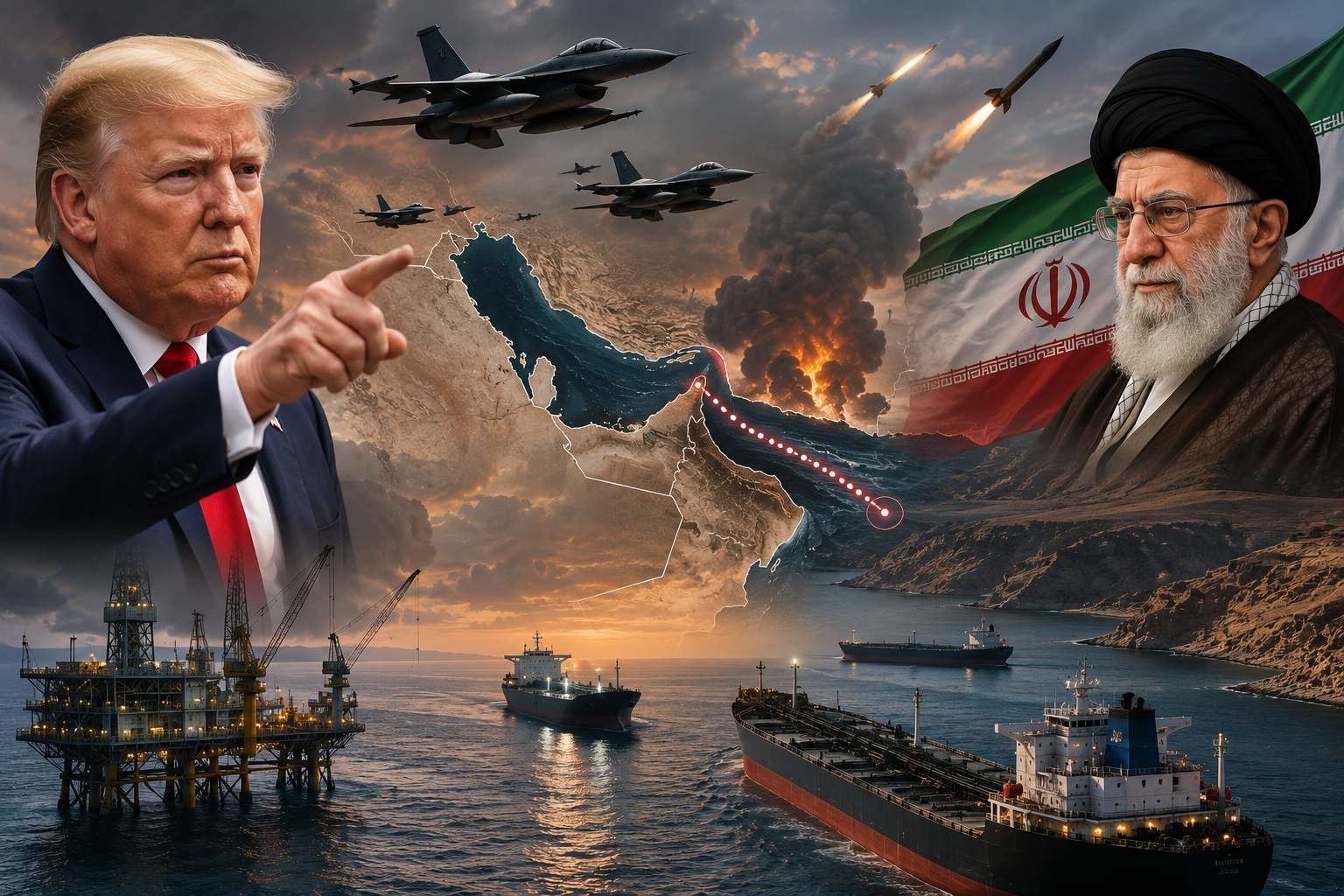
Renewed US-Iran Fighting Raises Fears of Prolonged Energy Shock
US President Donald Trump has said that the latest US military attacks on Iran are unlikely to continue for a long period, even as renewed fighting has pushed energy prices higher and revived concerns about a prolonged conflict across West Asia.
Trump's comments came after the United States conducted another round of strikes against Iranian military targets and Iran responded with missile and drone attacks against US military positions across the region.
The escalation has placed the Strait of Hormuz back at the centre of global economic concerns. The strategic waterway is critical for international energy supplies, and any prolonged disruption could affect crude oil, natural gas, refined fuels and other commodities.
While Trump's comments have offered some relief to markets by suggesting that the current military escalation may be temporary, investors remain cautious because the conflict has already demonstrated its ability to disrupt energy flows and increase geopolitical risk premiums.
Trump Reiterates Claim of US Control Over Hormuz
Trump has again asserted that the United States has control over the Strait of Hormuz, following American military operations against Iranian capabilities positioned along the waterway.
According to Trump, US forces destroyed equipment that Iran had developed around the Strait, including systems that he described as both defensive and offensive. He also indicated that Washington could conduct additional military operations whenever it considered them necessary.
The statement highlights the strategic importance of the waterway in the current confrontation. Control or effective access to Hormuz is critical because the route connects the Persian Gulf with international shipping lanes.
For financial markets, the key question is whether military tensions remain limited to military targets or begin to interfere more significantly with commercial shipping.
US Carries Out Fresh Strikes on Iranian Military Targets
The US military launched a second major wave of attacks within three days, targeting radar systems and capabilities associated with naval mine deployment along Iran's southern coast.
The operations followed a period of approximately one month in which direct fighting between the two sides had eased. Iran subsequently retaliated with missile and drone attacks against US bases and military facilities in several West Asian countries.
The absence of newly announced US strikes on Wednesday night provided some temporary relief, but the situation remains fluid.
The continuation of military deployments in the region suggests that Washington wants to retain the ability to respond quickly if Iranian attacks intensify.
Iran Retaliates Against US Positions Across West Asia
Iran has continued its retaliatory campaign against American military installations in the region.
Kuwait's military said its air-defence systems were responding to missile and drone threats. Kuwait hosts American military personnel and has been among the regional locations affected by Iranian counter-attacks.
The widening geographical reach of the attacks is an important risk factor for financial markets. Any direct involvement of additional Gulf states could increase uncertainty around oil production, refinery operations, ports and shipping infrastructure.
A broader regional confrontation would also increase the probability of prolonged disruption to energy markets.
Strait of Hormuz Emerges as the Biggest Market Risk
The Strait of Hormuz is one of the world's most strategically important energy corridors. Any sustained interruption to shipping through the waterway could create a supply shock at a time when markets are already sensitive to geopolitical risks.
During the recent period of reduced fighting, oil shipments through Hormuz recovered to around half of pre-war levels. Renewed military activity could threaten that recovery.
A reduction in tanker traffic could create several layers of pressure on the global energy market:
-
Higher crude oil prices due to supply concerns
-
Increased tanker insurance and freight costs
-
Longer shipping routes if vessels avoid the region
-
Higher prices for refined petroleum products
-
Increased natural gas market volatility
-
Greater inflationary pressure on importing economies
The longer the disruption continues, the more likely it becomes that these temporary risks translate into broader economic consequences.
Crude Oil Prices Remain a Major Concern
Oil markets reacted to Trump's comments, with Brent crude easing modestly during early trading. However, the benchmark remained sharply higher over the week and year.
Brent crude was around $95 per barrel in the latest update, remaining approximately 7 per cent higher during the week and around 57 per cent higher during the year.
The elevated price level reflects the risk premium associated with the conflict rather than simply changes in underlying global demand.
If the military confrontation remains contained, some of that geopolitical premium could eventually disappear. However, any attack affecting tankers, ports, pipelines or production infrastructure could quickly push crude prices higher.
Refined Fuel Prices Add to Inflation Concerns
The impact of the conflict is not limited to crude oil.
Refined fuels have also become significantly more expensive, increasing pressure on transportation and industrial costs. Higher diesel prices are particularly important because diesel is widely used across logistics, road transport, agriculture and industrial activity.
A sustained increase in energy costs could therefore pass through multiple stages of the economy.
Higher transportation expenses can raise the cost of moving goods, while manufacturers may face higher input costs. Businesses could eventually transfer part of those increases to consumers, creating another source of inflation.
Central banks could consequently face a difficult policy environment if oil prices remain elevated for an extended period.
Global Bond Markets Also Face Pressure
The latest energy shock comes at a time when global investors are already closely watching inflation and interest-rate expectations.
A sharp increase in crude prices can complicate the fight against inflation. If central banks believe higher energy costs could become embedded in broader price pressures, expectations for interest-rate cuts may be pushed further into the future.
This can affect government bond yields and equity valuations.
Higher bond yields generally increase the discount rate applied to future corporate earnings, potentially putting pressure on expensive growth stocks and technology companies.
As a result, the consequences of the Iran conflict could extend well beyond energy and defence stocks into global asset allocation.
Civilian Casualty Claims Intensify Political Tensions
The latest military escalation has also resulted in competing claims regarding civilian casualties.
Iranian authorities accused the United States of striking a wedding ceremony in the southern coastal city of Sirik. The Iranian Red Crescent reported several deaths and dozens of injuries and warned that the number of casualties could rise.
The US Central Command rejected the suggestion that civilians were deliberately targeted, stating that American forces do not target civilians.
Iranian officials have linked the latest incident to an earlier strike on an elementary school in Minab during the initial phase of the conflict.
The allegations and counterclaims could further complicate diplomatic efforts and increase political pressure on both governments.
Diplomatic Negotiations Remain Uncertain
The possibility of a diplomatic settlement remains unclear.
The US and Iran have not demonstrated a clear willingness to return to negotiations after an interim peace arrangement reached in June collapsed.
Washington continues to rely on economic and military pressure, while Tehran has called on regional governments to prevent the US from using their territory and military facilities for attacks.
US officials have argued that Iran's deteriorating economic situation could eventually force its leadership back to the negotiating table.
Iran, however, continues to resist US pressure, making the timing and possibility of renewed negotiations uncertain.
Iran Faces Growing Economic Pressure
The prolonged confrontation is adding to an already difficult economic environment for Iran.
The country is dealing with very high inflation, a severely weakened currency and rising unemployment. Restrictions on energy exports and the impact of the military confrontation are placing additional pressure on government finances and domestic economic activity.
A US naval blockade affecting Iranian ports could further constrain the country's ability to export energy.
For Iran, the economic consequences of the conflict could therefore become an important factor in determining its willingness to continue military operations or return to negotiations.
Conflict Risks Extend Beyond Iran
The broader West Asian security environment remains fragile.
Israel has continued military operations against Hezbollah targets in southern Lebanon, while the fragile Gaza ceasefire has also come under pressure.
The simultaneous presence of several conflict zones creates the possibility of a wider escalation. Any expansion involving major regional powers or critical infrastructure could have consequences for global oil and shipping markets.
Investors are therefore watching not only direct US-Iran developments but also developments in Lebanon, Gaza and the Gulf region.
Potential Impact on India
India is particularly sensitive to developments in West Asia because of its dependence on imported crude oil.
A sustained rise in global crude prices can increase India's import bill and put pressure on the rupee. It can also affect inflation, transportation costs and corporate margins.
Several sectors could experience different effects:
Aviation: Higher aviation turbine fuel and crude prices can increase operating costs and put pressure on airline margins.
Logistics and Transport: Higher diesel and freight costs could increase operating expenses.
Paints and Chemicals: Energy and crude-linked raw materials can become more expensive.
Oil Marketing Companies: Retail fuel pricing and government policy will determine the extent to which higher international crude prices affect margins.
Upstream Energy Companies: Producers may benefit from higher crude prices, depending on their production and pricing structures.
Shipping: Higher freight rates can create opportunities for some shipping companies, although geopolitical risks and insurance costs can also increase.
Rupee and Inflation Could Come Under Pressure
An extended oil shock could create additional pressure on India's external balance.
Higher crude prices mean that India needs to spend more foreign currency on energy imports unless the increase is offset by stronger exports or other capital inflows.
This can place pressure on the rupee and increase the cost of imported goods.
If fuel and transportation costs rise significantly, inflation could also become more persistent. That could complicate monetary policy decisions and affect interest-sensitive sectors.
However, India's ability to manage the situation would depend heavily on the duration of the oil price shock and the extent to which global supply chains remain operational.
Equity Markets Could See Sector Rotation
The conflict could create significant divergence between sectors rather than producing a uniform market reaction.
Energy producers and selected defence-related companies may benefit from higher commodity prices or increased government spending, while fuel-sensitive sectors such as aviation, paints, logistics and some manufacturing industries could face margin pressure.
Information technology and other relatively less energy-intensive sectors could be influenced more by global risk appetite, currency movements and bond yields.
For investors, the direction of crude oil could therefore become an important short-term indicator for sector allocation.
What Investors Should Watch Next
Markets are likely to focus on several developments in the coming sessions:
-
US military operations: Whether Washington conducts additional strikes against Iran.
-
Iranian retaliation: The frequency and scale of missile and drone attacks on US and regional targets.
-
Hormuz shipping activity: Whether tanker traffic continues to recover or declines again.
-
Crude oil prices: Whether Brent remains above key psychological levels.
-
Regional involvement: Any escalation involving Gulf countries, Israel, Lebanon or other regional actors.
-
Diplomatic developments: Any indication that Washington and Tehran are preparing to resume negotiations.
-
Inflation expectations: Whether the energy shock begins influencing global monetary-policy expectations.
These factors will determine whether the latest oil-price spike remains temporary or develops into a broader global economic shock.
Market Outlook
The near-term market outlook remains highly dependent on the duration and geographical spread of the US-Iran confrontation.
Trump's statement that the renewed attacks are likely to be short-lived could limit some of the immediate geopolitical risk premium in crude oil. However, the continued deployment of US forces, Iranian retaliation and uncertainty around the Strait of Hormuz indicate that the risk of further escalation remains.
If military activity subsides and commercial shipping through Hormuz normalises, crude prices could retreat from elevated levels and provide relief to global equities, currencies and inflation-sensitive sectors.
Conversely, a prolonged conflict or significant disruption to tanker traffic could push crude prices higher, increasing inflationary pressure and weighing on global risk assets.
For Indian markets, crude oil, the rupee and foreign institutional investor flows are likely to remain key indicators. A sustained oil shock would be negative for fuel-sensitive sectors and could increase volatility, while any meaningful de-escalation could quickly improve investor sentiment and support a broader recovery in equities.