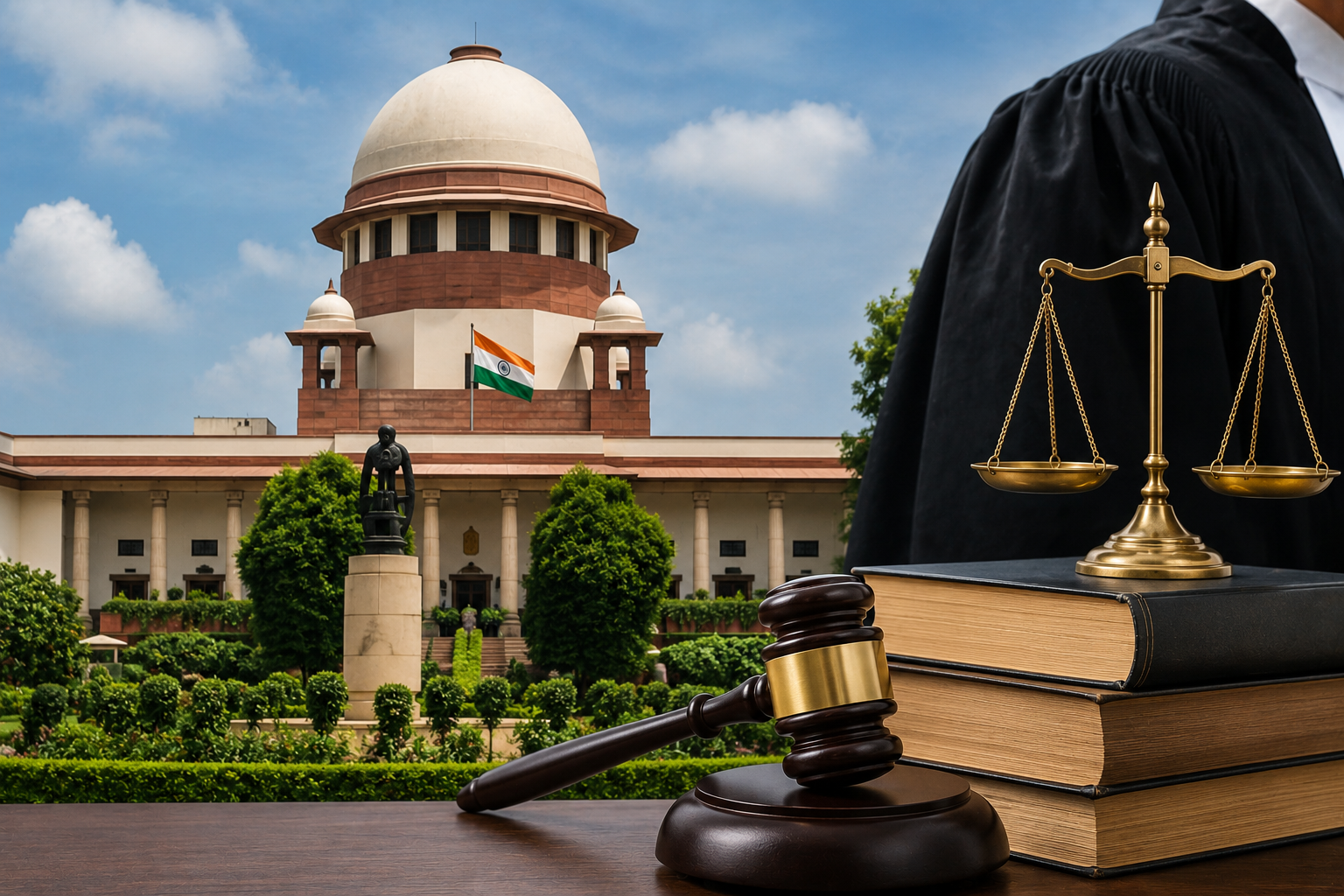
Top court hears challenge to prolonged tenure of BCI chairman Manan Kumar Mishra and stresses greater legal oversight in policy matters
The Supreme Court on Wednesday directed the Bar Council of India (BCI) to actively associate the Attorney General for India and the Solicitor General for India with every policy decision taken by the council.
The direction came while the top court was hearing petitions challenging the prolonged tenure of BCI chairman Manan Kumar Mishra and seeking his removal from the post.
A bench comprising Chief Justice Surya Kant and Justices Joymalya Bagchi and V Mohana heard the pleas and emphasised the need for consultation with the country's two senior law officers when the BCI takes policy decisions.
The development places the functioning and governance of the apex regulatory body for India's legal profession under closer judicial scrutiny.
Supreme Court calls for active participation of top law officers
During the proceedings, the bench said that the Attorney General for India and the Solicitor General for India should be “actively associated” with every policy decision taken by the Bar Council of India.
The direction effectively seeks greater legal oversight in the policy-making process of the council.
The Attorney General and Solicitor General occupy important positions in India's legal system and advise the government on significant legal matters. Their involvement in BCI policy discussions could provide additional legal scrutiny to decisions affecting the legal profession and legal education.
The court's direction is particularly significant as the proceedings involve questions concerning the functioning and leadership of the BCI.
Challenge centres on BCI chairman's prolonged tenure
The Supreme Court was hearing pleas that question the legality of the prolonged tenure of BCI chairman Manan Kumar Mishra.
According to a petition filed by advocate Yogamaya MG, Mishra was initially elected chairman of the BCI for a term extending until 2012.
The petition stated that Mishra briefly demitted office in 2014 but returned as chairman in November of the same year and has continued in the position since then.
The petitioner has challenged the continuation and sought Mishra's removal from the post.
The issues raised remain subject to judicial examination, and the allegations contained in the petition should not be treated as established findings.
BCI holds a central position in the legal profession
The Bar Council of India occupies an important position in India's legal and judicial ecosystem.
The council is responsible for regulating several aspects of the legal profession and legal education. It also prescribes standards of professional conduct for advocates and plays a role in maintaining standards across the country's legal institutions.
Its decisions can therefore affect a wide group of stakeholders.
These include practicing advocates, law students, law colleges, universities, State Bar Councils and other institutions connected with legal education and professional regulation.
Consequently, questions relating to the council's governance and leadership can have implications beyond the individuals directly involved in the present proceedings.
Governance and accountability come into focus
The Supreme Court's direction brings institutional governance into sharper focus.
Regulatory bodies exercise significant authority over the sectors they oversee, making transparent decision-making and adherence to applicable rules important aspects of institutional functioning.
The requirement that the Attorney General and Solicitor General be actively associated with BCI policy decisions could introduce an additional layer of legal review.
It could also ensure that major policy decisions are considered from a broader legal and institutional perspective.
Tenure issue remains before the court
The question surrounding Mishra's tenure is separate from the court's direction regarding consultation on BCI policy decisions.
The petitioners have raised questions concerning the length of Mishra's continuation as chairman and the legal basis for his repeated tenure.
The Supreme Court will have to consider the applicable legal and regulatory provisions and the arguments advanced by the parties before reaching any final conclusion.
The court's latest direction should therefore not be interpreted as a final ruling on the validity of the chairman's tenure.
Why BCI decisions matter to law students
The BCI's responsibilities extend significantly into legal education.
The council plays a role in prescribing standards for legal education and regulating institutions involved in training future advocates.
Any major policy decision concerning legal education can therefore have consequences for students, law colleges and universities.
Issues such as professional standards, eligibility requirements, legal education norms and recognition of institutions can affect the wider legal education ecosystem.
Greater legal consultation on policy matters could consequently be relevant to stakeholders beyond the practising bar.
Implications for practising advocates
BCI decisions also have a direct bearing on practising lawyers.
The council is involved in matters relating to professional conduct and standards applicable to advocates.
Policy changes can influence professional requirements, disciplinary frameworks and the relationship between the BCI and State Bar Councils.
For advocates, the institutional stability and credibility of the BCI are therefore important for the effective functioning of professional regulation.
State Bar Councils and the wider regulatory framework
The BCI operates within a broader framework involving State Bar Councils.
The functioning of the national-level council can therefore have implications for how professional regulation is coordinated across different states.
The Supreme Court's emphasis on consultation could potentially strengthen the legal scrutiny surrounding policies that have implications across the country's legal profession.
However, the practical impact of the direction will depend on how the consultation mechanism operates in future policy decisions.
Judicial scrutiny of institutional functioning
The proceedings also demonstrate the Supreme Court's role in examining questions concerning statutory and professional bodies when their functioning or leadership is challenged before it.
The court's intervention does not necessarily mean that every policy decision of a regulatory institution is invalid or requires judicial approval.
Instead, the present direction specifically emphasises the involvement of the Attorney General and Solicitor General in BCI policy decisions while the court considers the issues before it.
Institutional stability remains important
Leadership continuity can be important for any regulatory institution because frequent changes can affect policy implementation and administrative functioning.
At the same time, the legitimacy of a leadership arrangement depends on compliance with the applicable legal and regulatory framework.
The current proceedings bring both considerations into focus.
The Supreme Court's eventual determination on the tenure issue could provide greater clarity regarding the applicable rules and the functioning of the BCI's leadership structure.
Broader significance for regulatory governance
The case could also attract attention from the perspective of governance of professional regulatory bodies.
India has several statutory and professional institutions responsible for regulating specific sectors. Their credibility depends not only on the decisions they make but also on the transparency and legality of the processes through which those decisions are taken.
The Supreme Court's emphasis on legal consultation in the BCI context highlights the importance of institutional checks and balances.
It also reinforces the principle that significant policy decisions should operate within a clearly defined legal framework.
What happens next
The Supreme Court will continue examining the petitions and the issues raised regarding Mishra's prolonged tenure.
The immediate direction requires the Attorney General and Solicitor General to be actively associated with BCI policy decisions.
The eventual proceedings will determine how the court addresses the challenge to the chairman's tenure and whether any further directions are necessary regarding the council's functioning.
Until the court reaches a final conclusion, the claims made by the petitioners remain allegations under judicial consideration.
Key points to watch
The developments in the case will be closely watched for:
-
The Supreme Court's eventual view on the legality of the prolonged BCI chairmanship.
-
The interpretation of rules governing the tenure of the BCI chairman.
-
The role of the Attorney General and Solicitor General in future BCI policy decisions.
-
Any further directions concerning the council's governance.
-
The potential impact on legal education and professional regulation.
-
The implications for the relationship between the BCI and State Bar Councils.
Market Outlook
The Supreme Court's latest direction is primarily a legal and institutional development rather than a market-moving event. The immediate significance lies in strengthening legal consultation and oversight around policy decisions of the Bar Council of India.
The more important issue for the legal sector will be the court's eventual determination on the challenge to BCI chairman Manan Kumar Mishra's prolonged tenure. A clear judicial interpretation could provide greater certainty regarding leadership and governance within the country's apex body for legal-profession regulation.
For the broader institutional framework, the case highlights the importance of transparent governance, clearly defined tenure rules and legal oversight in statutory and professional regulatory bodies.