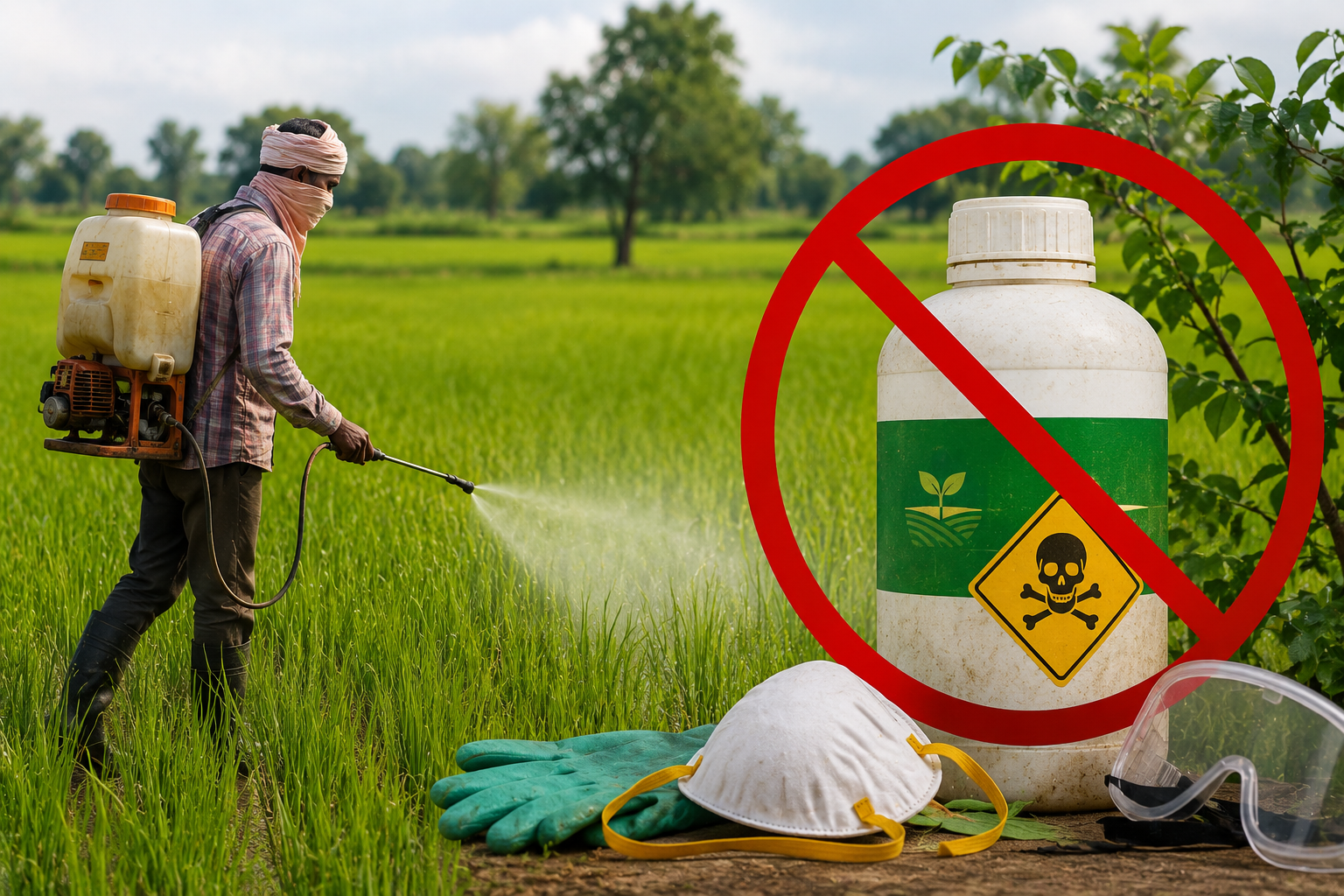
Expert panel cites toxicity and environmental risks, while agrochemical industry warns of higher pest-management costs and limited alternatives for farmers
The central government has proposed a ban on carbosulfan, a widely used insecticide in Indian agriculture, following recommendations from an expert panel that flagged concerns over its toxicity to humans, animals and non-target species.
The proposed prohibition would cover the manufacture, import, transport, distribution, sale and use of carbosulfan under the Insecticides Act, 1968. The move has triggered concern within the agrochemical industry, which argues that the chemical remains an important tool for controlling several economically significant pests across major crops.
The government’s draft notification has been opened for public comments and suggestions for 30 days. A final decision is expected after the consultation process is completed.
Expert Panel Recommends Complete Prohibition
The Ministry of Agriculture constituted a high-level expert committee on January 14, 2026, to examine the continued use of carbosulfan in India.
The committee submitted its report to the government on June 12, recommending a complete prohibition of the insecticide.
According to the government notification, the panel classified carbosulfan as an intrinsically highly hazardous carbamate insecticide. It noted that the chemical is rapidly metabolised into carbofuran, a highly toxic metabolite associated with severe cholinesterase inhibition and acute systemic toxicity.
The panel also highlighted potential risks to birds, pollinators, aquatic organisms and other non-target species.
Another concern identified by the committee was the absence of a specific antidote for carbosulfan poisoning. While atropine and supportive medical treatment can be used to manage symptoms, the panel said there is no specific antidote capable of directly reversing the toxic effects.
Based on these concerns, the committee concluded that continued use could pose significant risks to public health and the environment.
Carbosulfan Has a Wide Agricultural Footprint
Carbosulfan has been used across several important agricultural crops in India.
Its registered applications include crops such as:
-
Rice
-
Cotton
-
Chilli
-
Brinjal
-
Cumin
The insecticide is used to control a broad range of pests, including stem borers, sucking pests, leaf feeders and soil pests.
Industry estimates put the domestic market for carbosulfan-based products at around ₹250-400 crore annually, including technical material and formulated products.
The chemical is available in formulations such as carbosulfan 25 per cent EC, along with certain seed-treatment formulations.
Farmers Could Face Transition Challenges
The proposed ban could require farmers to shift to alternative insecticides and pest-management methods.
This transition may be particularly significant in areas where carbosulfan is used against pests for which farmers have relatively limited alternatives.
Industry representatives have pointed to pest resistance as an additional challenge. According to the industry, removing an established mode of action could increase dependence on a smaller pool of alternative chemistries.
This could potentially accelerate resistance development if the replacement products are used repeatedly.
The industry has therefore argued for a gradual and science-based approach rather than an immediate prohibition.
Agrochemical Industry Raises Economic Concerns
The plant protection industry has strongly opposed the proposed ban, arguing that carbosulfan continues to provide effective and relatively affordable pest control.
Industry representatives said the chemical's broad-spectrum activity and quick action have made it useful for controlling economically damaging pests.
They also pointed out that carbosulfan belongs to the carbamate group of insecticides and primarily works by inhibiting acetylcholinesterase activity in insects, disrupting their nervous systems.
According to the industry, its effectiveness has made it an important component of pest-management programmes in several crops.
The industry has also cited scientific studies that, according to its representatives, do not classify carbosulfan as carcinogenic, mutagenic, teratogenic, a reproductive toxin or an endocrine disruptor.
It further argues that the chemical degrades relatively quickly in soil and water and does not significantly bioaccumulate when used according to approved label directions.
Rice and Cotton Among Key Users
Rice cultivation is among the major areas where carbosulfan has been used.
Current registrations cited by the industry cover applications against pests such as gall midge, stem borer, leaf folder, white-backed plant hopper, brown plant hopper and green leaf hopper.
In cotton, the chemical is used for controlling pests including aphids and thrips, while applications in chilli, cumin and brinjal target various sucking pests and borers.
The industry has particularly highlighted its use in managing gall midge outbreaks in certain rice-growing regions, where farmers may have fewer effective alternatives.
Potential Impact on the Agrochemical Value Chain
The proposed prohibition could have implications beyond pesticide manufacturers.
The domestic agrochemical ecosystem includes technical manufacturers, formulation companies, repackers, distributors, retailers and other ancillary businesses.
Industry estimates suggest that more than 30-50 companies could be directly or indirectly associated with carbosulfan through manufacturing, formulation, distribution, repacking and marketing activities.
The broader Indian crop-protection industry is highly fragmented, with thousands of businesses operating across the value chain, including a large number of MSMEs.
A permanent withdrawal of a widely used molecule could therefore require companies to adjust product portfolios, inventory and manufacturing capacity.
Industry Seeks Alternatives Rather Than an Outright Ban
The industry has argued that India already has access to a comparatively limited number of registered pesticide molecules.
According to industry representatives, further reduction in available chemistries could increase the risk of pest outbreaks and resistance, particularly if farmers become excessively dependent on a smaller number of replacement products.
They have called for a regulatory approach that considers safe usage, exposure levels, scientific evidence, farmer requirements and availability of alternatives before a final decision is taken.
The government, however, is weighing these considerations against the expert committee's concerns regarding toxicity and environmental safety.
Public Consultation to Determine Next Steps
The proposed ban is currently at the draft stage, meaning the final prohibition has not yet taken effect.
The government has invited stakeholders to submit comments and suggestions during the prescribed consultation period. Feedback from farmers, pesticide manufacturers, agricultural experts and other stakeholders could therefore influence the final regulatory decision.
The outcome will determine whether carbosulfan is completely withdrawn from the Indian market or whether additional regulatory measures are considered.
The debate highlights the broader challenge facing Indian agriculture: balancing crop protection and farmer economics with human health, environmental safety and long-term sustainability.