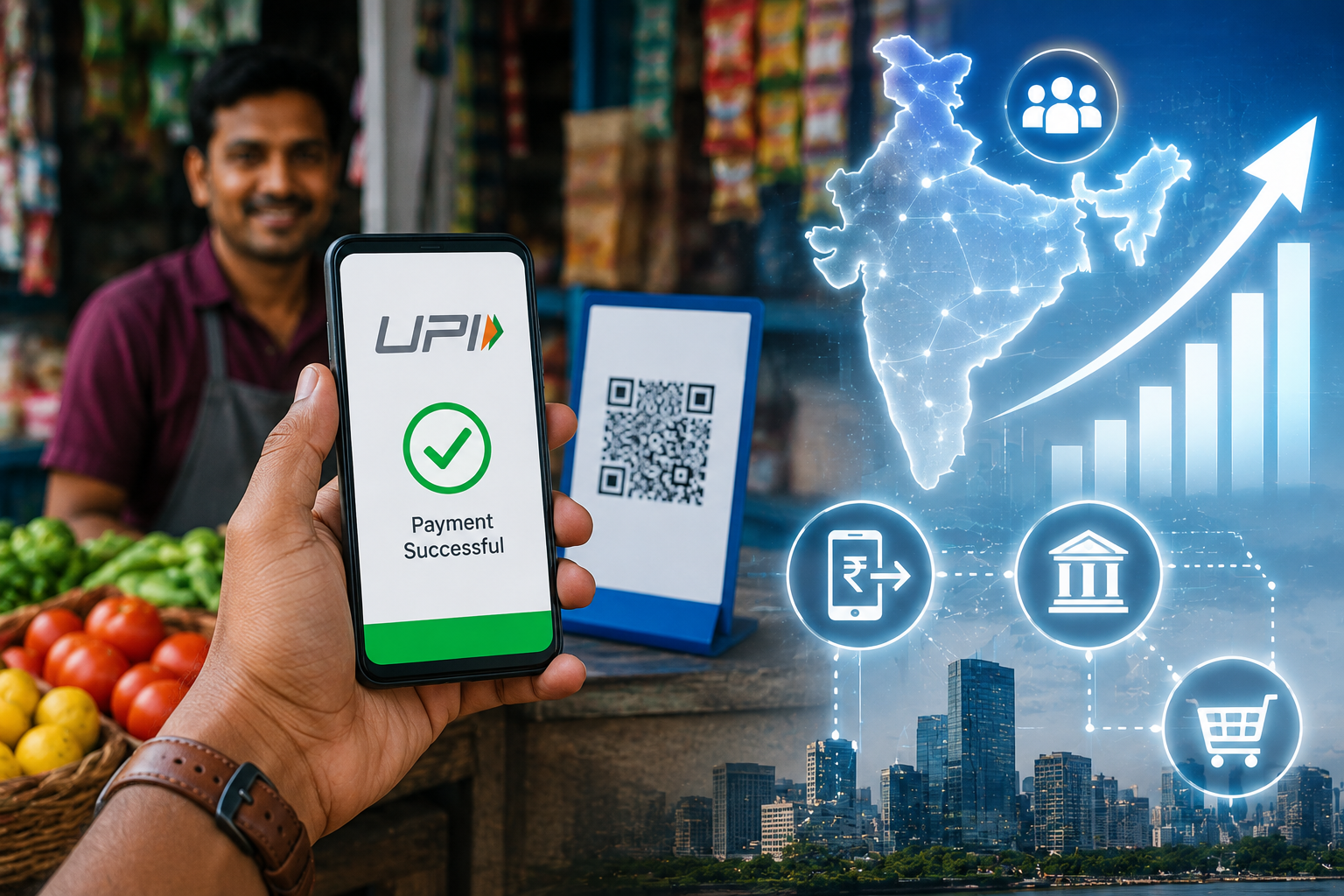
From 1.78 crore transactions in 2016-17 to more than 24,162 crore in 2025-26, UPI has emerged as one of the world’s largest real-time digital payment platforms
The Unified Payments Interface (UPI) has completed a decade of operations, marking a major milestone in India's digital payments journey. Prime Minister Narendra Modi on Tuesday described the platform's growth as a major turning point, highlighting the scale and reach that UPI has achieved since its launch in 2016.
Launched on August 25, 2016, by the National Payments Corporation of India (NPCI) under the regulatory oversight of the Reserve Bank of India (RBI), UPI has fundamentally changed the way Indians transfer and receive money.
What began as a relatively new digital payment mechanism has evolved into a critical part of India's financial infrastructure, supporting transactions ranging from small purchases at local shops to large-scale digital commerce.
From a small beginning to massive scale
The growth in UPI transaction volumes over the past decade has been extraordinary.
According to official figures, annual UPI transaction volume increased from just 1.78 crore transactions in 2016-17 to more than 24,162 crore transactions in 2025-26.
This represents an almost 13,000-fold increase in transaction volume.
The value of transactions has expanded at a similarly rapid pace. UPI transaction value increased from around ₹0.07 lakh crore in 2016-17 to approximately ₹314 lakh crore in 2025-26.
That translates into a more than 4,000-fold increase in transaction value over the period.
The numbers underline how quickly digital payments have become embedded in India's everyday economic activity.
PM Modi calls UPI a turning point
Prime Minister Narendra Modi marked the completion of UPI's first decade by highlighting its scale and impact on India's digital economy.
He also invited citizens to share their experiences of using UPI and explain how the payment platform has affected their daily lives.
The Prime Minister's comments come at a time when UPI has become a familiar payment option across urban and rural India.
From buying groceries and paying restaurant bills to transferring money to family members, consumers can now complete transactions almost instantly using a smartphone.
UPI becomes a key pillar of Digital Public Infrastructure
UPI has emerged as one of the most successful components of India's Digital Public Infrastructure (DPI).
Its interoperable architecture allows customers to make real-time payments between bank accounts through participating banks and payment applications.
Unlike traditional payment systems that may require specific account details or separate processes, UPI has simplified transactions through features such as virtual payment addresses and QR-code payments.
The result has been a payment ecosystem in which consumers can transact across banks and applications without needing to remain within a single financial institution.
QR codes changed merchant payments
One of UPI's most visible impacts has been the rapid spread of QR-code payments.
Small retailers, street vendors, restaurants, service providers and other businesses can accept digital payments without investing heavily in traditional card-payment infrastructure.
For consumers, the process is equally simple: scan a QR code, enter the amount and authorise the payment.
This has helped bring digital payments into transactions where cash previously dominated.
The widespread availability of QR-based payments has also contributed to the formalisation of economic activity by creating digital transaction records for businesses.
UPI's role in financial inclusion
UPI has also strengthened India's financial inclusion ecosystem.
The platform connects digital payments with the country's expanding bank-account and smartphone user base, enabling customers to transfer money without visiting a bank branch.
For many users, the smartphone has effectively become a digital wallet and banking interface.
The growth of UPI has therefore coincided with wider changes in India's financial system, including increasing bank-account penetration, greater smartphone adoption and improved internet connectivity.
A major change in consumer behaviour
Perhaps the biggest achievement of UPI has been the change in consumer behaviour.
Digital payments were once predominantly associated with online purchases or relatively large transactions. UPI helped extend electronic payments into everyday, low-value transactions.
A consumer can now use the same payment infrastructure to pay for a cup of tea, transfer money to a friend, settle a utility bill or make an online purchase.
This convenience has gradually reduced the friction associated with digital payments and encouraged consumers to carry less cash.
Benefits extend to businesses
The impact of UPI is not limited to consumers.
For businesses, digital payments can simplify collection, reconciliation and transaction tracking. Small merchants can receive payments directly into bank accounts, reducing the need to handle and deposit large amounts of physical cash.
Digital transaction records can also create a clearer financial trail, potentially supporting access to formal credit and other financial services.
For banks, fintech companies and digital-commerce businesses, UPI has created an ecosystem around payment applications, merchant acquiring, transaction services and other financial products.
UPI strengthens India's fintech ecosystem
The expansion of UPI has been closely linked to the rapid development of India's fintech sector.
Payment applications have built products and services around UPI, while banks and financial technology companies have used the underlying infrastructure to develop new consumer and merchant solutions.
The interoperability of UPI has also encouraged competition between payment providers while keeping the underlying payment rail common across the ecosystem.
This combination of common infrastructure and private-sector innovation has become an important feature of India's digital financial model.
International ambitions gain importance
UPI's significance is increasingly extending beyond India's domestic payments market.
India has been working to expand UPI's international acceptance and establish payment linkages with other countries. Such initiatives can make payments more convenient for Indian travellers and potentially facilitate cross-border retail transactions.
International expansion, however, also brings additional challenges involving regulatory frameworks, data requirements, cybersecurity and interoperability with local payment systems.
Security and fraud remain key challenges
The extraordinary growth of digital payments also brings new risks.
As transaction volumes increase, cybersecurity, fraud prevention and consumer awareness become increasingly important. Phishing attempts, fraudulent payment requests, fake QR codes and social-engineering scams can undermine confidence in digital payments.
For UPI to maintain its long-term growth trajectory, strong security systems and effective consumer-protection mechanisms will remain critical.
Banks, payment companies and regulators will need to continue investing in fraud detection, authentication technologies and public awareness.
What lies ahead for UPI?
As UPI enters its second decade, the next phase is likely to focus not merely on transaction volumes but on expanding the range of services built around the payment infrastructure.
Potential growth areas include cross-border payments, digital credit, merchant financing, recurring payments, financial services and deeper integration with India's broader digital economy.
The challenge will be to maintain the speed and simplicity that made UPI successful while ensuring that the system remains secure, reliable and accessible as usage expands.
A decade that reshaped India's payment economy
UPI's first 10 years represent one of the most significant transformations in India's financial system.
The journey from 1.78 crore transactions in 2016-17 to more than 24,162 crore transactions in 2025-26 demonstrates the extraordinary pace at which digital payments have been adopted.
Beyond the numbers, UPI has changed the everyday payment experience for consumers, created new opportunities for merchants and strengthened India's Digital Public Infrastructure.
As the platform begins its second decade, its evolution could increasingly influence not only how Indians pay but also how businesses operate and how India's digital financial ecosystem develops.