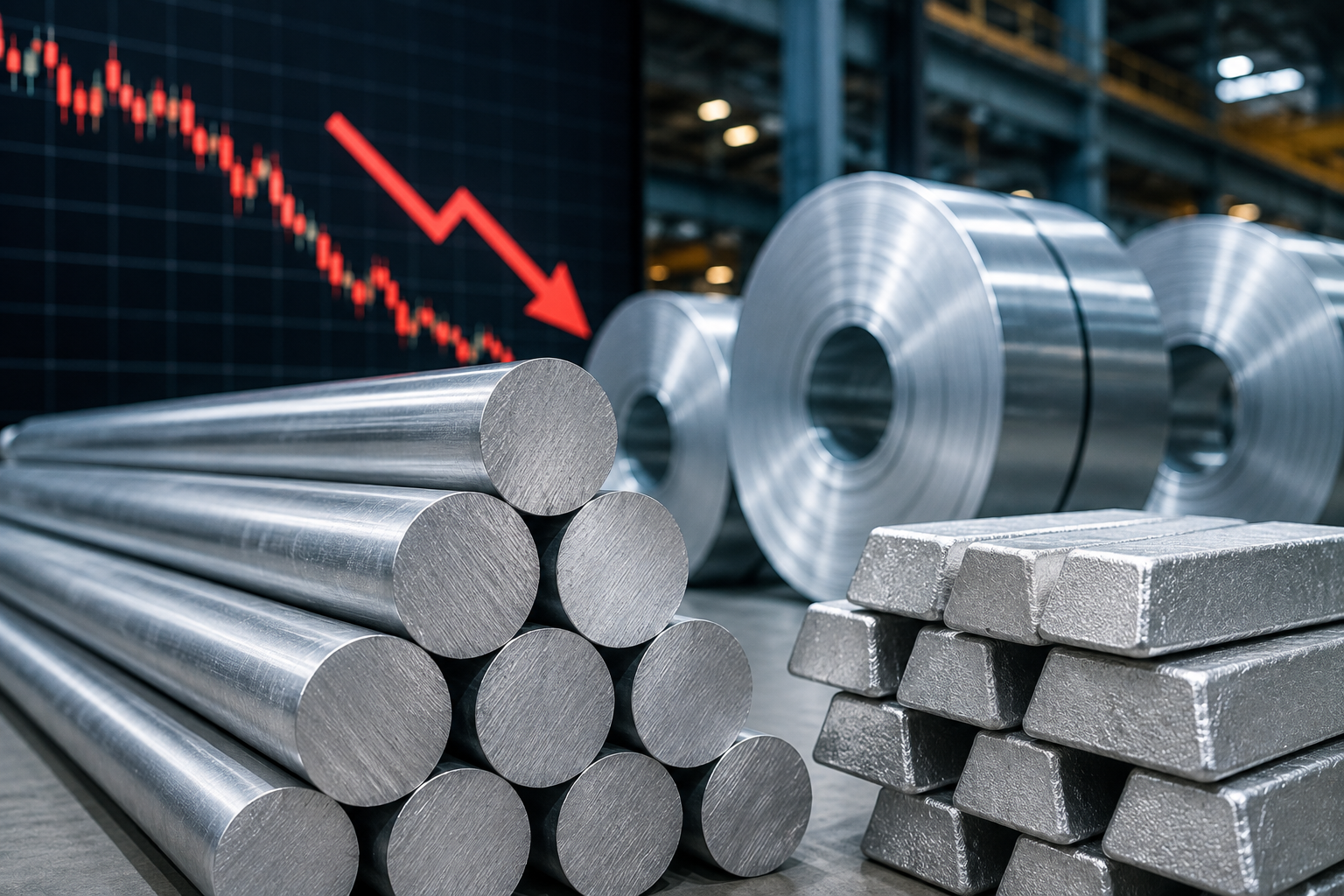
MCX aluminium futures slip 0.19% to ₹348 per kg as traders reduce positions amid subdued demand from consuming industries
Aluminium futures prices edged lower on Thursday as weak demand in the spot market encouraged traders to trim their positions. The decline remained modest, suggesting that while near-term sentiment has softened, there was no sharp deterioration in the broader aluminium market.
On the Multi Commodity Exchange (MCX), aluminium futures for August delivery fell 65 paise, or 0.19 per cent, to ₹348 per kg. The contract recorded trading volume of around 3,516 lots.
Weak Spot Demand Puts Pressure on Aluminium
The primary factor weighing on aluminium prices was subdued demand from consuming industries. Aluminium is a key industrial metal used across automobiles, construction, electrical equipment, packaging, consumer durables and other manufacturing activities.
When purchases from these sectors slow, traders typically become more cautious about the near-term demand outlook. The latest decline in futures prices reflects this cautious approach, with participants reducing their exposure rather than aggressively building fresh positions.
Position Cutting Adds to Market Weakness
Analysts attributed Thursday's decline partly to position cutting by market participants.
Position unwinding can amplify price movements when traders reduce existing futures exposure because of weaker demand expectations. In the current scenario, the fall in prices appears to be more closely associated with adjustments in trading positions and soft physical-market demand than with a major change in the long-term fundamentals of aluminium.
The relatively small 0.19 per cent decline indicates that selling pressure remained limited.
Aluminium Demand Closely Linked to Industrial Activity
The outlook for aluminium remains closely connected to the performance of the manufacturing and infrastructure sectors.
Automobile production, construction activity, power infrastructure and electrical equipment manufacturing are among the major demand drivers for the metal. Any acceleration in these sectors could provide support to aluminium consumption and improve market sentiment.
Conversely, prolonged weakness in industrial activity could keep buyers cautious and restrict any significant recovery in prices.
Global Factors Remain Crucial for Aluminium
Apart from domestic demand, international developments will continue to influence aluminium prices. Global production levels, inventories, energy costs, currency movements and demand trends in major consuming economies are important factors for the metal's price direction.
China remains particularly important for the global aluminium market because of its large role in both production and consumption. Any meaningful change in Chinese industrial activity or demand expectations could therefore have a significant impact on international aluminium prices.
Energy Costs Could Influence the Supply Outlook
Aluminium production is highly energy-intensive, making electricity and other energy costs an important component of producers' economics.
Higher energy prices can increase production costs and potentially provide support to aluminium prices if they affect supply. On the other hand, softer energy prices could reduce cost pressures for producers.
Investors will therefore need to track developments in the broader commodities market, particularly crude oil and energy prices, alongside aluminium-specific indicators.
What Should Commodity Investors Watch?
For traders, the immediate focus will remain on the ability of aluminium futures to sustain levels around ₹348 per kg.
A recovery in spot demand, fresh buying interest and stronger industrial activity could help aluminium prices regain momentum. In contrast, continued position unwinding and weak consumption could keep prices under pressure.
Traders should also monitor exchange inventories, global manufacturing data, Chinese demand trends and currency movements for signals about the next major price direction.
Market Outlook
The near-term outlook for aluminium remains cautious, with weak industrial demand and position reduction weighing on futures prices. However, the relatively limited fall suggests that the market is experiencing measured selling rather than a broad-based collapse in sentiment.
A sustained improvement in demand from automobiles, construction, electrical equipment and other consuming industries could provide a foundation for a recovery. Until stronger demand signals emerge, aluminium prices may remain sensitive to inventory levels, global manufacturing trends and commodity-market volatility.
For investors, the key triggers to watch are the recovery in physical demand, global aluminium inventories, Chinese consumption, energy costs and MCX price action.