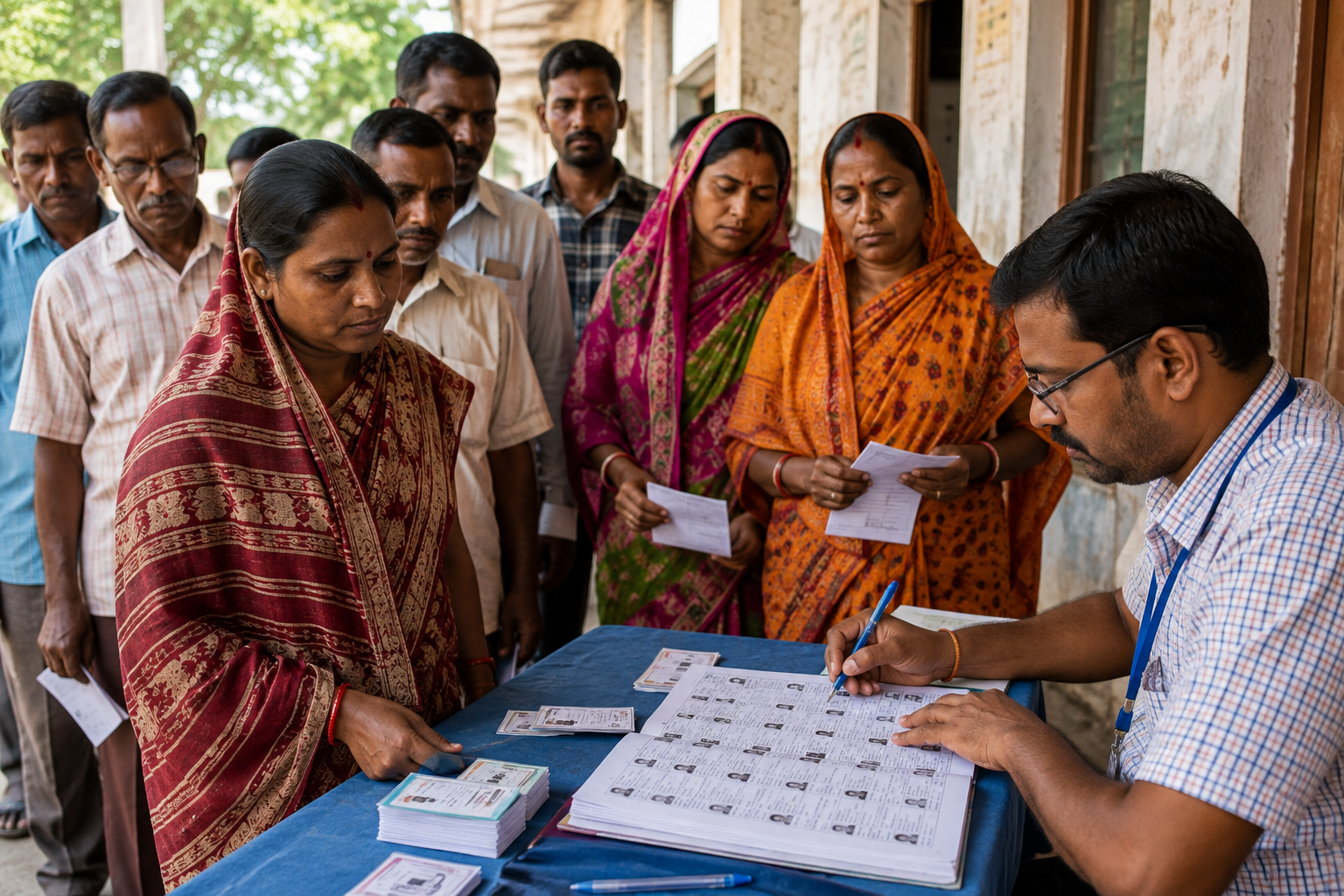
Nearly 3.09 crore eligible voters have been considered for inclusion in Odisha’s final electoral roll, while more than 58 lakh people have received notices during the Special Intensive Revision process
Odisha’s electoral roll revision enters final stage
The Special Intensive Revision (SIR) of electoral rolls in Odisha has entered a crucial phase, with the state election authorities setting September 17 as the deadline for taking final decisions on claims and objections. The revised and final voter list is scheduled to be published on September 21.
The deadline for filing claims and objections ended on Wednesday, following which election officials will now scrutinise submissions, verify supporting documents and conduct hearings wherever required.
According to the office of Odisha’s Chief Electoral Officer, notices had been issued to 5.836 million people as of August 19 as part of the verification exercise.
The authorities said around 3.09 crore eligible voters have so far been considered for inclusion in the final electoral roll. The number could increase further as the hearing and verification process progresses.
Officials instructed to ensure no eligible voter is excluded
Chief Electoral Officer R S Gopalan has directed election officials to ensure that every eligible citizen gets an opportunity to remain on the electoral roll.
At the same time, authorities have been asked to ensure that ineligible, duplicate or otherwise invalid entries do not remain on the final list.
Officials have indicated that voters who have received notices but are unable to submit the required valid documents or provide correct information during the verification process could face removal from the electoral roll.
This makes the period leading up to September 17 particularly important for voters whose registrations have been flagged for additional verification.
More than 2.79 lakh new voters apply through Form-6
The SIR exercise has also generated significant interest among young and newly eligible voters.
According to the CEO’s office, around 279,000 people have submitted applications through Form-6 seeking registration as new voters.
The number highlights the importance of the revision exercise in bringing newly eligible citizens into the electoral system. Young voters turning 18 and other eligible citizens who were previously absent from the electoral roll have used the revision process to seek inclusion.
Their applications will now be examined by the relevant electoral authorities before the final list is published.
Form-7 applications target duplicate and deceased entries
The revision process has also resulted in thousands of applications seeking removal or modification of existing voter registrations.
Around 53,625 applications were submitted through Form-7. These include cases involving voters registered at two locations, requests to remove names from one polling location following relocation and applications for deletion of names of deceased persons.
Such applications are an important component of the electoral-roll cleanup exercise because duplicate or outdated entries can affect the accuracy of voter databases.
Election officials will need to verify these applications before making changes to the final roll.
Nearly 1.97 lakh Form-8 applications received
Voters have also used Form-8 to seek corrections and changes in their electoral information.
Around 197,000 Form-8 applications have reportedly been received. These include requests to bring members of the same family together at a common polling station as well as corrections involving names, addresses, ages and other voter details.
The high number of correction applications indicates that the SIR process is not limited to adding or deleting names. It is also being used to improve the accuracy of existing electoral records.
Flood situation creates additional challenge
The revision process has been taking place against the backdrop of flooding in several parts of Odisha, prompting concerns over whether affected citizens have received adequate time and opportunity to complete the verification process.
The opposition Biju Janata Dal (BJD) has urged the Chief Electoral Officer to extend the claims and objections period by another month.
BJD senior vice president Debi Prasad Mishra argued that the prevailing flood situation had made it difficult for voters, electoral officials and booth-level representatives to complete the required verification and documentation within the existing timeline.
According to the BJD, extending the deadline would help ensure that residents in flood-affected areas are not inadvertently excluded from the electoral roll.
September 17 becomes the key deadline
With the claims and objections window now closed, the focus shifts to the scrutiny and hearing process.
The election authorities have until September 17 to take decisions on the claims and objections received. The final electoral roll is scheduled to be published four days later, on September 21.
The period between the two dates will therefore be critical for resolving disputed entries and determining which applications are accepted or rejected.
For voters who have received notices, the submission of valid documents and participation in the prescribed verification process could determine whether their names remain on the final electoral roll.
What the SIR process could change
The Special Intensive Revision is expected to result in several changes to Odisha’s electoral database.
These could include the addition of newly eligible voters, deletion of duplicate or deceased entries, correction of voter information and relocation of voters to appropriate polling stations.
The exercise could therefore provide election authorities with a substantially updated database ahead of future electoral activity in the state.
However, the scale of the exercise also makes transparency and due process important. Any large-scale deletion or rejection of voter applications could attract scrutiny from political parties and civil society groups, particularly if affected voters believe they were unable to complete the verification process.
Political parties closely watching the final roll
The final electoral roll is also expected to attract significant attention from political parties.
An accurate voter database is critical for political organisations as they prepare their booth-level networks, voter outreach programmes and election strategies.
The BJD's request for an extension demonstrates that the revision process has already become a politically sensitive issue, particularly amid concerns over the impact of flooding and accessibility in affected areas.
The final number of voters included, deleted or added after the SIR process will therefore be closely monitored once the revised roll is released.
What happens next?
The immediate process will involve hearings and verification of claims and objections submitted before the deadline.
September 17: Final decisions on claims and objections are scheduled to be completed.
September 21: Odisha’s final electoral roll is scheduled to be published.
Until then, election officials will continue reviewing documents and resolving disputed cases.
Odisha SIR: Key numbers at a glance
-
3.09 crore: Eligible voters currently considered for inclusion in the final roll
-
58.36 lakh: People who had received notices as of August 19
-
2.79 lakh: Form-6 applications for new voter registration
-
53,625: Form-7 applications for deletion or relocation-related changes
-
1.97 lakh: Form-8 applications for corrections and other modifications
-
September 17: Deadline for decisions on claims and objections
-
September 21: Scheduled publication date of the final electoral roll
Final voter list to be watched closely
Odisha’s SIR is now approaching its decisive stage. With millions of voter records reviewed and hundreds of thousands of applications submitted for additions, deletions and corrections, the decisions taken over the next few weeks could significantly shape the state’s updated electoral database.
The election authorities face the dual challenge of preventing ineligible entries while ensuring that genuine voters are not excluded because of documentation issues, relocation or difficulties caused by the flood situation.
The final voter list scheduled for September 21 will consequently be an important milestone. Its publication will provide the clearest picture of how Odisha’s electoral roll has changed following the intensive verification exercise and will likely remain under close observation from voters, political parties and election watchers.