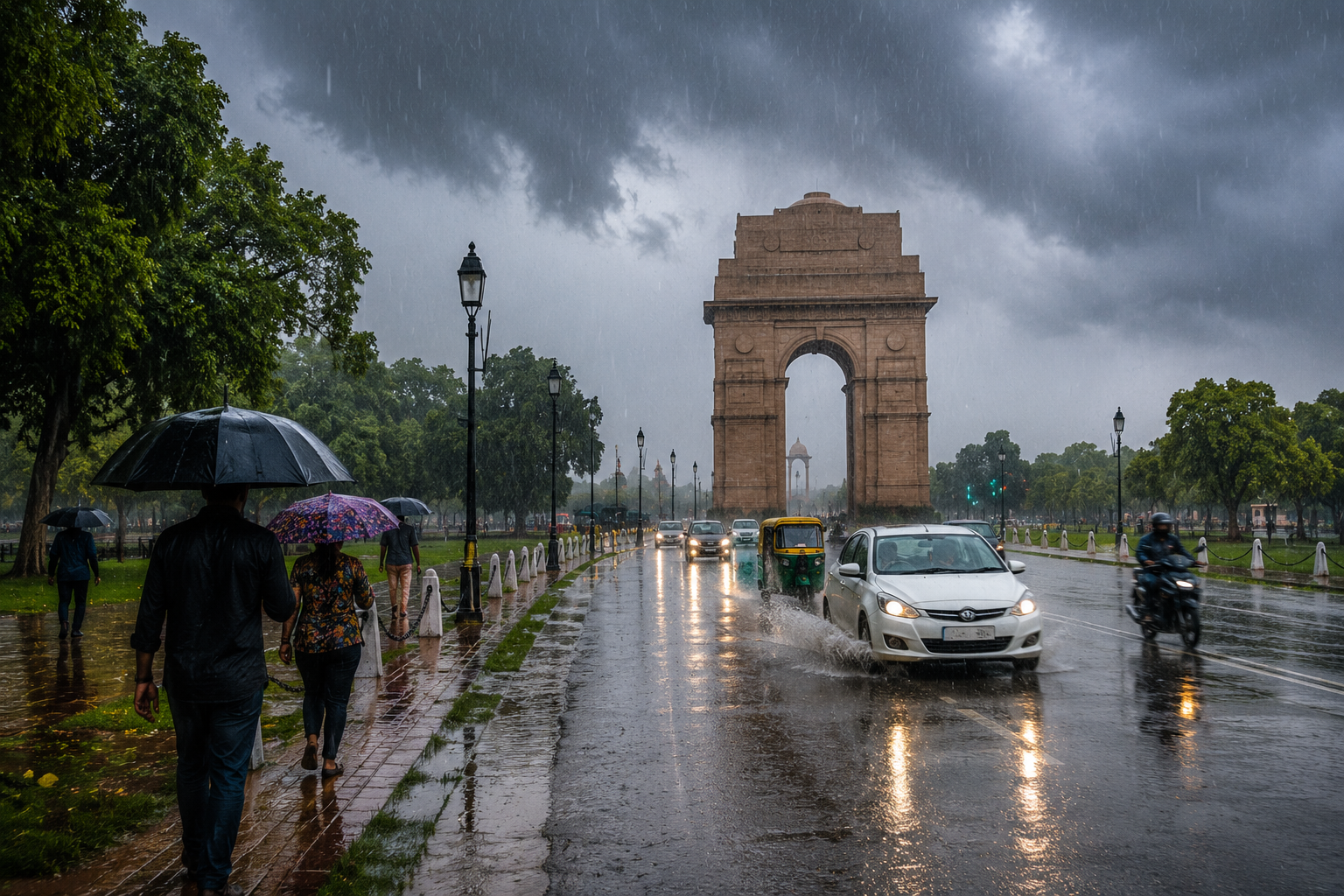
Fresh rainfall brings respite from humidity in the national capital, while heavy to extremely heavy rain alerts remain active across several states, raising concerns over flooding, landslides and disruption to transport
Heavy rainfall lashed several parts of Delhi on Thursday morning, offering relief from persistent humidity and uncomfortable weather conditions. The India Meteorological Department (IMD) has forecast more rainfall and thunderstorms in Delhi-NCR during the day, while several other parts of the country remain under alerts for heavy to extremely heavy showers.
The latest weather developments underline the continued strength of the southwest monsoon across parts of India. While rainfall is providing relief from heat and supporting water resources and agricultural activity, intense spells are also creating risks of waterlogging, flash floods, landslides and disruption to essential services.
Delhi Gets Relief From Heat and Humidity
Several parts of the national capital received rain during the morning hours, resulting in cooler and more comfortable conditions for residents.
According to the IMD forecast, Delhi could receive another spell of light rain during the afternoon, while the possibility of rainfall and thunderstorms is expected to increase towards the evening. Temperatures are likely to remain around 33 degrees Celsius.
The fresh showers have brought some respite from humidity, but continued rainfall could create challenges for commuters. Waterlogging, traffic congestion and reduced visibility could affect movement across low-lying and heavily populated areas if rainfall intensifies.
Delhi-NCR Could See More Rain
The weather system is also affecting neighbouring parts of the National Capital Region. Noida and Ghaziabad have witnessed spells of rain, while Gurugram could also receive further showers.
Cloudy conditions are expected to persist across parts of the region. With rainfall activity likely to remain intermittent, residents and commuters may have to deal with rapidly changing weather conditions through the day.
For commuters, the evening period could be particularly important as thunderstorms and heavier showers may coincide with peak traffic hours.
Monsoon Activity Remains Strong Across India
The current weather pattern is not restricted to Delhi. The monsoon remains active across multiple regions, with heavy rainfall reported in Himachal Pradesh, Assam, Gujarat, Odisha, Uttarakhand and Uttar Pradesh.
The IMD has issued colour-coded alerts in several districts, warning of heavy and extremely heavy rainfall. Such conditions can increase the likelihood of flash floods, waterlogging, landslides and damage to infrastructure.
Authorities in vulnerable districts have been advised to maintain preparedness as additional rainfall could aggravate conditions in areas already affected by flooding or saturated soil.
Uttar Pradesh Under Heavy Rainfall Alert
Uttar Pradesh is among the states facing significant rainfall activity. The IMD has issued red alerts for extremely heavy rainfall in districts including Banda, Prayagraj and Mirzapur.
Several adjoining districts have also been placed under yellow alerts.
The combination of intense rainfall and already saturated ground conditions could increase the risk of water accumulation and localised flooding. Residents in affected districts are likely to remain under close weather monitoring as the situation develops.
Himachal Pradesh Faces Road and Infrastructure Disruptions
Heavy and persistent rainfall has caused significant disruption in Himachal Pradesh, where several roads and essential services have been affected.
According to the State Emergency Operation Centre, 166 roads, including National Highway-003, were blocked. Around 130 power transformers and 222 water supply schemes were also reported to be affected.
The mountainous terrain makes the state particularly vulnerable to landslides and road blockages during prolonged periods of heavy rainfall. Further showers could create additional challenges for rescue teams and commuters.
Authorities are continuing to monitor vulnerable locations and restore essential connectivity wherever possible.
Kerala Coast Faces Rough Sea Conditions
The weather situation has also prompted serious warnings along the Kerala coast.
The IMD has issued a red alert for the coast and a Swell Surge and High Wave Warning covering Kerala, Lakshadweep, South Tamil Nadu and Puducherry.
Swell waves could reach between 1.1 metres and 2.2 metres in affected coastal areas. Fishermen have been advised not to venture into the sea, while restrictions have been placed on certain small-vessel operations, boat movements and beach activities.
The warnings highlight the broader impact of the monsoon system, with adverse conditions extending beyond rainfall on land to coastal and marine areas.
Odisha Continues Flood Monitoring
Odisha remains another area of concern as authorities monitor flood-affected regions amid forecasts of additional rainfall.
According to information cited in the report, 429 villages across 52 blocks had been affected by floodwater as of August 15. Authorities have deployed 79 rescue teams to assist affected communities.
The Central Water Commission has also warned about the possibility of flash floods in parts of the state. Further heavy rainfall could increase pressure on rivers, drainage systems and low-lying settlements.
Local administrations are therefore keeping a close watch on water levels and vulnerable areas.
Fishermen Warned Across Arabian Sea and Bay of Bengal
The IMD has issued marine weather warnings covering several areas of the Arabian Sea and Bay of Bengal.
In the Arabian Sea, warnings are in place along and off the coasts of Somalia and Oman, as well as across parts of the westcentral and southwest Arabian Sea. Additional warnings have been issued for portions of the northwest Arabian Sea between August 20 and August 24.
In the Bay of Bengal, warnings cover parts of the Gulf of Mannar, the Comorin region, the southwest Bay of Bengal adjoining the Sri Lanka coast and the Andaman Sea.
Fishermen and marine operators have been advised to follow official advisories and avoid entering areas where dangerous sea conditions are expected.
Rainfall Could Have Mixed Economic Impact
The widespread rainfall comes with both positive and negative economic implications.
Adequate monsoon rainfall is crucial for agriculture, reservoir levels, rural demand and overall water availability. A healthy monsoon can support farm incomes and potentially strengthen consumption across rural markets.
However, excessive rainfall can disrupt transportation, damage crops, affect infrastructure and temporarily slow economic activity in severely affected regions. Flooding can also increase costs for local administrations and businesses.
For agriculture-linked sectors, the distribution and intensity of rainfall will therefore remain more important than rainfall alone.
What Residents and Businesses Need to Watch
The immediate focus remains on the intensity and geographical spread of rainfall over the coming days. Urban residents should remain alert to waterlogging and traffic disruptions, while people in hilly regions need to exercise caution around landslide-prone areas.
Businesses dependent on road transportation, logistics, tourism, construction and outdoor activity could also experience temporary disruptions in areas receiving intense rainfall.
Coastal communities face an additional risk from high waves and rough sea conditions, making adherence to IMD and local administration warnings particularly important.
Weather Outlook
The IMD's latest warnings suggest that monsoon activity will remain significant across several parts of India. Delhi-NCR is likely to see intermittent rain and thunderstorms, while heavy rainfall risks remain elevated across parts of northern, eastern, western and central India.
For Delhi residents, the immediate rainfall provides welcome relief from humidity, but the possibility of further showers means commuters should remain prepared for waterlogging and traffic disruptions.
Across the country, authorities in flood-prone, hilly and coastal regions are expected to remain on alert as the monsoon continues to bring both much-needed rainfall and heightened weather-related risks.