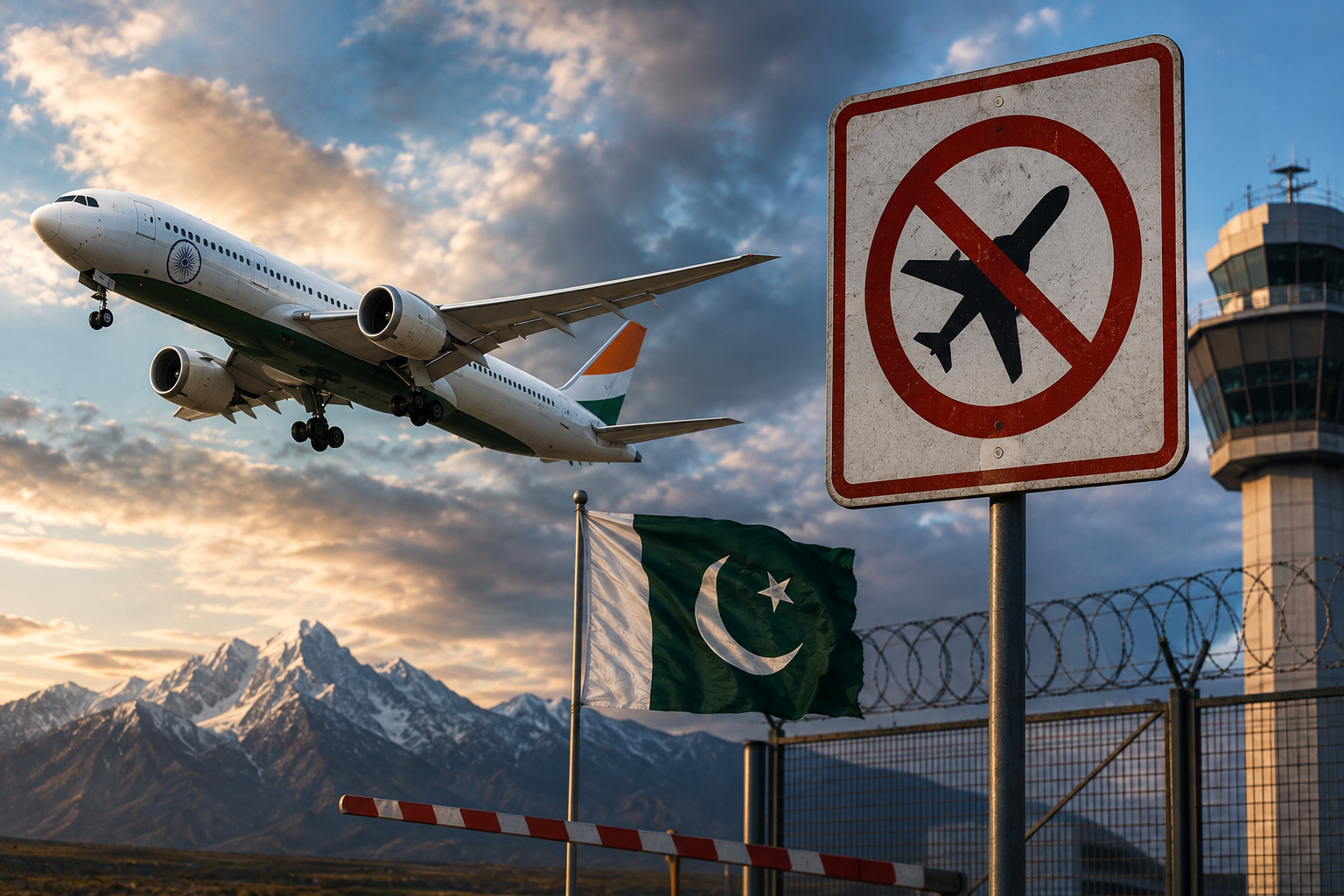
Aviation restrictions between India and Pakistan continue, keeping airlines on longer routes and adding to travel and operational costs
Pakistan has extended its airspace ban on Indian aircraft until September 24, prolonging aviation restrictions that have remained in place since the deterioration in India-Pakistan relations following the Pahalgam terrorist attack in April 2025.
The Pakistan Airports Authority issued a fresh Notice to Airmen (NOTAM), stating that Pakistani airspace will remain unavailable to Indian-registered aircraft, aircraft operated or leased by Indian airlines and operators, and Indian military flights. The latest extension comes just days before the existing restriction was due to expire on August 23.
Restriction to Continue Until September 24
According to the latest NOTAM, the extended restriction will take effect at 10:15 am on August 23 and remain effective until 4:59 am on September 24.
The restriction covers both major Flight Information Regions (FIRs) operated by Pakistan — Karachi and Lahore. The repeated extensions suggest that the aviation restrictions remain closely connected to the broader diplomatic and security tensions between the two neighbouring countries.
Pakistan has been renewing the airspace restriction periodically since it was first introduced following the Pahalgam attack.
India Also Maintains Reciprocal Ban
India has continued to impose a reciprocal restriction on Pakistani-registered aircraft, airlines, operators and military flights.
The two countries introduced matching aviation restrictions after the April 2025 attack in Pahalgam, which claimed 26 lives. The measures represented a significant escalation in bilateral tensions and affected commercial aviation routes between the two countries.
While the restrictions are primarily targeted at each other's aviation operators, their impact extends beyond direct India-Pakistan flights because several international routes traditionally use the airspace of the region.
Longer Routes Increase Airline Costs
The continued closure of Pakistani airspace forces affected aircraft to take alternative routes. For airlines, longer flight paths can translate into higher fuel consumption, increased crew and operational costs and longer flying times.
Passengers can also be affected as rerouted flights may take longer to reach their destinations. For airlines operating on highly competitive international routes, additional fuel and operational expenses can put pressure on margins.
The restrictions also create uncertainty for airlines while planning international schedules, particularly on routes where Pakistani airspace would otherwise provide a shorter connection between India and destinations in Europe, West Asia and other regions.
Bilateral Tensions Continue to Influence Aviation
The latest extension highlights how security and diplomatic tensions continue to affect commercial aviation between the two countries.
The Pahalgam attack triggered a series of retaliatory diplomatic and economic measures, with airspace restrictions becoming one of the most visible consequences for the aviation sector.
For now, the continued extension means airlines and passengers will have to operate under the existing restrictions for at least another month. Any restoration of normal air connectivity is likely to depend on a broader improvement in India-Pakistan relations and the easing of security-related tensions.
The September 24 deadline could therefore become another point to watch for the aviation industry, although further extensions cannot be ruled out if bilateral relations remain strained.