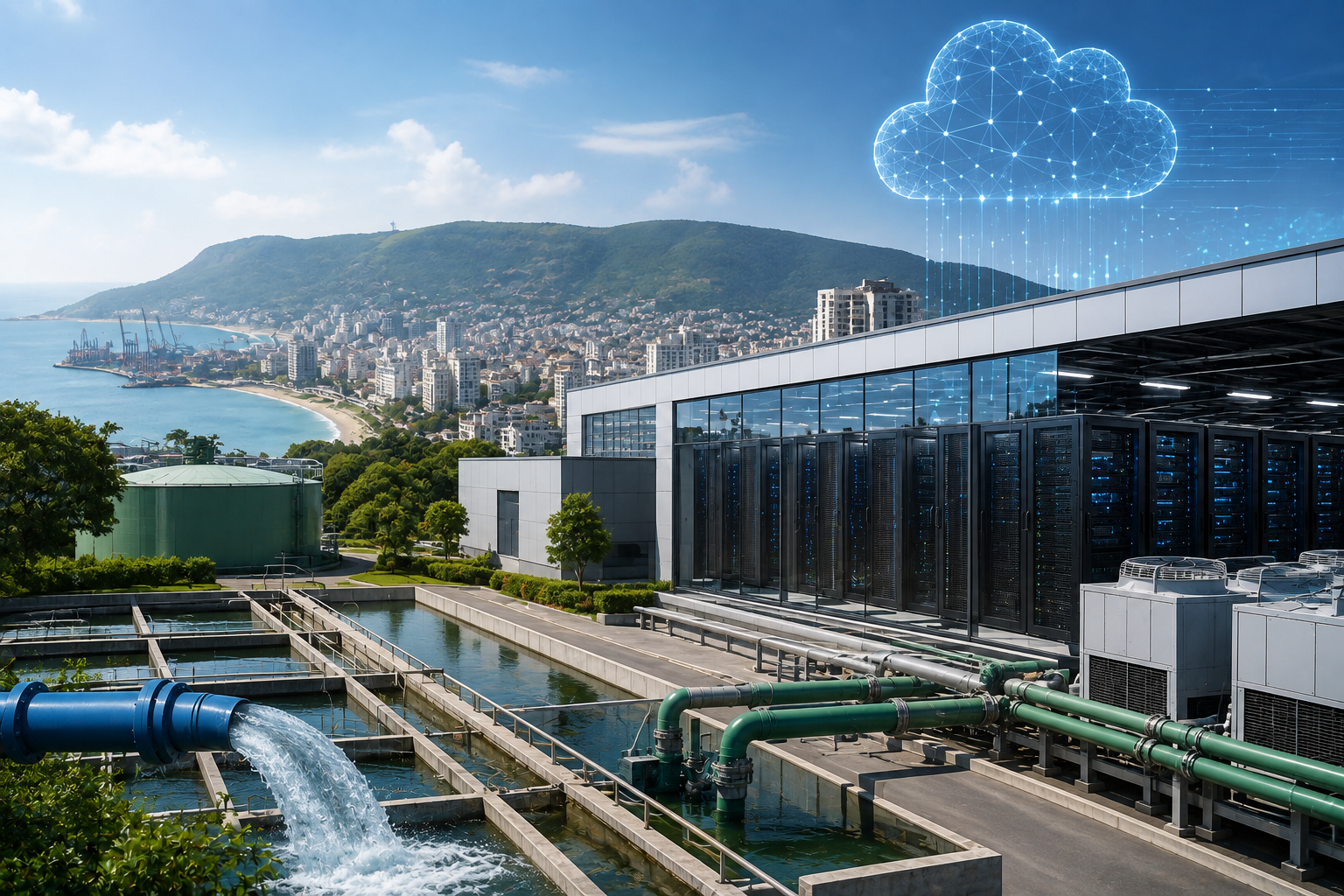
IT Minister Nara Lokesh says the proposed 6.5 GW data-centre ecosystem will use industrial water allocations, while newer cooling technologies are expected to reduce consumption and protect the city’s residential water supply.
The Andhra Pradesh government has strongly defended its plans to develop Visakhapatnam as a major data-centre and digital infrastructure hub, dismissing concerns over the sector’s water requirements as misleading.
IT Minister Nara Lokesh, addressing the state Assembly on Wednesday, said deliberate misinformation was being circulated about the environmental impact and water consumption of upcoming data centres. He argued that large-scale digital infrastructure is becoming increasingly important as artificial intelligence, cloud computing and data-driven services expand globally.
The government’s position comes as Visakhapatnam attracts growing interest from major technology companies, following Google’s investment plans in the city.
6.5 GW Data Centre Capacity Fully Allocated
Lokesh said Chief Minister N Chandrababu Naidu had set a clear ceiling of 6.5 GW for data-centre allocations in the state and that the targeted capacity has now been fully achieved.
The proposed ecosystem is expected to create a substantial digital infrastructure base in Visakhapatnam, potentially attracting additional technology companies and supporting businesses.
The minister said that at current cooling and operating technologies, a data-centre ecosystem of 6.5 GW could require approximately 3 TMC of water annually.
However, he stressed that this figure could decline as newer cooling systems become more efficient and reduce dependence on water-intensive technologies.
Government Plans Separate Water Supply
Water availability has emerged as one of the major concerns surrounding the planned data-centre expansion.
Lokesh said the government would ensure that water supplied to data centres does not come at the expense of Visakhapatnam’s residential requirements.
According to the minister, data centres will receive water through the industrial allocation from the Polavaram Project. Dedicated pipelines will also be developed to serve the facilities.
The government expects gravity-based water supply from the Polavaram Project to meet Visakhapatnam’s urban requirements within approximately 18 months, according to Lokesh.
Why Data Centres Need Water
Large data centres operate thousands of servers continuously, generating significant amounts of heat. Cooling systems are therefore essential for maintaining equipment performance and preventing overheating.
Traditionally, some cooling technologies have relied heavily on water. However, advances in cooling design, including more efficient systems, can potentially reduce the amount of water required for computing infrastructure.
The Andhra Pradesh government is therefore highlighting technological improvements as an important factor in assessing the future water footprint of data centres.
Minister Compares Data Centres With Thermal Plants
Lokesh also sought to place the water requirements of data centres in the context of other large infrastructure projects.
He said a 1 GW thermal power plant consumes nearly 10 times more water annually than a data centre.
The comparison was used to question why data-centre projects have attracted disproportionate criticism over water consumption while other water-intensive industrial and power facilities have received comparatively less attention.
The government’s argument is that environmental impact should be assessed across different categories of infrastructure rather than focusing exclusively on data centres.
Google Investment Sparks Broader Interest
According to Lokesh, Google’s decision to invest in Visakhapatnam has helped generate wider interest among other technology companies.
The development could potentially position the city as an important destination for cloud infrastructure, artificial intelligence computing, digital services and data storage.
As global demand for AI infrastructure increases, countries and regions are competing to attract large data-centre investments. These projects can generate economic activity through construction, power infrastructure, telecommunications, engineering and technology services.
Environmental Standards to Remain a Priority
The state government has indicated that environmental responsibility will be an important consideration while selecting companies for future projects.
Lokesh said preference would be given to companies demonstrating stronger environmental practices.
This could become particularly important as the proposed data-centre capacity expands. Besides water, large computing facilities require substantial amounts of electricity, making power availability, renewable energy adoption and cooling efficiency key factors for sustainable development.
Visakhapatnam’s Emerging Technology Opportunity
The proposed data-centre ecosystem could provide Visakhapatnam with an opportunity to diversify its economic base and strengthen its position in India’s technology infrastructure landscape.
The city already has strategic importance as a major port and industrial centre. Additional digital infrastructure could create opportunities for technology services, high-skilled employment, construction and supporting industries.
However, the scale of the planned projects also means that infrastructure planning will be critical.
Water Security Will Remain Under Watch
While the government has assured that residential water supplies will not be diverted for data centres, the actual impact will depend on how efficiently the planned industrial water system operates.
Regular monitoring of water consumption, recycling, cooling efficiency and environmental compliance could become important as facilities begin operations.
The use of dedicated pipelines and industrial water allocations is intended to create a separate supply system rather than place additional pressure on the municipal network.
Outlook
Andhra Pradesh is positioning Visakhapatnam as a potential major hub for India’s expanding AI and data-centre economy. The government’s 6.5 GW target, interest from global technology companies and planned water infrastructure indicate an ambitious strategy to attract digital investments.
The opportunity, however, comes with significant infrastructure responsibilities. Ensuring adequate power, water, connectivity and environmental safeguards will be essential for the projects to remain sustainable.
If the government’s proposed water-management measures and next-generation cooling technologies work as planned, Visakhapatnam could strengthen its position as a major digital infrastructure destination while limiting pressure on the city’s existing residential water resources.