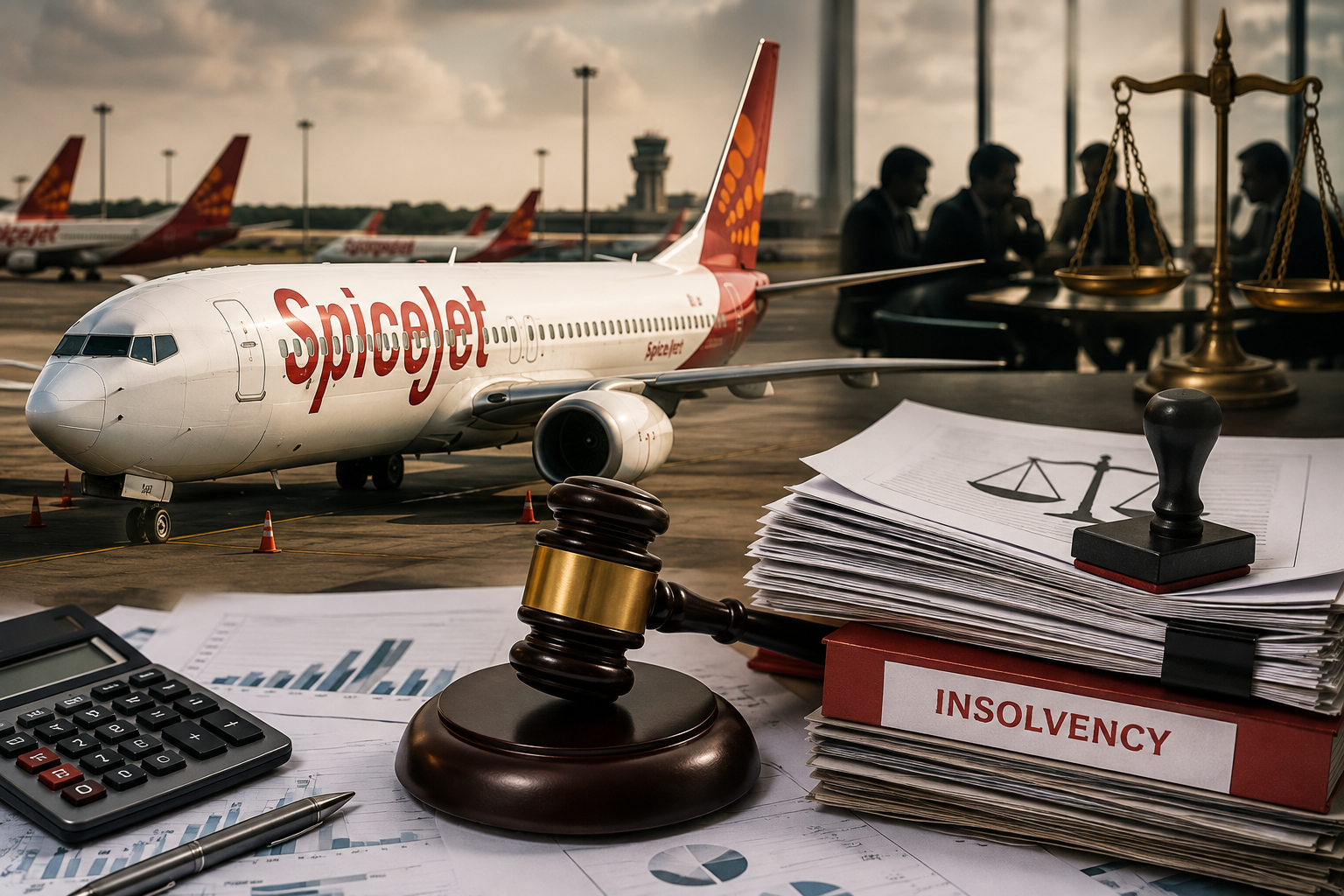
The tribunal’s decision gives the cash-strapped airline temporary relief and allows its existing management to remain in control, but aircraft lessors face another delay in their long-running efforts to recover outstanding dues.
The National Company Law Tribunal (NCLT) will rehear bankruptcy petitions filed against SpiceJet by aircraft lessors after the airline reached a last-minute settlement with one of the lessors. The development provides the financially stressed airline with another opportunity to address its liabilities, while delaying a potential insolvency process that could have affected the company’s management and future operations.
The tribunal had been preparing a judgment covering eight insolvency petitions against SpiceJet. However, the withdrawal of one petition following the settlement meant that the earlier judgment would have to be revised.
Fresh Hearing After Withdrawal of Petition
The NCLT said the judgment could not be rewritten and delivered on Wednesday because one member of the existing bench was scheduled to retire on the same day.
As a result, the cases will now be considered afresh by a new bench.
The decision effectively gives SpiceJet additional breathing room. Its existing management will continue to remain in control while the insolvency petitions are reconsidered.
The airline did not immediately comment on the tribunal’s decision.
Temporary Relief for SpiceJet
The development is significant for SpiceJet because admission of an insolvency petition could have triggered a formal corporate insolvency resolution process.
Such a process could potentially result in a change in control and introduce greater uncertainty over the airline’s operations. The fresh hearing means that possibility has been postponed for now.
The airline can use the additional time to pursue settlements with creditors, improve liquidity and strengthen its operational position.
However, the tribunal’s decision does not resolve the underlying financial disputes. SpiceJet still faces claims from aircraft lessors and other creditors.
Lessors Face Another Delay
Aircraft leasing companies have been engaged in a prolonged battle with SpiceJet over unpaid dues and other contractual obligations.
The latest development is therefore a setback for lessors that have spent years pursuing legal remedies to recover their money.
The withdrawal of one petition following the settlement has changed the circumstances before the NCLT, forcing the tribunal to restart consideration of the remaining cases.
The total amount currently claimed by SpiceJet’s lessors was not immediately available.
Financial Stress Remains a Major Concern
SpiceJet continues to operate under significant financial pressure.
The airline has faced liquidity constraints, operational difficulties and payment delays. Some of its pilots had reportedly experienced delays in receiving salaries, highlighting the extent of the company’s financial challenges.
The carrier’s market position has also deteriorated substantially over the past several years.
SpiceJet’s domestic market share fell to around 1.9% in June 2026, compared with approximately 15% in 2019.
The decline reflects the intense competition in India’s aviation sector as well as the airline’s struggles to maintain fleet availability and operational capacity.
Government-Backed Financing Provides Some Support
SpiceJet has also received financing through a government-backed credit programme aimed at supporting its operations.
Such funding has provided the airline with additional liquidity, but the longer-term challenge remains its ability to generate sufficient cash flows while meeting creditor obligations.
For an airline operating in a capital-intensive industry, maintaining aircraft, paying lessors, managing fuel costs and funding regular operations require substantial liquidity.
The continuing legal disputes therefore remain an important factor in assessing SpiceJet’s financial stability.
Insolvency Risk Has Not Disappeared
Although the fresh NCLT hearing is a reprieve, it does not mean SpiceJet’s insolvency concerns have been permanently resolved.
The new bench will have to examine the bankruptcy petitions and the circumstances surrounding the claims. The eventual outcome could determine whether the airline continues under its existing management or enters a formal insolvency resolution process.
A settlement with additional creditors could potentially reduce legal pressure, while failure to resolve outstanding claims could bring the insolvency issue back into focus.
Impact on SpiceJet’s Turnaround Plans
The airline’s ability to stabilise its finances will be critical to its turnaround strategy.
A stronger operating fleet, improved passenger volumes, better cash generation and successful negotiations with creditors would help reduce financial pressure.
However, continued litigation could consume management attention and make it harder for the airline to focus on rebuilding its market position.
The sharp decline in SpiceJet’s market share demonstrates the scale of the challenge facing the carrier.
Aviation Sector Implications
The case also highlights the financial risks faced by airlines operating with leased aircraft.
Aircraft leasing is an important part of the global aviation industry because it allows airlines to expand their fleets without purchasing aircraft outright. However, when an airline faces liquidity problems, lease payments can become a major source of creditor pressure.
The SpiceJet dispute therefore remains relevant beyond the company itself, particularly for lessors assessing credit risk among Indian airlines.
What Investors Should Watch
For investors and creditors, the next NCLT proceedings will be an important event.
Key factors to watch include the outcome of the fresh insolvency hearings, additional settlements with aircraft lessors, the airline’s liquidity position, fleet availability, passenger traffic and its ability to improve operating cash flows.
Any successful settlement could reduce near-term uncertainty, while an adverse tribunal decision could once again raise concerns about a formal insolvency process.
Outlook
The NCLT’s decision gives SpiceJet valuable additional time but does not remove its financial challenges.
The immediate positive is that the airline’s current management remains in control and the potential insolvency process has been delayed. However, the underlying creditor claims remain unresolved, while the company continues to operate with a significantly smaller market share than it held several years ago.
The coming months will therefore be crucial for SpiceJet. Its ability to settle creditor disputes, strengthen liquidity and rebuild operations will determine whether the latest legal reprieve becomes a meaningful step towards recovery or merely postpones another round of insolvency pressure.