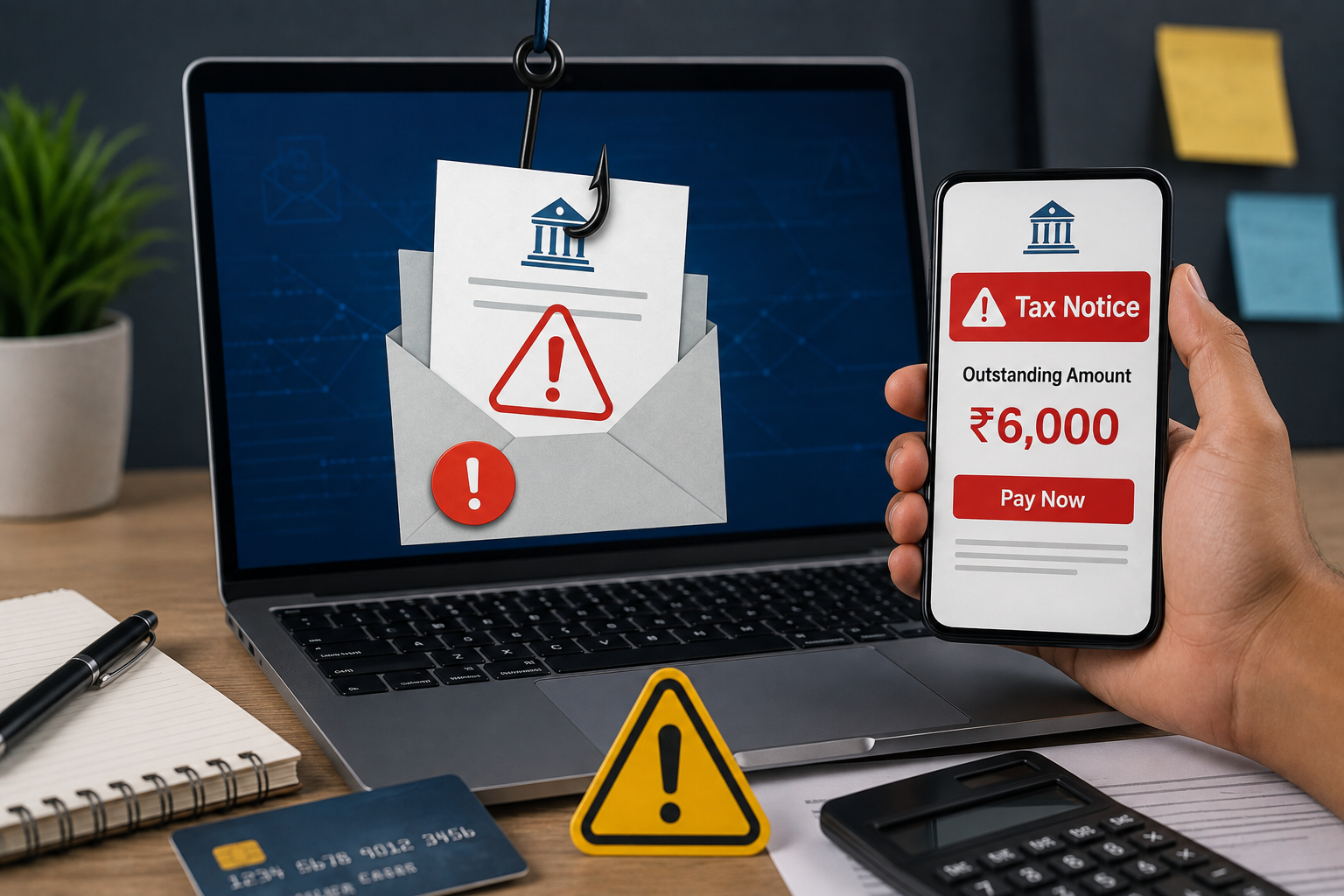
PIB Fact Check flags a fake tax-payment message, warning taxpayers not to click suspicious links or share banking and personal information
A message asking taxpayers to pay ₹6,000 towards an alleged tax liability has been flagged as fake by the government's Press Information Bureau (PIB) Fact Check team. The warning comes as taxpayers continue to check their income-tax refunds, outstanding demands and assessment-related communications.
The fraudulent message is designed to appear like an official communication from the Income Tax Department and may create a sense of urgency among recipients. PIB Fact Check has clarified that the message is not an official Income Tax Department notice and has advised taxpayers not to respond to it or click on any links contained in the communication.
The incident highlights the growing risk of tax-related phishing scams, particularly during periods when taxpayers are expecting refunds or checking whether they have any outstanding tax dues.
How the ₹6,000 Tax Phishing Scam Works
The fraudulent communication reportedly informs recipients that they have to pay ₹6,000 towards tax dues. Such messages can be made to look convincing by using government-related terminology and references to tax payments, penalties or outstanding liabilities.
The objective may be to persuade the recipient to click on a payment link or visit a fake website.
Once a victim interacts with such a website, fraudsters may attempt to obtain sensitive information, including bank account details, debit or credit card information, internet banking credentials, passwords, PAN details and OTPs.
In some cases, the fraudulent website may also attempt to make the user download an application or file that could compromise the security of the device.
Why Taxpayers Should Be Extra Careful
Tax-related communications can be particularly effective for scammers because most taxpayers are familiar with receiving notices, refund updates and other messages from government authorities.
A taxpayer who is waiting for a refund or believes there could be an outstanding liability may be more likely to respond to a message claiming that an immediate payment is required.
Fraudsters can exploit this uncertainty by using terms such as "tax due", "refund", "penalty", "assessment" and "urgent payment".
The relatively modest amount involved in the latest scam can also make the demand appear genuine. However, the ultimate objective may be to obtain confidential financial information rather than simply collect ₹6,000.
A Genuine Tax Demand Should Be Checked Through the Official Portal
Taxpayers should not assume that every message mentioning an outstanding tax amount is genuine.
If an individual wants to know whether there is an actual tax demand against them, the safest approach is to independently access their account on the official Income Tax e-filing portal.
Taxpayers should not use a link received through an SMS, email or social media message to access their tax account.
Instead, they should independently open the official portal, log in and check their outstanding demands, tax records and other communications.
This distinction is important because a taxpayer may genuinely have an outstanding tax demand, while the payment link contained in a fraudulent message may still be fake.
Never Share OTPs, Passwords or Banking Details
Taxpayers should never share confidential information in response to an unsolicited communication.
This includes:
-
Bank account numbers and login credentials
-
Debit or credit card details
-
Internet banking passwords
-
Income-tax account passwords
-
OTPs
-
PINs
-
PAN or other sensitive personal information
An OTP should never be disclosed to someone simply because they claim to represent the Income Tax Department, a bank or another government agency.
If a message asks the recipient to enter an OTP on an unfamiliar website, the taxpayer should immediately stop the process.
Warning Signs That a Tax Message May Be Fake
Several characteristics can indicate that a tax-related communication is potentially fraudulent.
Immediate payment pressure
Messages demanding that a taxpayer pay immediately to avoid penalties, legal action or cancellation of a refund should be treated with caution.
Unknown payment links
A payment link supplied through an unsolicited SMS or email should not be trusted without independent verification.
Requests for confidential information
Requests for passwords, OTPs, card details or internet banking credentials are major warning signs.
Threatening language
Fraudsters frequently use fear and urgency to prevent victims from taking time to verify the communication.
Suspicious sender details
The sender's name displayed on a phone is not sufficient proof that a message came from a government department. Taxpayers should independently verify the claim.
What Should You Do If You Receive the ₹6,000 Message?
Taxpayers who receive the suspected fake message should avoid interacting with it.
The safest course of action is:
Do not reply to the message.
Do not click on any link contained in it.
Do not download any attachment or application.
Do not provide OTPs, passwords or banking information.
Independently check your tax account through the official Income Tax e-filing portal.
Delete or report the suspicious communication after preserving relevant evidence if necessary.
If there is a genuine outstanding demand, taxpayers should make the payment only through the authorised process available through the official tax portal.
What If You Already Clicked the Link?
If someone has clicked the suspicious link but has not entered any information or downloaded anything, they should close the webpage immediately and avoid further interaction.
If personal, banking or tax-account information has already been entered, the situation requires greater caution.
The individual should immediately contact the concerned bank or financial institution if banking or card details were disclosed. Any compromised passwords should be changed, particularly where the same password has been used across multiple services.
The taxpayer should also monitor bank accounts and card transactions for unauthorised activity.
What If Money Has Already Been Transferred?
If a taxpayer has already made a payment to a fraudulent account or website, they should contact their bank or financial institution immediately and report the suspected transaction.
Prompt reporting can be important in attempting to prevent further movement of the funds.
The suspected cyber fraud should also be reported to the appropriate cybercrime authorities and law-enforcement agencies.
Taxpayers should retain screenshots, transaction details, phone numbers, emails, URLs and other evidence associated with the fraudulent communication.
Protect Your Income-Tax Account
Taxpayers should also take steps to strengthen the security of their e-filing accounts.
Where available, additional authentication mechanisms can provide an extra layer of protection against unauthorised access.
Taxpayers should use strong and unique passwords and avoid sharing their login credentials with anyone.
They should also be cautious about logging into their tax account from public or unsecured devices.
Do Not Confuse a Fake Message With a Genuine Tax Demand
One of the most important lessons from the latest scam is that a fake message and a genuine tax demand are two different things.
A taxpayer could receive a fraudulent message even when there is no tax liability at all.
Conversely, a taxpayer could have a legitimate outstanding demand but receive a fake payment link from a scammer.
Therefore, the correct approach is to verify the demand independently rather than judging its authenticity based on the amount mentioned in the message.
If the official tax portal shows no corresponding demand, taxpayers should not make a payment merely because an SMS or email asks them to do so.
Why Small Amounts Can Lead to Bigger Financial Losses
A phishing scam involving ₹6,000 may initially appear to be a small financial risk. However, the potential damage can be much greater if the fraudster obtains access to the victim's financial accounts.
For example, a victim who enters banking credentials, card details or an OTP on a fraudulent website could expose their account to unauthorised transactions.
Similarly, stolen personal information can potentially be used in subsequent identity-theft or financial-fraud attempts.
This is why taxpayers should treat even small payment demands with caution when the communication appears suspicious.
How to Safely Verify a Tax Communication
Before taking any action on a tax-related message, taxpayers can follow a simple verification process.
Step 1: Do not click the link provided in the message.
Step 2: Independently access the official Income Tax e-filing portal.
Step 3: Log in using your own credentials.
Step 4: Check whether any outstanding tax demand or official communication actually exists.
Step 5: If a genuine demand exists, use the official payment mechanism provided on the portal.
Step 6: Keep the payment receipt and relevant tax documents for your records.
This approach eliminates the need to trust a payment link supplied by an unknown sender.
Taxpayers Should Verify Before Making Any Payment
The latest warning from PIB Fact Check serves as a reminder that scammers increasingly use government-related themes to make fraudulent communications appear credible.
During tax and refund periods, taxpayers should be particularly careful with messages claiming that a payment is immediately required.
The safest rule is simple: never make a tax payment solely because an SMS, email or social media message asks you to do so.
Instead, independently verify the information through the official Income Tax Department system.
Key Takeaways for Taxpayers
The ₹6,000 tax-payment message flagged by PIB Fact Check is a reminder to remain cautious when dealing with unsolicited tax communications.
Taxpayers should remember:
-
The ₹6,000 message flagged by PIB Fact Check is fake.
-
Do not click on suspicious tax-payment links.
-
Do not share OTPs, passwords or banking credentials.
-
Verify tax demands directly through the official Income Tax e-filing portal.
-
Use only authorised channels for making tax payments.
-
Do not download applications or attachments from suspicious messages.
-
Contact your bank immediately if financial information has been compromised.
-
Report suspected cyber fraud promptly.
Final Takeaway
The fake ₹6,000 tax-demand message shows how fraudsters can exploit taxpayers' concerns about refunds, penalties and outstanding dues.
A genuine tax liability should always be verified independently through the official Income Tax e-filing system. Taxpayers should never rely on a payment link received through an unsolicited message, nor should they disclose OTPs, passwords or banking information.
Before paying any tax demand, verify it directly through the official tax portal. A few minutes of verification can prevent a potentially much larger financial loss.