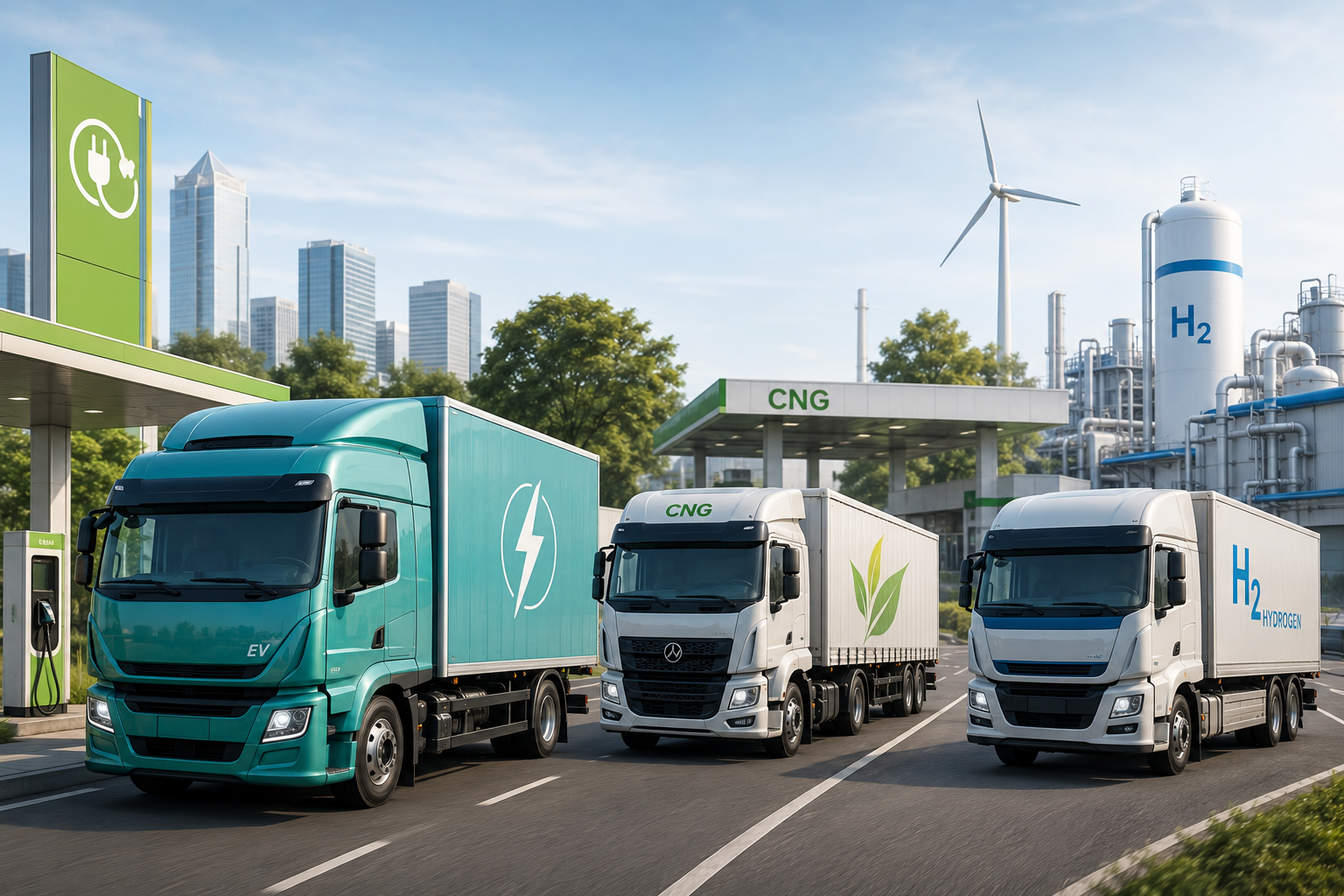
MoRTH proposes longer operating lives for cleaner commercial vehicles, five-year national permit authorisations and simpler digital registration procedures as India looks to accelerate the shift towards alternative-fuel transportation
The Ministry of Road Transport and Highways (MoRTH) has proposed giving battery-operated, hydrogen-fuelled and natural-gas-powered commercial vehicles an additional five years under the age limits applicable to national permits.
The proposal is part of a draft amendment to the Central Motor Vehicle Rules (CMVR), 1989, and seeks to make commercial transportation regulations more flexible while encouraging the adoption of cleaner vehicle technologies.
Along with the proposed age extension, MoRTH has suggested allowing national permit authorisations for up to five years, moving more permit-related procedures online, increasing the use of the VAHAN database and simplifying temporary-registration rules.
The proposed changes could have a significant impact on commercial fleet operators, particularly those investing in electric, CNG and hydrogen-powered vehicles, where higher upfront costs remain one of the major barriers to adoption.
Five-Year Extension Proposed for Cleaner Commercial Vehicles
The key proposal relates to Rule 88, which governs the age limits applicable to vehicles operating under the national permit system.
MoRTH has proposed extending the existing age limits by five years for battery-operated, hydrogen fuel-based and natural gas-driven commercial vehicles.
If the proposal is finalised in its current form, the existing 12-year and 15-year limits would effectively become 17 years and 20 years, respectively, for eligible cleaner vehicles.
The proposed extension is not a blanket relaxation for all commercial vehicles. It specifically applies to vehicles covered by Rule 88 and powered by the alternative fuels identified in the draft.
The move is aimed at improving the economic viability of cleaner commercial transportation and encouraging operators to shift away from conventional fuel-powered vehicles.
Longer Operating Life Could Improve Fleet Economics
The higher upfront cost of cleaner commercial vehicles has been one of the major concerns for fleet operators.
Electric trucks, hydrogen vehicles and other alternative-fuel commercial vehicles can require substantial initial investment compared with conventional diesel-powered vehicles.
A longer permissible operating period could allow fleet owners to spread this initial investment over a larger number of years.
For operators, the additional five years could potentially improve asset utilisation, lower the annualised ownership cost and provide more time to recover the investment through commercial operations.
The proposal could therefore become an additional incentive for fleet operators considering the transition towards cleaner technologies.
Electric Truck Adoption Remains Limited
The proposal comes at a time when electric commercial vehicle adoption, particularly in the heavy-duty segment, remains relatively low.
According to NITI Aayog's 2025 EV report cited in the source material, India recorded sales of only 6,220 electric trucks in 2024, including just 280 electric trucks above 3.5 tonnes.
The report identified high upfront costs and limited financing availability as important barriers to faster electric truck adoption.
The proposed five-year age extension does not directly reduce the purchase price of electric trucks, but it could improve the overall economics by allowing operators to use the vehicles for longer under the national permit framework.
EV Fleet Operators Could Get More Time to Recover Investment
For commercial fleet operators, the total cost of ownership is more important than the initial purchase price alone.
Operators consider fuel or electricity expenses, maintenance, financing costs, utilisation, vehicle life and resale value before purchasing a commercial vehicle.
A longer regulatory operating period could strengthen the business case for electric commercial vehicles by increasing the period over which the asset can generate revenue.
This could be particularly relevant for high-utilisation fleets such as logistics vehicles, urban delivery trucks and buses.
However, the actual financial benefit will depend on battery life, charging costs, financing terms and the residual value of the vehicles.
CNG Vehicles Also Included in the Proposal
The proposed five-year extension is not limited to battery-electric vehicles.
Natural-gas-powered commercial vehicles have also been included.
CNG already has an established ecosystem in several Indian cities and regions, making it an important alternative to conventional diesel vehicles.
The proposed regulatory extension could therefore support the continued use of CNG-powered commercial fleets while the country's electric and hydrogen infrastructure develops.
For operators that may not yet be ready to transition directly to electric vehicles, CNG could continue to play an important role in the cleaner-mobility transition.
Hydrogen Commercial Vehicles Get a Longer Regulatory Window
Hydrogen-powered commercial vehicles have also been included in the proposed changes.
Hydrogen is increasingly being considered for heavy-duty transportation because of its potential advantages in applications requiring longer driving ranges and faster refuelling compared with some battery-electric alternatives.
However, India's hydrogen commercial-vehicle ecosystem remains at an early stage.
The availability and cost of hydrogen, refuelling infrastructure, vehicle prices and technology development will determine how quickly hydrogen-powered trucks and buses can become commercially viable.
The proposed age extension could nevertheless provide greater regulatory certainty for operators and manufacturers investing in the technology.
National Permit Authorisations Could Last Up to Five Years
MoRTH has also proposed making the national permit system more convenient for commercial vehicle operators.
Instead of renewing national permit authorisations every year, operators could opt for an authorisation period of up to five years at a time.
The annual fee would remain at ₹16,500.
Therefore, a five-year authorisation would cost ₹82,500.
The longer validity period could reduce the administrative burden associated with annual renewals and provide greater certainty to operators running vehicles across state borders.
National Permit Process to Become More Digital
The draft amendment also proposes greater digitisation of the national permit process.
Applications under Form 46 and authorisations under Form 47 would be processed electronically.
Electronic payment receipts would also be accepted.
The shift could reduce paperwork, improve processing efficiency and reduce the need for operators to physically visit transport offices for routine permit-related procedures.
For large fleet operators, digital processing could save considerable administrative time.
VAHAN Could Automatically Fill Vehicle Details
The government also wants to increase the use of the VAHAN database for vehicle-related applications.
Under the proposed changes, information required in Forms 16, 46 and 48 could be automatically retrieved from VAHAN once the relevant dealership or vehicle registration details are provided.
Applicants would only need to enter information that is not already available on the database.
This could reduce repetitive data entry and minimise the possibility of errors caused by manually entering vehicle information across different forms.
Temporary Registration Rules Proposed for Chassis
The draft amendment also proposes changes to temporary registration rules.
A chassis without a body would receive temporary registration valid for six months from the date of issue.
If the chassis remains at a workshop beyond six months for body fitting, or because of unforeseen circumstances beyond the owner's control, the registering authority could extend the temporary registration by 30 days at a time.
Such an extension would require an application and payment of the prescribed fee.
The provision could provide greater flexibility for commercial vehicles that require specialised body construction or modifications before permanent registration.
45-Day Temporary Registration for Fully Built Vehicles
The draft also proposes a separate temporary-registration provision for fully built vehicles.
Temporary registration would be valid for 45 days if the vehicle is being converted into an adapted vehicle or is intended to be registered in a state different from the state where the dealer is located.
The proposed change could simplify the process for vehicles purchased in one state and subsequently registered elsewhere.
It could also provide additional time for vehicles requiring adaptation before final registration.
More Information Proposed in Registration Forms
MoRTH has proposed adding more information requirements to vehicle registration and permit forms.
Under Form 20, the vehicle owner's mobile number would be required to be Aadhaar-linked.
The form would also capture the agreement number or loan account number for vehicles under hypothecation.
The additional information could strengthen the link between vehicle ownership, registration and financing records.
Form 48 Could Include Insurance and Fitness Information
The proposed changes to Form 48 would require more detailed information about a vehicle.
This would include details of the valid registration certificate, insurance, Pollution Under Control certificate, fitness certificate, pending challans and any national permit previously held by the vehicle.
The additional information could give authorities a more comprehensive view of a commercial vehicle's regulatory and compliance status.
Automotive Component Manufacturers Could Get Trade Certificates
MoRTH has also proposed bringing eligible automotive component manufacturers within the Rule 33 trade certificate framework.
The draft defines eligible manufacturers as those approved by the Department of Scientific and Industrial Research and involved in research and development for developing new products for the automotive industry.
The move could provide qualifying component manufacturers with a clearer regulatory framework for activities connected with automotive product development and research.
It could also support innovation in India's growing automotive and alternative-mobility ecosystem.
Potential Impact on the Automotive Sector
If the proposals are implemented, the changes could benefit several segments of India's automotive industry.
Potentially affected areas include electric commercial vehicle manufacturers, CNG vehicle manufacturers, hydrogen mobility companies, battery manufacturers, automotive component suppliers, charging infrastructure providers, fleet operators, commercial vehicle financiers and fleet-management companies.
The actual impact on individual companies will depend on their exposure to commercial vehicles and alternative-fuel technologies.
Longer Vehicle Life Could Support Commercial EV Adoption
The proposed extension could be particularly relevant for electric commercial vehicle manufacturers.
One of the challenges for electric trucks is the higher upfront purchase price compared with conventional vehicles.
If fleet operators are permitted to use those vehicles for a longer period under national permits, the initial investment could potentially be recovered over a longer operating cycle.
This could improve the financial attractiveness of electric commercial vehicles for logistics and transportation companies.
However, battery degradation and replacement costs will remain important considerations.
Financing Remains a Critical Factor
The government proposal addresses the regulatory life of cleaner vehicles, but financing remains another major challenge.
Banks and non-banking financial companies may be cautious about lending against newer vehicle technologies because of uncertainties around residual values, battery life and resale markets.
A longer permitted operating period could potentially improve lenders' assessment of the useful life of these assets.
If financing availability improves alongside regulatory support, commercial EV adoption could accelerate more rapidly.
Charging Infrastructure Will Remain Important
Regulatory changes alone cannot resolve the infrastructure challenges facing electric commercial vehicles.
Commercial trucks often operate for long hours and require reliable charging infrastructure to minimise downtime.
The expansion of charging stations along major highways and freight corridors will therefore remain crucial.
Fleet operators are unlikely to significantly increase electric truck adoption unless they can be confident that vehicles can be charged efficiently and reliably during operations.
Hydrogen Requires Wider Infrastructure Development
Hydrogen-powered commercial vehicles face an even larger infrastructure challenge.
For hydrogen mobility to become commercially viable, India will need adequate production, storage, transportation and refuelling infrastructure.
The cost of hydrogen will also need to become competitive with conventional fuels and other alternatives.
The proposed age extension can provide regulatory support, but the wider hydrogen ecosystem will ultimately determine the pace of adoption.
Longer Vehicle Life Must Be Balanced With Safety
The proposed age extension also raises an important issue: vehicle safety.
Allowing cleaner commercial vehicles to operate for an additional five years should not result in weaker fitness standards.
Older commercial vehicles may require more frequent inspections and maintenance to ensure that safety-critical components remain roadworthy.
Fitness certification, braking systems, tyres, suspension and other mechanical and electrical components will need continued monitoring.
The policy objective should therefore be to extend the economic life of cleaner vehicles without compromising road safety.
Could Reduce Fleet Replacement Pressure
A longer permissible operating period could allow operators to retain vehicles for longer rather than replacing them purely because they have reached the existing age limit.
This could help operators extract more value from cleaner vehicles purchased at higher initial costs.
However, the measure could also have a mixed impact on new-vehicle sales in the short term if fleet owners delay replacement.
Over the longer term, stronger adoption of alternative-fuel vehicles could offset this effect as more operators transition from conventional vehicles.
Cleaner Commercial Transport Gets Policy Support
The proposal reflects the government's broader objective of reducing emissions from road transportation.
Commercial vehicles consume significant amounts of fuel because of their high utilisation and long operating distances.
Encouraging cleaner technologies in this segment could therefore have a meaningful environmental impact.
Battery-electric vehicles can reduce tailpipe emissions, while CNG and hydrogen can provide alternative pathways for reducing dependence on conventional fuels.
The overall environmental benefit will depend on the energy source, vehicle utilisation and lifecycle emissions associated with each technology.
Digitalisation Could Improve Ease of Doing Business
The permit and registration changes are also important from an ease-of-doing-business perspective.
Commercial operators often manage multiple permits, registrations, insurance documents, fitness certificates and challans.
Bringing more of these processes online and integrating them through VAHAN could reduce administrative complexity.
A digital system could also improve transparency and reduce delays in processing routine applications.
Industry Consultation Will Shape Final Rules
The proposed amendments are not yet final.
MoRTH has invited objections and suggestions for 30 days after the draft notification is made available to the public.
Industry participants, transport operators, vehicle manufacturers and other stakeholders can submit their feedback during this consultation period.
The final regulations could therefore differ from the current proposal.
Stakeholders are likely to seek further clarity on eligibility, fitness requirements, implementation timelines and the treatment of vehicles already operating under existing permits.
Key Questions Investors Should Watch
From an investment perspective, several developments will be important, including whether the five-year age extension is finalised, which exact vehicle categories qualify, whether existing vehicles receive the benefit, commercial EV sales growth, electric truck adoption, CNG vehicle demand, hydrogen vehicle development, financing availability, charging infrastructure expansion, fleet electrification orders, automotive component demand and implementation of digital permit systems.
The policy could create opportunities across the alternative-mobility ecosystem, but investors should focus on actual vehicle adoption rather than relying solely on the regulatory announcement.
Market Outlook
The proposed MoRTH amendments represent a potentially positive development for India's cleaner commercial transportation ecosystem.
The five-year age extension for eligible EV, CNG and hydrogen commercial vehicles could improve the economics of alternative-fuel fleets by allowing operators to use their assets for a longer period under the national permit framework.
The proposal is particularly relevant to electric trucks, where high upfront costs and limited financing have remained major barriers to adoption. A longer permitted operating life could allow operators to spread their investment over a greater period and potentially improve total cost of ownership.
The proposed five-year national permit authorisation, electronic processing of Forms 46 and 47, greater VAHAN integration and simplified temporary-registration provisions could also reduce administrative costs for commercial vehicle operators.
For investors, the proposal could support the broader commercial EV, CNG, hydrogen, battery, automotive-component and mobility-infrastructure ecosystem. However, the actual financial impact on individual companies will depend on whether the proposed regulatory changes translate into stronger vehicle demand, fleet orders and infrastructure investment.
The proposal remains at the consultation stage, with stakeholders being given 30 days to submit objections and suggestions. The final rules could therefore undergo changes before implementation.
Overall, the proposed policy signals a shift towards improving the entire lifecycle economics of cleaner commercial vehicles rather than focusing only on their initial purchase. If implemented effectively, the reforms could encourage fleet operators to adopt alternative-fuel vehicles, improve regulatory certainty and support India's longer-term transition towards cleaner commercial transportation.