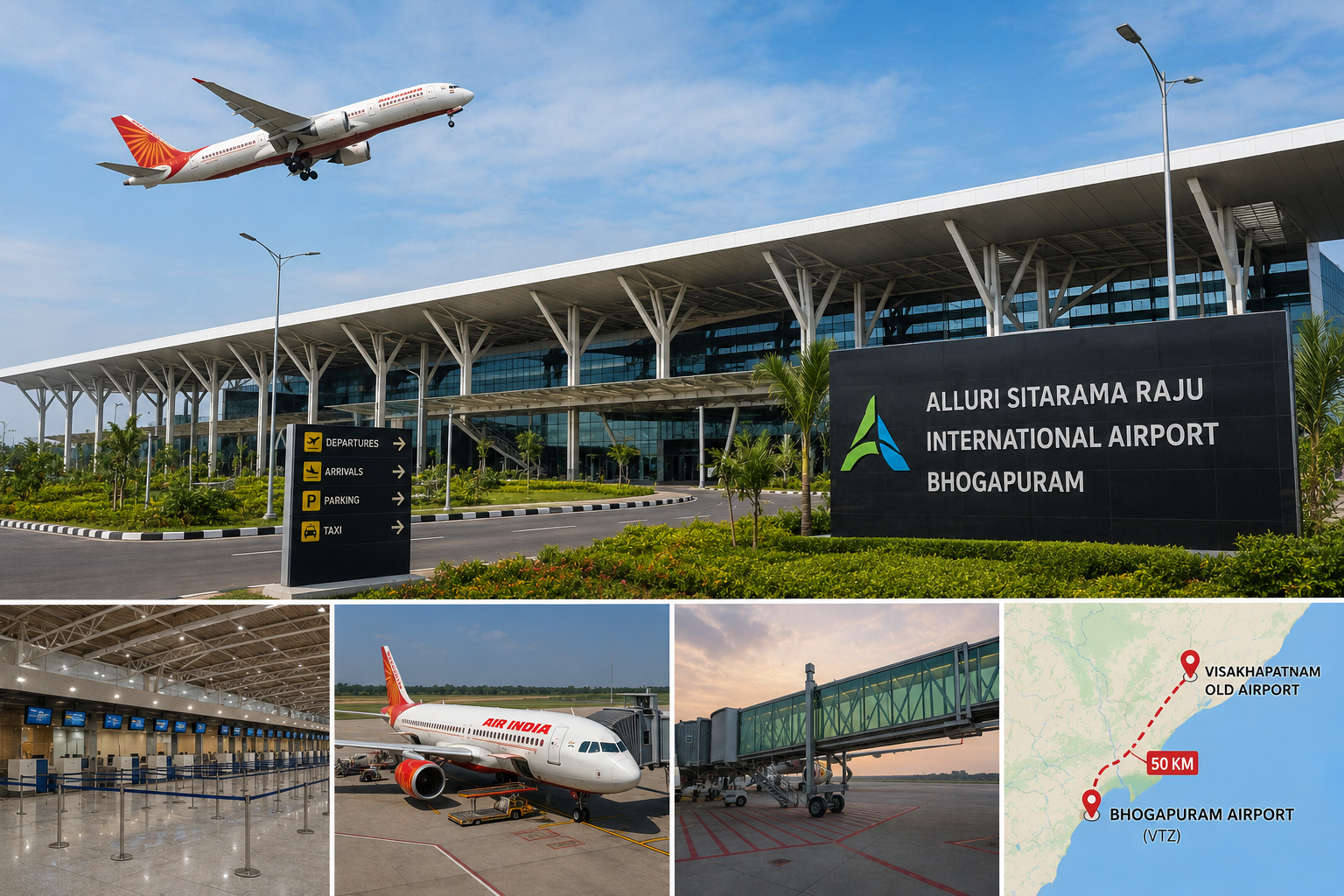
VTZ airport code has moved to the new Alluri Sitarama Raju International Airport, while Air India continues 14 weekly Delhi flights from the new aviation hub
Air India has shifted all its scheduled flights serving Visakhapatnam to the newly operational Alluri Sitarama Raju International Airport at Bhogapuram, marking a major transition for air travel in North Andhra.
The airline will continue using the familiar VTZ airport code, but the code now corresponds to the new Bhogapuram facility rather than the former Visakhapatnam Airport.
The new airport is located around 50 km from the previous airport, making advance travel planning particularly important for passengers.
Air India has advised travellers to check their bookings carefully and allow additional time to reach the new airport.
VTZ Code Now Points to Bhogapuram
For passengers, one of the most important aspects of the transition is that the airport code remains unchanged.
The VTZ code has been transferred to Bhogapuram, meaning passengers may continue to see VTZ on airline tickets, websites and booking platforms.
However, the physical airport associated with the code has changed.
Travellers who have previously used Visakhapatnam Airport should therefore verify the airport location before leaving for their flight.
Air India Maintains 14 Weekly Delhi Flights
Air India will continue operating 14 weekly flights between Bhogapuram and Delhi.
The Delhi connection provides passengers with access to one of India's largest aviation hubs and offers connectivity to a wider network of domestic and international destinations.
The route is particularly important for business travellers, tourists and passengers travelling onward to other cities.
Commercial Operations Begin at New Airport
The transition has coincided with the start of scheduled commercial operations at the new airport.
The first commercial flight to arrive was an IndiGo service from Hyderabad, followed by an Air India Express flight from Bengaluru.
The commencement of regular services marks the beginning of Bhogapuram's role as the principal commercial aviation gateway for the Visakhapatnam region.
Modern Airport Infrastructure
The new airport has been equipped with modern passenger facilities designed to handle increasing traffic.
Its terminal covers approximately 77,342 square metres and incorporates technology and infrastructure aimed at improving passenger processing.
The facilities include:
- 22 check-in counters
- 18 self-baggage drop units
- Advanced passenger screening systems
- Modern baggage-handling facilities
- Seven aerobridges
The infrastructure provides a significantly different passenger environment compared with the older airport.
Seven Aerobridges Improve Passenger Experience
The seven aerobridges will allow passengers to board aircraft directly from the terminal.
This can improve convenience and reduce dependence on buses for aircraft boarding.
The facility should also make boarding more comfortable during periods of rain or extreme weather.
Self-Baggage Drop Facilities Add Convenience
The presence of 18 self-baggage drop units is another important feature.
Passengers who complete the required check-in procedures online can potentially use self-service facilities to deposit their checked baggage.
This can help reduce queues during busy travel periods.
Advanced Baggage Handling Infrastructure
The airport's modern baggage-handling systems are designed to support more efficient movement of passenger luggage.
As traffic increases, reliable baggage processing will become an important part of maintaining operational efficiency.
The ability to handle higher passenger volumes without creating significant delays will be closely watched as the airport expands.
Old Visakhapatnam Airport Ends Scheduled Commercial Role
The opening of Bhogapuram also marks the end of scheduled commercial operations at the old Visakhapatnam Airport.
The final scheduled commercial departure brought the airport's long-standing role as the region's primary passenger aviation facility to a close.
The transition represents a major change for passengers who have traditionally used the old airport.
Existing Airport to Continue General Aviation Operations
The old airport will continue to have a role in aviation through general aviation and private flight operations.
This means the facility will remain relevant even though scheduled commercial passenger flights have moved elsewhere.
The continued availability of the old airport for private aviation could also support business and charter travel.
Distance From Visakhapatnam Is a Major Passenger Consideration
The new airport's location around 50 km from the previous airport is one of the biggest practical changes for passengers.
Travel time to the terminal could be significantly longer depending on the passenger's starting location and traffic conditions.
This makes road connectivity particularly important.
Passengers should factor the additional distance into their flight-day plans rather than relying on travel times previously used for the old airport.
Road Connectivity to Bhogapuram Being Strengthened
Infrastructure development around the airport is also progressing.
Several road projects are being taken up to improve access between Visakhapatnam and the new facility.
Improved road connectivity will be essential to ensuring that the airport can effectively serve a large regional catchment area.
Beach Corridor Could Improve Access
A proposed Beach Corridor could provide another route between Visakhapatnam and the airport.
The additional connectivity could give travellers an alternative to existing road routes and potentially improve accessibility from different parts of the city and surrounding region.
Multiple access routes will become increasingly important as passenger traffic grows.
North Andhra Gets a New Connectivity Gateway
Bhogapuram Airport is expected to play a larger role than simply replacing the existing airport.
Improved air connectivity can strengthen North Andhra's connection with India's major economic centres.
The airport could become an important gateway for:
- Business travel
- Tourism
- Manufacturing
- Trade
- Investment
- Education
- Healthcare travel
- Employment
Tourism Could Gain From Better Air Connectivity
North Andhra has a wide range of tourism attractions, including beaches, temples, heritage destinations and natural landscapes.
A modern airport with improved connectivity can make the region easier to access for domestic and international tourists.
Greater tourist traffic could create opportunities for hotels, restaurants, travel operators, transport companies and local businesses.
Business Travel Could Increase
Reliable flight connectivity is important for companies operating across multiple cities.
The availability of regular flights to Delhi and other major destinations can reduce travel time for corporate executives and professionals.
This could make the region more attractive for companies considering new investments or expanding existing operations.
Industrial Investment Could Benefit
Improved connectivity can complement the region's industrial development.
Manufacturing and industrial companies require access to customers, suppliers, executives and skilled employees.
A modern international airport can strengthen the overall investment ecosystem by making the region more accessible.
Logistics and Cargo Could Become Important
The airport could eventually develop a larger role in cargo and logistics activity.
A modern airport can support the movement of high-value, time-sensitive and specialised goods.
Potential demand could come from industries such as:
- Pharmaceuticals
- Electronics
- Engineering
- Seafood
- Perishables
- High-value manufacturing
The development of cargo infrastructure and dedicated connectivity could become an important long-term growth opportunity.
Employment Opportunities Could Expand
Airport operations can create employment both directly and indirectly.
Direct employment can emerge in aviation, airport management, security, maintenance, ground handling and retail.
Indirect employment can benefit transportation, hospitality, tourism, food services and other supporting industries.
As passenger and flight volumes grow, the airport's overall economic footprint could expand.
Real Estate Activity Could Increase Around the Airport
Large infrastructure projects often influence development in surrounding areas.
Improved accessibility can increase demand for:
- Hotels
- Offices
- Retail outlets
- Warehousing
- Residential projects
- Service businesses
The pace of such development will depend on road connectivity, industrial activity and urban planning around the airport.
International Connectivity Will Be a Key Growth Driver
The airport's international status creates an opportunity to establish direct international services.
International connectivity could reduce the need for passengers to travel through larger hubs for overseas journeys.
Direct international flights could also support tourism, trade and business investment.
The expansion of international routes will therefore be an important factor in determining the airport's long-term importance.
More Airlines Could Strengthen Competition
The presence of multiple airlines can provide passengers with greater choice.
IndiGo, Air India Express and Air India have begun establishing services at the new facility.
Additional airlines and routes could improve connectivity while increasing competition for passengers.
More destinations could also encourage greater passenger traffic, creating a positive cycle for the airport.
Passenger Volumes Will Be a Key Metric
The long-term success of the airport will depend significantly on passenger volumes.
High passenger traffic can encourage airlines to add routes and increase frequencies.
If passenger growth is strong, the airport could become a more important regional hub.
Conversely, slower traffic growth could delay route expansion.
Airport Infrastructure Must Match Growth
Modern facilities provide a strong starting point, but operational performance will ultimately determine passenger satisfaction.
The airport will need to maintain:
- Efficient check-in
- Fast security screening
- Reliable baggage handling
- Smooth boarding
- Ground transportation
- Adequate parking
- Effective passenger information
Maintaining these standards as traffic increases will be critical.
Initial Transition Could Bring Challenges
Any large-scale airport transition can create temporary difficulties.
Passengers may initially face confusion regarding:
- Airport location
- Ground transportation
- Travel time
- Parking
- Pickup and drop-off points
- Flight information
Airlines and airport authorities will need to communicate clearly with passengers to minimise disruption.
Passengers Should Plan Their Journey Carefully
Travellers using VTZ should take a few basic precautions.
They should check their flight details, confirm the airport location and leave sufficient time for the longer journey.
Passengers arranging taxis or private transportation should also confirm that the destination is Bhogapuram Airport, rather than the former Visakhapatnam Airport.
Connectivity Can Transform Regional Economics
The airport's importance extends beyond the aviation sector.
Transport infrastructure often acts as a catalyst for economic activity by reducing travel barriers.
For North Andhra, improved connectivity could encourage businesses to expand, tourists to visit and investors to explore opportunities in the region.
The airport could therefore become an important part of the region's broader economic development strategy.
Potential Benefits for Local Businesses
Small and medium-sized businesses could benefit from increased passenger and visitor activity.
Potential beneficiaries include:
- Hotels
- Restaurants
- Cab operators
- Travel agencies
- Retailers
- Tourism operators
- Logistics companies
- Commercial property developers
The economic multiplier could increase as passenger traffic grows.
Market Outlook
The transition from Visakhapatnam Airport to Alluri Sitarama Raju International Airport at Bhogapuram represents a significant infrastructure development for North Andhra.
The immediate focus will be on ensuring a smooth passenger transition and building reliable connectivity. Air India's 14 weekly Delhi services, along with operations by IndiGo and Air India Express, provide a strong foundation for the airport's initial network.
Over the longer term, the investment and economic implications could be considerably broader. A modern international airport can support tourism, manufacturing, logistics, commercial real estate, employment and foreign investment, while improved road infrastructure and the proposed Beach Corridor could strengthen the airport's regional catchment.
For the aviation industry, the key indicators to watch will be passenger growth, airline additions, route expansion, flight frequencies, international connectivity and cargo volumes. Strong traffic growth could encourage more airlines to establish services, reinforcing Bhogapuram's position as a regional aviation hub.
For North Andhra's economy, the airport could become an important catalyst for the next phase of development. The shift may create some initial adjustment for passengers because of the new location, but the combination of modern infrastructure and expanded connectivity provides the potential for Bhogapuram to become a major gateway for Visakhapatnam and the wider North Andhra region.