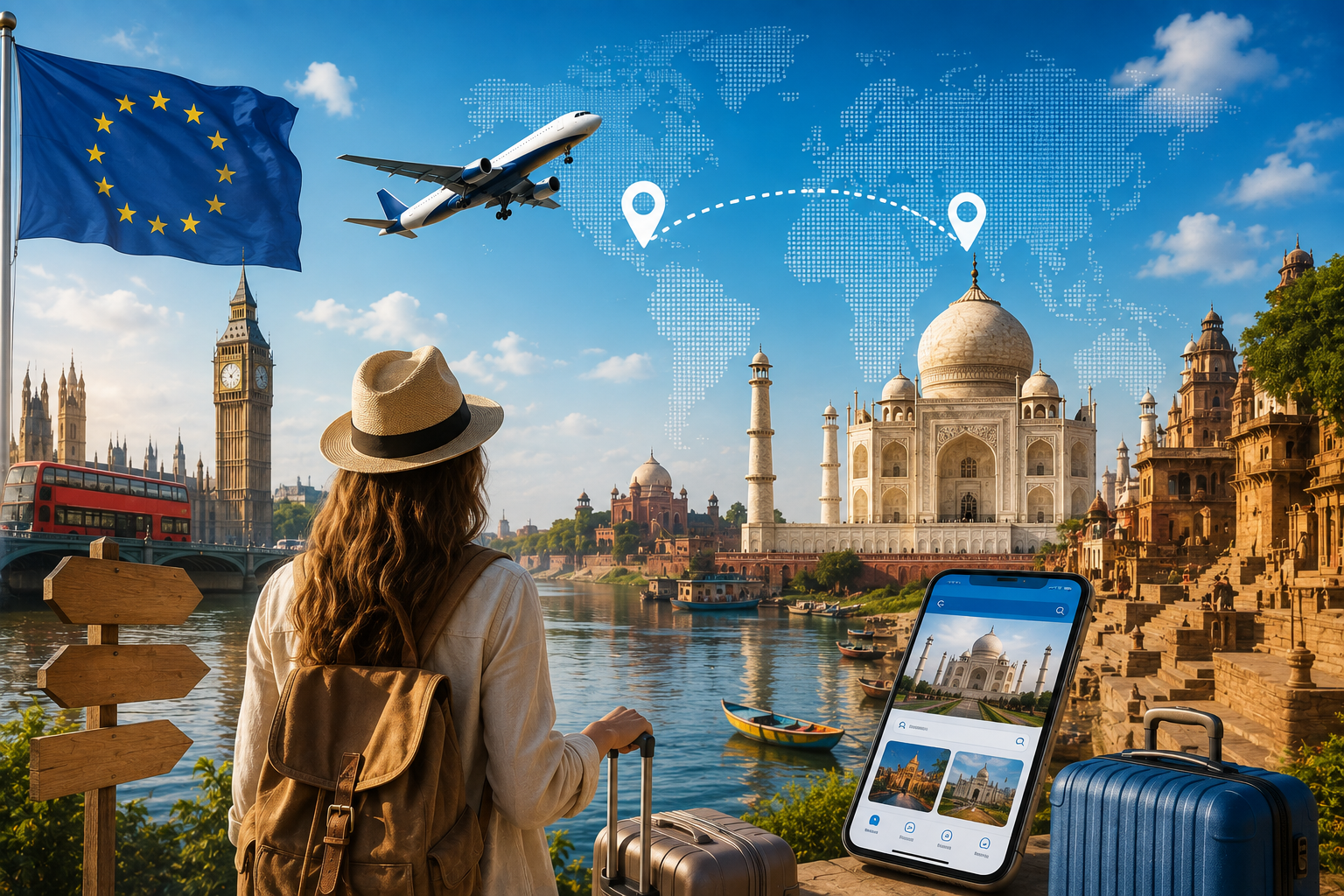
India Emerges as Europe’s Fastest-Growing Asian Destination as UK, Germany, Netherlands, France and Italy Lead Search Demand
India is witnessing a significant rise in travel interest from European tourists ahead of the 2026 summer travel season, with accommodation searches from Europe for India increasing 14 per cent year-on-year, according to digital travel platform Agoda.
The data is based on accommodation searches recorded between April and June 2026 for travel during July and August. India emerged as the fastest-growing Asian destination in Agoda's ranking of European travel interest, indicating increasing visibility of India among travellers planning summer holidays in Asia.
The trend could provide a positive demand backdrop for India's hospitality, aviation, travel and tourism-related businesses.
UK Remains the Largest European Market for India
The United Kingdom generated the highest volume of accommodation searches for India among European markets.
Germany ranked second, followed by:
- The Netherlands
- France
- Italy
The geographical spread is significant because it indicates that India's growing appeal is not being driven by a single European market.
The UK remains an important source market for Indian tourism due to longstanding cultural, business and travel links between the two countries.
India Outpaces Other Asian Destinations in Search Growth
India's 14 per cent increase in European accommodation searches placed it at the top of Agoda's list of fastest-growing Asian destinations based on the platform's summer travel data.
The rise points towards changing preferences among European travellers, with India increasingly competing for attention alongside established Asian tourism markets.
India's wide range of tourism experiences gives it an advantage in attracting different categories of travellers.
Diverse Tourism Offering Supports India's Appeal
India's tourism proposition extends across several categories, including:
- Heritage tourism
- Cultural experiences
- Beaches
- Wildlife
- Wellness and Ayurveda
- Adventure tourism
- Luxury travel
- Spiritual tourism
- Culinary experiences
This diversity allows travellers to combine several experiences within a single trip.
For European tourists, India's historic cities, cultural heritage, cuisine and natural attractions can provide a substantially different experience from conventional European holiday destinations.
Summer Search Data Signals Growing International Interest
Agoda's data covers searches for travel during July and August, a period when European consumers traditionally plan overseas summer holidays.
The increase in Indian accommodation searches suggests that the country is gaining greater consideration among travellers looking towards Asia.
However, search activity is an early indicator of travel demand and should not be treated as equivalent to completed hotel bookings or tourist arrivals.
The conversion of search interest into actual travel will depend on airfare, hotel pricing, connectivity, visa procedures and consumer spending conditions.
Tourism Growth Could Benefit Multiple Industries
A rise in international visitors can create economic benefits across a broad ecosystem.
Hotels and Resorts
Higher tourist arrivals can support hotel occupancy, room rates and revenue.
Airlines
International and domestic airlines can benefit from increased passenger traffic.
Restaurants
Foreign tourists generate additional demand for restaurants, cafes and local culinary experiences.
Transportation
Taxis, car rentals, trains, buses and other mobility services can benefit from higher tourist movement.
Travel Operators
Tour operators, guides and experience providers can gain from increased demand for organised travel.
Retail
International visitors can contribute to spending on handicrafts, jewellery, apparel and other products.
Premium Tourism Could Offer Greater Economic Value
The increase in European travel interest could be particularly beneficial for India's premium hospitality segment.
International travellers often spend across accommodation, restaurants, experiences, transportation and shopping.
Luxury hotels, boutique properties, heritage hotels and wellness resorts could therefore benefit disproportionately if the growth in European demand translates into actual bookings.
Higher-value tourism can also support greater revenue generation without requiring an equivalent increase in visitor numbers.
Tier-2 and Tier-3 Destinations Could Gain
Increasing international interest could gradually extend beyond India's traditional tourist centres.
International travellers are increasingly looking for authentic and experience-driven destinations, creating opportunities for lesser-known locations.
States and destinations offering strong cultural, natural or wellness experiences could potentially benefit from greater international visibility.
This could help distribute tourism spending beyond major metropolitan centres.
Domestic Connectivity Will Be Important
International flights are only one part of India's tourism infrastructure.
Once tourists arrive in India, convenient domestic connectivity becomes important for travellers visiting multiple destinations.
Better air, rail and road connectivity can make multi-city itineraries easier and potentially encourage visitors to extend their stays.
For example, a tourist arriving in Delhi may also want to visit Rajasthan, Kerala, Goa or other destinations during the same trip.
Hotel Capacity Must Keep Pace With Demand
A sustained increase in international travel interest could create additional demand for hotel rooms.
Adequate hotel capacity is particularly important during peak tourism periods.
If supply remains constrained in popular destinations, rising demand could support room rates and hotel profitability.
However, excessive capacity expansion could eventually put pressure on occupancy and pricing.
Therefore, the balance between demand growth and new room supply will remain important for hospitality companies.
Digital Travel Platforms Are Becoming Important Demand Indicators
Agoda's search data illustrates how digital travel platforms can provide early insights into changing tourism trends.
Travellers increasingly use online platforms to:
- Discover destinations
- Compare hotels
- Check prices
- Read reviews
- Build itineraries
- Make accommodation bookings
An increase in searches can therefore provide businesses with an early indication of potential demand.
Hotel companies and tourism operators can use such trends to adjust marketing campaigns, pricing and inventory.
European Markets Offer Diversification
The presence of five major European source markets in Agoda's data is strategically important.
India's tourism industry can potentially reduce dependence on individual international markets by attracting visitors from multiple countries.
The UK, Germany, Netherlands, France and Italy have different travel preferences, spending patterns and holiday calendars.
A diversified international customer base can make tourism demand more resilient.
Connectivity Could Determine Conversion of Search Demand
One of the most important factors determining whether travel interest translates into actual bookings will be connectivity.
Travellers generally prefer destinations that can be reached conveniently and economically.
Increasing direct or efficient connecting flights from major European cities could support India's tourism ambitions.
Domestic connectivity between international gateway cities and tourist destinations will be equally important.
Visa and Travel Facilitation Remain Important
The ease with which international travellers can enter India can influence destination decisions.
A smooth visa application process, clear travel information and efficient arrival procedures can improve the overall visitor experience.
As international competition for tourists intensifies, ease of travel could become an increasingly important factor alongside destination attractiveness.
Sustainability Could Influence European Traveller Choices
Sustainability is becoming an increasingly relevant consideration for many European travellers.
Indian tourism businesses could potentially strengthen their appeal by highlighting:
- Eco-friendly hotels
- Responsible wildlife tourism
- Community-based tourism
- Local sourcing
- Sustainable transportation
- Heritage conservation
- Waste-management initiatives
Responsible tourism can also help destinations manage the environmental and social impact of rising visitor numbers.
India Faces Strong Competition in Asian Tourism
India's growing popularity comes amid intense competition from other Asian destinations.
Countries such as Thailand, Vietnam, Indonesia, Japan and Sri Lanka continue to attract European travellers.
India therefore needs to compete on multiple factors, including:
- Travel experience
- Price
- Connectivity
- Hospitality
- Safety
- Infrastructure
- Service quality
- Ease of travel
The country's cultural and geographical diversity provides a major advantage, but infrastructure and visitor experience will remain important differentiators.
Search Growth Does Not Guarantee Booking Growth
Investors and tourism companies should distinguish between travel interest and actual travel demand.
A consumer may search for hotels in India but ultimately choose another destination based on:
- Airfare
- Hotel prices
- Weather
- Visa requirements
- Geopolitical conditions
- Currency movements
- Personal budgets
Actual hotel bookings, international passenger traffic and tourist arrivals will therefore be more important confirmation indicators.
Potential Impact on Hospitality Companies
If the rise in European searches translates into actual arrivals, Indian hotel companies could benefit from stronger occupancy and pricing.
The potential beneficiaries include hotels with:
- Strong international brand recognition
- Properties in major tourist destinations
- Luxury and premium positioning
- Heritage properties
- Wellness resorts
- Strong digital distribution
- Exposure to foreign tourists
Investors should nevertheless assess each company's room inventory, occupancy rates, average daily rate and valuation before drawing investment conclusions.
Airlines Could Also Benefit
International tourism growth can increase demand for flights to India.
Airlines could benefit from higher passenger volumes on European-India routes as well as additional domestic travel by international tourists.
However, airline profitability remains sensitive to fuel prices, aircraft utilisation, foreign exchange and competition.
Therefore, higher passenger traffic does not necessarily translate into proportionately higher profits.
Travel Spending Can Create a Wider Economic Impact
International tourism has a multiplier effect.
A foreign tourist's spending does not stop at the hotel.
It can flow through:
Hotel → Restaurant → Driver → Tourist attraction → Local retailer → Tour operator
This creates economic activity across multiple businesses and regions.
Higher international tourist spending can therefore contribute to employment and local economic development.
Key Growth Drivers for India's Tourism Industry
Several factors could support India's tourism growth over the medium term.
Rising Global Visibility
India is increasingly visible on international travel platforms and media.
Better Connectivity
Additional international and domestic routes can improve accessibility.
Hospitality Expansion
New hotel capacity can accommodate increasing visitor numbers.
Premiumisation
Luxury and experiential tourism can increase spending per visitor.
Destination Diversification
Promoting lesser-known destinations can create new tourism corridors.
Digital Booking
Online travel platforms can improve international discovery and booking convenience.
Key Risks to Watch
Despite the positive trend, India's tourism industry faces several challenges.
Infrastructure Constraints
Some tourist destinations continue to face limitations in roads, public transport and accommodation.
Weather Conditions
Extreme heat, monsoons and seasonal weather can affect travel patterns.
International Competition
Other Asian destinations continue to compete aggressively for European travellers.
Service Quality
Inconsistent service standards can affect visitor satisfaction and repeat travel.
Airfare
High international airfare can discourage price-sensitive travellers.
Geopolitical Risks
Global conflicts and travel disruptions can influence international travel decisions.
What Investors Should Monitor
For investors looking at India's tourism and hospitality ecosystem, the following indicators will be important:
- International tourist arrivals
- Foreign tourist spending
- Hotel occupancy
- Average daily room rates
- Revenue per available room
- International passenger traffic
- Hotel room additions
- Airline capacity
- Visa trends
- European booking trends
A sustained improvement across these indicators would provide stronger evidence that rising travel searches are translating into real economic activity.
Market Outlook
Agoda's latest data provides an encouraging early signal for India's international tourism and hospitality sector, with accommodation searches from European travellers for India rising 14 per cent year-on-year for travel during July and August 2026.
India's position as the fastest-growing Asian destination in Agoda's European search ranking is particularly significant. The UK remains the largest European source market, while Germany, the Netherlands, France and Italy provide additional demand diversification.
If this search momentum converts into actual bookings and tourist arrivals, the benefits could extend well beyond hotels. Airlines, restaurants, travel operators, local transportation providers, tourist attractions, retail businesses and premium hospitality companies could all benefit from higher international visitor spending.
The most important confirmation will now come from actual foreign tourist arrivals, hotel occupancy, room rates and international passenger traffic. Search data provides an early indication of interest, but sustained improvement in these operating metrics will determine whether the trend develops into a meaningful earnings opportunity for listed tourism and hospitality companies.
For investors, the outlook remains positive but selective. Companies with strong exposure to international travellers, premium room inventory, favourable destination positioning and healthy pricing power could be better placed to benefit from rising demand.
The longer-term opportunity is also supported by India's diverse tourism proposition, improving digital discovery and potential growth in experiential and premium travel. However, infrastructure, connectivity, airfare, service quality and competition from other Asian destinations remain important challenges.
Overall, the 14 per cent rise in European search interest strengthens the growth narrative for India's tourism sector. If the increased digital interest translates into higher arrivals and sustained hotel demand, FY27 could see a further improvement in the operating environment for India's hospitality, aviation and travel ecosystem.