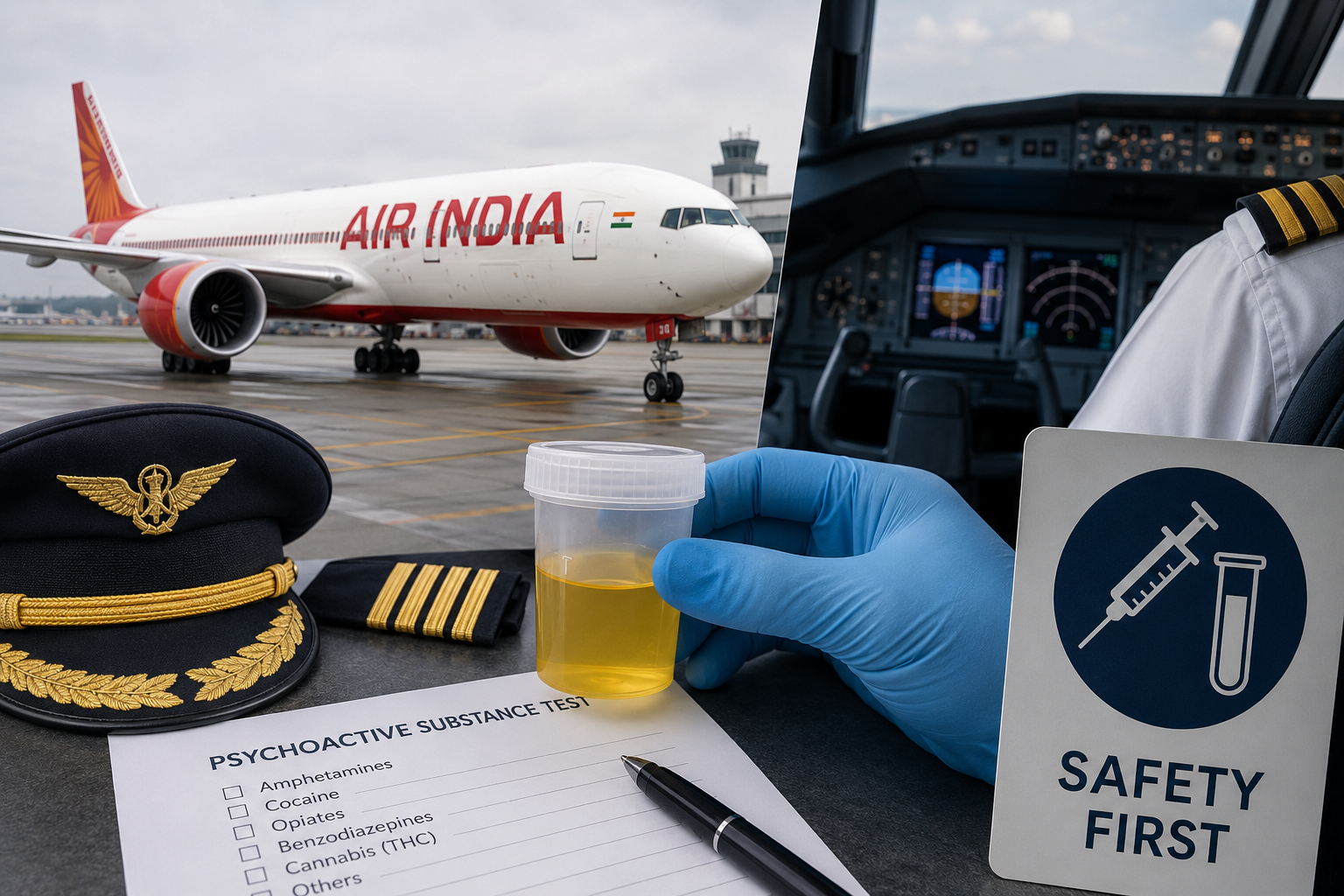
Airline Tightens Internal Safety Protocols After Pilot Tests Positive for Marijuana; AAIB Probe Continues Into August 4 Flight Incident
Air India has made psychoactive substance testing mandatory for its pilots, tightening its internal safety procedures following the August 4 Phuket-Delhi flight incident in which the pilot-in-command tested positive for marijuana in a confirmatory test. The airline previously conducted random testing in line with regulatory requirements, but the new internal measure makes testing mandatory for pilots.
The development comes as aviation authorities continue to examine the circumstances surrounding Air India flight AI2379, which experienced a sudden loss of approximately 300 feet in altitude while flying from Phuket to Delhi.
Phuket-Delhi Flight Incident Put Safety Procedures Under Focus
Air India flight AI2379, an Airbus A320, was carrying 137 passengers, including three infants, along with eight crew members when the incident occurred on August 4.
The aircraft subsequently landed safely in Delhi, but the sudden altitude loss resulted in injuries to passengers and crew. The number of injured was later reported at 24, including 20 passengers and four crew members.
The incident has been classified as a serious incident, bringing it under investigation by the Aircraft Accident Investigation Bureau (AAIB).
Pilot's Confirmatory Test Returned Positive
The pilot-in-command initially returned a “non-negative” result in a screening test for marijuana.
A subsequent confirmatory test returned a positive result for marijuana, according to reports.
Both pilots were removed from the flying roster following mandatory post-flight screening.
The substance-test result has increased scrutiny around the incident, although the final investigation will need to establish whether it had any connection with the aircraft's altitude loss.
Air India Moves Beyond Random Testing
Air India had previously conducted random psychoactive-substance testing of pilots and other aviation personnel in accordance with DGCA requirements.
The airline's latest decision introduces a more stringent internal requirement by making psychoactive substance testing mandatory for pilots.
The move is aimed at strengthening internal safety controls and ensuring that crew members operating flights meet the required fitness standards.
The decision also comes as Air India faces heightened attention over its operational safety procedures.
What Do DGCA Rules Say About Psychoactive Substances?
DGCA regulations prohibit flight crew from operating while under the influence of psychoactive substances that could impair their ability to safely perform their duties.
The regulatory framework also provides for testing of aviation personnel.
DGCA's rules state that licensed personnel must not exercise their privileges while under the influence of a psychoactive substance that could render them unable to safely discharge their duties. The rules also provide for testing procedures involving crew members.
The regulatory framework therefore places fitness for duty at the centre of aviation safety.
First Positive Test Does Not Automatically Mean Licence Cancellation
A confirmed positive test does not necessarily mean that a pilot's licence is automatically cancelled after a first violation.
Under the applicable framework, a pilot can be referred for rehabilitation or de-addiction treatment and must meet prescribed medical requirements before returning to flying duties.
This distinction is important because the regulatory process separates the immediate finding of a positive test from the longer-term assessment of a pilot's fitness and eligibility to operate aircraft.
Repeat violations attract progressively stricter consequences.
Air India Could Take Separate Disciplinary Action
While DGCA regulations provide the regulatory framework, Air India can impose its own internal disciplinary measures.
The airline's internal inquiry into the Phuket-Delhi incident could consider the circumstances of the flight, the substance-test findings and the consequences of the incident.
The final action could therefore depend on the airline's internal investigation as well as the findings of aviation authorities.
AAIB Investigation Remains Crucial
The AAIB continues to investigate the August 4 incident.
Investigators are expected to examine a wide range of evidence rather than relying on a single test result.
This could include:
- Flight-data records
- Cockpit information
- Crew statements
- Aircraft systems
- Weather and turbulence conditions
- Medical information
- Operational procedures
- Other relevant evidence
Aviation investigations generally require multiple sources of evidence before determining the circumstances and contributing factors behind an incident.
Airbus and France's BEA Assisting Investigation
Airbus and France's Bureau of Enquiry and Analysis for Civil Aviation Safety (BEA) are also assisting with the investigation.
Their involvement could provide additional technical expertise as investigators examine the aircraft's systems, flight data and operational circumstances.
The investigation's final conclusions will be important in determining whether the altitude loss was caused by turbulence, technical factors, crew-related factors or a combination of circumstances.
Authorities Warn Against Premature Conclusions
The AAIB has cautioned against drawing conclusions from incomplete or unverified information while the investigation is underway.
Information gathered during an aviation investigation, including records, statements and medical information, is subject to confidentiality protections under the applicable framework.
As a result, the positive substance-test finding should not by itself be treated as the final explanation for the flight incident.
Air India Faces Greater Safety Scrutiny
The latest incident comes at a time when Air India's safety standards are already under increased scrutiny following the June 2025 AI171 crash, which resulted in 260 deaths.
Although the Phuket-Delhi event was a different type of incident and the aircraft landed safely, it has added to public and regulatory attention surrounding the airline's safety systems.
For Air India, maintaining confidence among passengers and regulators will be an important part of its ongoing transformation.
CEO Campbell Wilson Briefed Government Officials
Air India's outgoing CEO Campbell Wilson was summoned by the Ministry of Civil Aviation following the Phuket-Delhi incident.
He briefed senior officials on the matter and also met officials from the ministry and DGCA.
The engagement underscores the seriousness with which the incident is being treated by aviation authorities.
Why Mandatory Testing Matters
Mandatory testing can strengthen an airline's internal safety framework in several ways.
Stronger Fitness-for-Duty Controls
Testing can help identify potential substance-related concerns among flight crew.
Greater Accountability
A mandatory process creates a clear compliance requirement rather than relying exclusively on random checks.
Stronger Internal Oversight
Regular testing can become one component of a broader safety-management system.
Passenger Confidence
Following a high-profile incident, visible safety measures can help reassure passengers that additional safeguards are being implemented.
Substance Testing Is Only One Part of Aviation Safety
While psychoactive-substance testing is important, it is only one component of a comprehensive aviation safety system.
Other critical areas include:
- Pilot training
- Medical fitness
- Fatigue management
- Crew resource management
- Aircraft maintenance
- Flight-data monitoring
- Weather assessment
- Operational procedures
- Safety reporting
- Emergency preparedness
The AAIB investigation will therefore remain important in determining the full circumstances surrounding the Phuket-Delhi incident.
What Happens to the Pilot Now?
The pilot's future flying status will depend on the applicable regulatory process, medical assessment and Air India's internal disciplinary proceedings.
A positive test does not by itself establish the cause of the flight incident.
The airline and regulators will have to consider the complete evidence before determining further action.
This could include medical assessments, rehabilitation requirements, internal disciplinary procedures and the findings of the ongoing investigation.
Air India's Safety Challenge Goes Beyond One Incident
The latest testing decision reflects a broader challenge facing Air India as it continues its transformation.
The airline is simultaneously working to expand its network, integrate operations and improve its fleet and service proposition.
At the same time, it must maintain strict operational and safety standards across a large and increasingly complex organisation.
For passengers, consistent execution of safety procedures will be more important than individual announcements.
Key Developments to Watch
The next stages of the matter will likely focus on:
- AAIB's investigation findings
- Air India's internal inquiry
- Regulatory action, if any
- The pilot's medical and regulatory status
- Implementation of mandatory testing across the airline
- Any additional DGCA directions
- Further changes to Air India's safety procedures
Business and Reputation Implications for Air India
For Air India, safety is not only a regulatory requirement but also a critical component of its business strategy.
The airline is competing in an increasingly competitive Indian aviation market where passenger confidence can influence airline selection.
Any perception of weakening safety standards can create reputational challenges, while transparent corrective measures can demonstrate a commitment to strengthening operational controls.
The introduction of mandatory psychoactive-substance testing is therefore significant from both a safety and reputation-management perspective.
Market Outlook
Air India's decision to make psychoactive substance testing mandatory for pilots represents a significant tightening of its internal safety procedures following the Phuket-Delhi incident.
The immediate trigger was the confirmatory positive test for marijuana involving the pilot-in-command, but the broader issue is how the airline strengthens its systems for ensuring crew fitness and operational safety.
The AAIB investigation remains the key development to watch, as the final findings will determine the circumstances surrounding the approximately 300-foot altitude loss and whether any crew, technical or environmental factors contributed to the incident.
For Air India, the priority will be to demonstrate that enhanced testing is part of a broader and consistently implemented safety framework. Pilot fitness, training, fatigue management, aircraft maintenance, operational oversight and transparent compliance will all remain critical to rebuilding and maintaining passenger confidence.
The latest move signals that the airline is responding to the incident with tighter internal controls, while the final regulatory and investigative conclusions will determine what further action may be required.