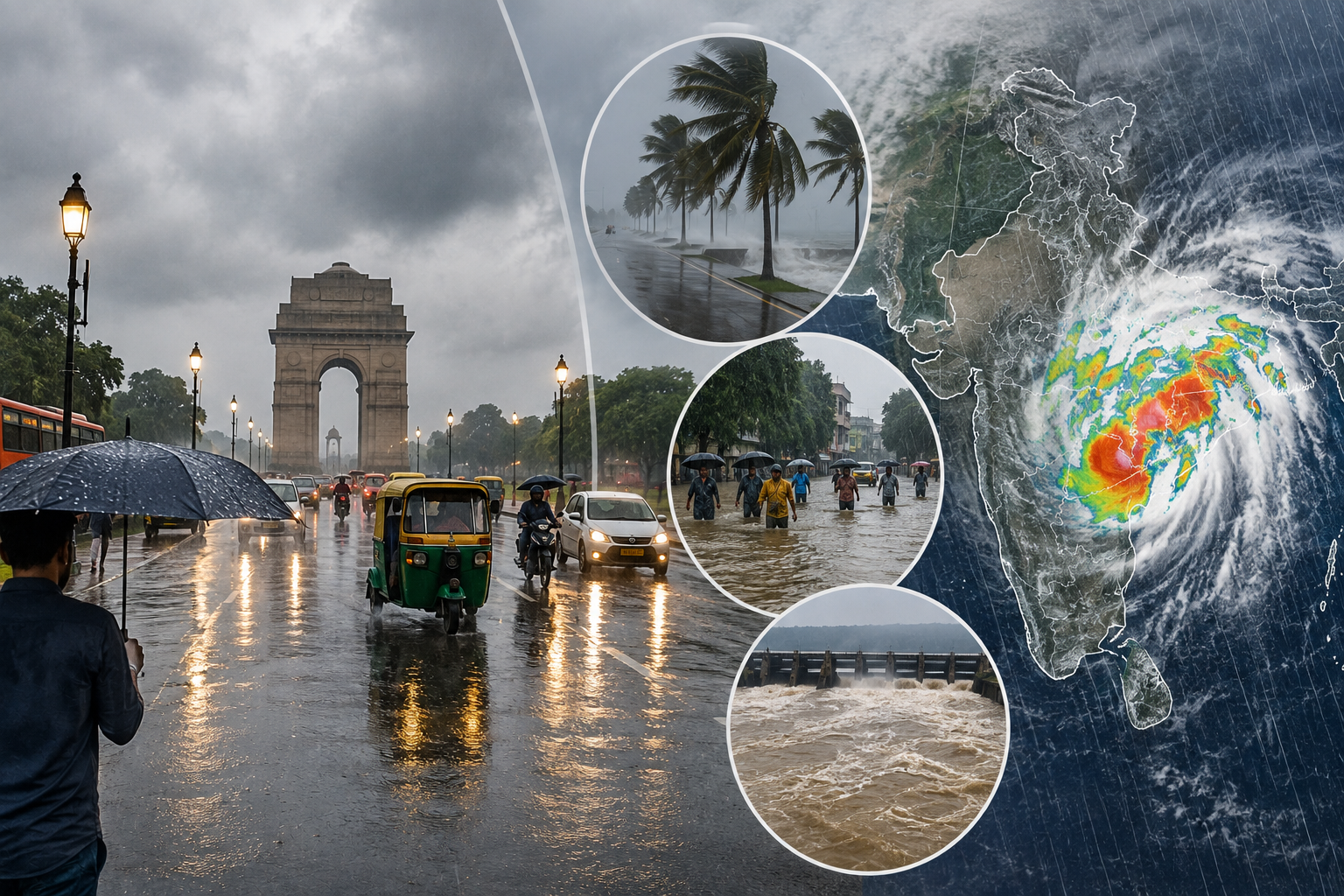
Delhi-NCR Likely to Remain Cloudy With Rain Chances Through August 16; Odisha, Chhattisgarh, West Bengal and Other Regions Face Heavy Rainfall Risk
Delhi-NCR remained humid and cloudy on Thursday as monsoon activity continued across several parts of the country. While the national capital may see light rain or drizzle, the India Meteorological Department (IMD) has forecast a more active rainfall spell across eastern, central, northern and northeastern India.
The latest IMD bulletin indicates fairly widespread to widespread rainfall over several regions, with heavy rainfall expected at isolated places across parts of Odisha, Chhattisgarh, West Bengal, Jharkhand and northern India. The weather agency has also warned of thunderstorms, lightning and gusty winds in several areas.
Delhi-NCR to Remain Cloudy and Humid
Delhi residents woke up to a humid morning following recent spells of rain. The weather is expected to remain generally cloudy, with chances of light rainfall or drizzle.
The combination of moisture and temperatures in the mid-30s is likely to keep humidity levels elevated, potentially making conditions uncomfortable despite intermittent showers.
The latest IMD outlook indicates that rainfall activity is expected to increase over Haryana, Chandigarh and Delhi from August 14, with heavy rainfall possible at isolated locations during the extended forecast period.
Rainfall Activity Likely to Continue Through August 16
Delhi-NCR is expected to remain under the influence of the ongoing monsoon system over the next several days.
The IMD has forecast fairly widespread to widespread rainfall over Haryana, Chandigarh and Delhi during August 14–15, while isolated heavy rainfall is possible over the region during the broader August 14–18 period.
Residents should therefore be prepared for changing weather conditions, particularly during the afternoon and evening hours.
Eastern India Remains Under Rainfall Watch
The more significant rainfall activity is currently concentrated across eastern and central India.
The IMD has forecast widespread rainfall over Gangetic West Bengal, Jharkhand and Odisha, while Chhattisgarh is also expected to experience widespread rainfall activity during the current spell.
Persistent rainfall in these areas could result in localised waterlogging, reduced visibility and temporary disruptions to road and rail transportation.
Odisha Faces Heavy Rainfall Risk
Odisha remains one of the key states under weather watch.
The IMD has forecast heavy rainfall at isolated places over Odisha, while its broader outlook indicates continued rainfall activity across the state.
Coastal and low-lying areas could be particularly vulnerable to waterlogging if intense rainfall persists.
The combination of heavy showers and thunderstorms could also affect local transportation and outdoor activities.
Chhattisgarh to See Widespread Rainfall
Chhattisgarh is also expected to experience widespread rainfall during the current weather spell.
The IMD's latest bulletin indicates widespread rainfall over Chhattisgarh through the coming days, with isolated heavy rainfall possible in the region.
The state has also been under a thunderstorm and lightning watch during portions of the current forecast period.
West Bengal and Jharkhand Remain Active
West Bengal and Jharkhand are expected to remain wet as monsoon activity persists over eastern India.
The IMD has forecast fairly widespread to widespread rainfall over Gangetic West Bengal and Jharkhand. Sub-Himalayan West Bengal and Sikkim are also expected to see significant rainfall activity.
Intense rainfall in urban centres could result in temporary waterlogging, while hilly areas could face additional risks from landslides.
Heavy Rainfall Forecast Over Northern India
The rainfall spell is also extending across parts of northern India.
The IMD has forecast widespread rainfall over Himachal Pradesh, Jammu & Kashmir-Ladakh and Uttarakhand, while rainfall activity is expected to increase across Haryana, Chandigarh and Delhi.
Heavy rainfall in the Himalayan region can create additional risks, including landslides, road blockages and disruption to tourism and transportation.
Uttar Pradesh and Rajasthan Also on Weather Radar
Parts of Uttar Pradesh and Rajasthan are expected to experience continued rainfall activity.
The IMD has forecast isolated heavy rainfall over East Uttar Pradesh during the coming days, while rainfall activity is also expected across parts of Rajasthan.
Thunderstorms and lightning could accompany rainfall in some locations.
Northeastern States May Receive Heavy Rain
The Northeast remains another important area of concern.
The IMD has forecast heavy to very heavy rainfall at isolated places over Arunachal Pradesh and Assam & Meghalaya, while heavy rainfall is also possible over Nagaland, Manipur, Mizoram and Tripura during parts of the forecast period.
Given the region's mountainous terrain, prolonged heavy rainfall can increase the risk of landslides and localised flooding.
Thunderstorms and Gusty Winds Could Add to Risks
Rainfall will not be the only weather concern.
Thunderstorms accompanied by lightning and gusty winds are expected at isolated locations across several states.
The IMD has also highlighted the possibility of strong surface winds over parts of southern India.
Residents are advised to exercise caution during thunderstorms, particularly in open areas and near trees, electric infrastructure and temporary structures.
Southern India Also Likely to Receive Rain
Monsoon activity is expected to continue across parts of southern India, including Karnataka, Kerala, Goa and Tamil Nadu.
The latest weather outlook also indicates rainfall activity over parts of Andhra Pradesh and Telangana.
Some areas could also experience strong winds and thunderstorms.
Gujarat and Western India Remain Under Watch
Western India is not expected to remain completely dry.
The IMD has included Gujarat, Maharashtra and Goa among areas where rainfall activity could continue.
For Gujarat, continued monsoon rainfall will remain important for agriculture, reservoirs and water availability, although intense spells can create localised flooding and urban drainage problems.
Rainfall Brings Both Benefits and Risks
The ongoing monsoon activity has mixed implications for the economy.
Adequate rainfall can improve:
- Soil moisture
- Reservoir levels
- Agricultural conditions
- Irrigation availability
- Rural income prospects
- Kharif crop development
However, excessive rainfall over a short period can create:
- Crop damage
- Waterlogging
- Flooding
- Road disruptions
- Supply-chain interruptions
- Infrastructure damage
Therefore, the distribution and intensity of rainfall remain more important than the headline monsoon figure alone.
Agriculture Remains a Key Beneficiary
Continued monsoon activity is particularly important for India's agricultural economy.
Normal rainfall can support kharif crops and reduce dependence on irrigation, potentially supporting farm incomes and rural consumption.
A healthy agricultural season can also benefit sectors linked to rural demand, including FMCG, tractors, two-wheelers, fertilisers and agricultural equipment.
However, excessive rainfall in crop-producing regions can create a different set of risks, particularly if fields remain waterlogged for prolonged periods.
Infrastructure and Logistics Could Face Short-Term Disruptions
Heavy rainfall can temporarily affect construction, road projects, mining and logistics.
Urban waterlogging can slow transportation, while intense rainfall in rural and hilly areas can disrupt road connectivity.
For companies operating in affected regions, prolonged weather disruptions could increase logistics costs and delay project execution.
Impact on Daily Life
The current weather conditions could affect daily activities across several states.
Potential disruptions include:
- Traffic congestion
- Waterlogging
- Flight and railway delays
- Road closures
- Localised flooding
- Power interruptions
- Reduced visibility
- Landslide risks in hilly regions
Delhi-NCR may see relatively manageable conditions compared with areas facing heavier rainfall, but sudden intense showers can still create short-term traffic disruptions.
Key Weather Factors to Watch
Delhi-NCR Rainfall
Rainfall activity is expected to increase around August 14–15, with isolated heavy rain possible during the broader forecast period.
Eastern India
Odisha, West Bengal and Jharkhand remain important regions to monitor for persistent rainfall.
Central India
Chhattisgarh and Madhya Pradesh are expected to experience continued monsoon activity.
Himalayan Region
Himachal Pradesh, Uttarakhand and Jammu & Kashmir-Ladakh remain vulnerable to heavy rainfall and associated disruptions.
Northeast India
Arunachal Pradesh, Assam and Meghalaya could experience heavy to very heavy rainfall at isolated locations.
Thunderstorms
Lightning and gusty winds remain a concern in several regions.
Economic and Market Impact
Weather conditions can influence multiple sectors of the Indian economy.
A favourable monsoon generally supports agriculture, rural consumption, FMCG, tractors, two-wheelers and fertiliser demand.
At the same time, excessive rainfall can temporarily affect construction, infrastructure, logistics, mining and transportation.
Investors should therefore track regional rainfall patterns rather than assuming that all sectors will benefit equally from a stronger monsoon.
Market Outlook
The latest IMD forecast points to continued monsoon activity across large parts of India, with Delhi-NCR expected to remain humid and increasingly wet while eastern and central regions face a greater risk of heavy rainfall.
For Delhi, the immediate weather outlook remains focused on cloudy skies, humidity and intermittent rainfall, with rainfall activity expected to strengthen around August 14–15. Eastern and central states including Odisha, Chhattisgarh, West Bengal and Jharkhand remain important areas to watch for heavy rainfall and related disruptions.
From an economic perspective, continued rainfall should support agriculture, reservoirs and rural activity, provided the distribution remains favourable. Excessive rainfall, however, could temporarily disrupt infrastructure, transportation and supply chains.
For markets, investors should monitor crop conditions, reservoir levels, rural demand, infrastructure activity and weather-related disruptions as the monsoon progresses.