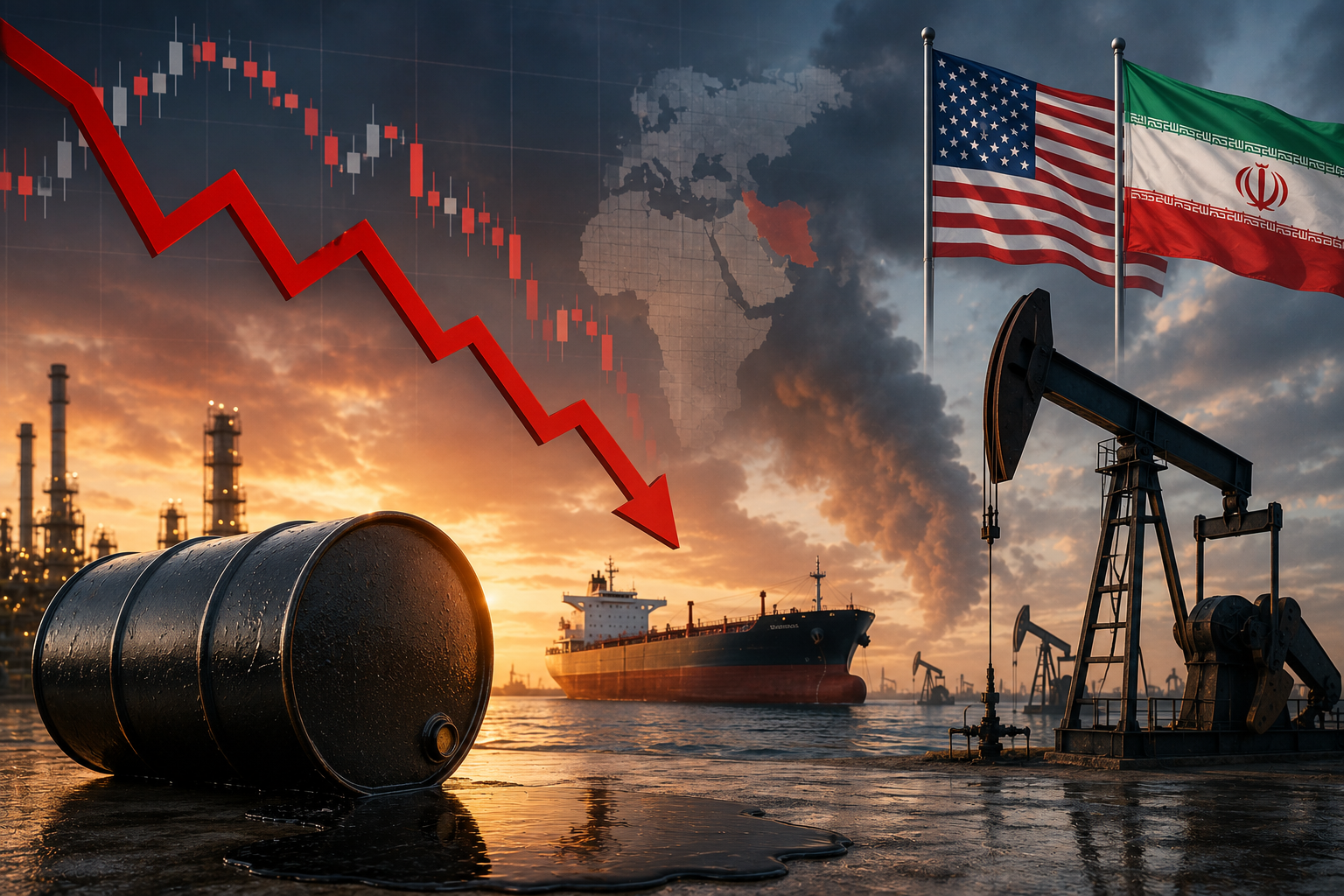
Brent Crude Falls More Than 1% After Sharp Rally as Tanker Traffic Continues Through Strategic Gulf Routes Despite Intensifying Military Action
Global crude oil prices retreated on Thursday after witnessing one of the sharpest rallies since the US-Iran conflict intensified, as traders shifted their focus from geopolitical tensions to the resilience of global oil supply chains. Although fresh military strikes between the United States and Iran raised concerns over energy security, continued movement of crude through key Middle Eastern shipping routes helped ease fears of an immediate supply shock.
Brent crude slipped below the crucial $90 per barrel mark, while US benchmark West Texas Intermediate (WTI) also traded lower. Analysts noted that the oil market is increasingly responding to actual supply disruptions rather than political rhetoric, keeping prices volatile but preventing another major breakout.
Crude Prices Reverse After Sharp Rally
Oil markets witnessed profit booking after a strong surge in the previous trading session.
Latest Crude Oil Prices
| Benchmark | Price | Daily Change |
|---|---|---|
| Brent Crude | $89.78 per barrel | -1.06% |
| WTI Crude | $83.82 per barrel | -0.76% |
The decline follows Wednesday's sharp gains, when:
-
Brent crude surged 7.91%
-
WTI crude jumped 6.56%
Those gains came after renewed military escalation in the Middle East triggered fears of supply disruptions.
Fresh US-Iran Military Escalation Raises Geopolitical Risks
Crude prices had surged after tensions between the United States and Iran intensified once again.
The latest developments include:
-
US President Donald Trump warning that Iran would be hit "very hard" following a missile attack on a US military base in Jordan.
-
Fresh US military strikes on Iranian targets.
-
Saudi Arabia joining US-led operations against Iran-backed militias in Iraq for the first time publicly.
-
Continued drone attacks on Saudi energy infrastructure.
The widening conflict has increased concerns that instability could spread across one of the world's most strategically important energy-producing regions.
Supply Continues Despite Conflict
Despite the deteriorating geopolitical situation, global oil supplies have remained more resilient than expected.
The market's attention has shifted from military headlines to the actual movement of crude exports.
Industry estimates suggest that nearly 13 million barrels of oil per day continue to leave the Gulf region and reach international buyers.
The continued availability of crude has prevented panic buying and limited further gains in oil prices.
Strait of Hormuz Remains the Biggest Concern
The Strait of Hormuz remains at the centre of global energy markets.
Before the conflict intensified, approximately 20% of global oil and LNG trade passed through this narrow shipping corridor.
Although Iran announced restrictions after the conflict escalated, exporters have continued using alternative shipping arrangements to move crude.
As long as substantial volumes continue to reach global markets, analysts believe oil prices may remain volatile but avoid sustained spikes unless exports face severe disruption.
Alternative Shipping Routes Reduce Supply Risks
Shipping companies and energy traders have increasingly relied on alternative logistics routes to maintain exports.
Despite disruptions around the Bab el-Mandeb Strait following Houthi naval activity, several oil cargoes continue reaching international markets.
Chinese-linked tanker fleets and other specialised shipping arrangements have played an important role in maintaining crude exports from the Gulf.
The emergence of alternative transport channels has reduced the market's immediate concerns regarding a complete supply blockade.
Why Oil Prices Failed to Sustain the Rally
Although geopolitical risks remain elevated, traders have become increasingly cautious about reacting solely to military developments.
Several factors have capped further gains.
Key Reasons Behind the Decline
-
Oil exports from Gulf producers continue.
-
Alternative shipping routes remain operational.
-
Physical supply disruptions remain limited.
-
Markets have largely priced in geopolitical risks.
-
Traders are waiting for evidence of actual production losses.
This suggests that future price movements will depend more on supply fundamentals than political statements alone.
Energy Analysts Expect Continued Volatility
Market experts believe the crude oil market will remain highly sensitive to developments in the Middle East.
According to analysts, geopolitical headlines are likely to trigger short-term price spikes, but sustained rallies will require meaningful disruptions to production or exports.
If crude continues flowing through alternative channels, oil prices may remain range-bound despite ongoing military tensions.
Global Energy Security Remains in Focus
Investors continue monitoring several developments that could influence oil prices over the coming weeks.
Key Factors to Watch
-
US-Iran military developments.
-
Security of the Strait of Hormuz.
-
Shipping activity through Bab el-Mandeb.
-
OPEC+ production decisions.
-
Global crude inventory levels.
-
Chinese oil demand.
-
Diplomatic efforts to de-escalate tensions.
Any disruption to these factors could rapidly change the outlook for global energy markets.
Impact on the Indian Economy
India imports nearly 85% of its crude oil requirements, making global oil prices a critical factor for economic stability.
Higher crude prices generally lead to:
-
Rising fuel costs.
-
Increased inflation.
-
Higher import bills.
-
Pressure on the Indian rupee.
-
Higher logistics and transportation costs.
-
Margin pressure for oil-intensive industries.
Thursday's decline therefore offers temporary relief for India's macroeconomic outlook, although continued geopolitical uncertainty keeps risks elevated.
Sectoral Impact on Indian Markets
Movements in crude oil prices could influence several sectors.
Likely Beneficiaries if Oil Prices Ease
-
Aviation
-
Paint manufacturers
-
Chemicals
-
Tyre companies
-
Logistics
-
Cement
Sectors That Could Benefit from Higher Crude Prices
-
Upstream oil producers
-
Oil exploration companies
-
Select energy service providers
Oil Marketing Companies (OMCs) may continue to face margin uncertainty depending on government pricing policies and crude price trends.
What Investors Should Monitor
Going forward, investors should closely watch:
-
Military developments in West Asia.
-
Tanker movements through strategic shipping lanes.
-
OPEC+ production guidance.
-
Weekly US crude inventory data.
-
Freight and shipping insurance costs.
-
Diplomatic negotiations between major global powers.
These factors will determine whether crude prices stabilise or witness another sharp move.
Market Outlook
Global crude oil prices are expected to remain highly volatile as geopolitical tensions between the United States and Iran continue to evolve. While Thursday's decline indicates that markets are currently prioritising actual supply flows over geopolitical headlines, the risk of sudden price spikes remains elevated if exports through the Strait of Hormuz or other critical shipping routes face meaningful disruptions. Brent crude is likely to remain sensitive around the $90 per barrel level, with future price movements largely dependent on supply continuity rather than political rhetoric.
For Indian equity markets, crude oil will remain a key macroeconomic indicator over the coming weeks. Sustained oil prices above current levels could increase inflationary pressures, weaken the rupee and impact sectors such as aviation, paints, chemicals, logistics and consumer goods through higher input costs. On the other hand, if Gulf exports continue uninterrupted and alternative shipping routes remain operational, market sentiment could stabilise, providing relief to import-dependent sectors. Investors should closely monitor geopolitical developments, global inventory trends and shipping activity, as these will play a crucial role in shaping commodity prices and broader market sentiment.