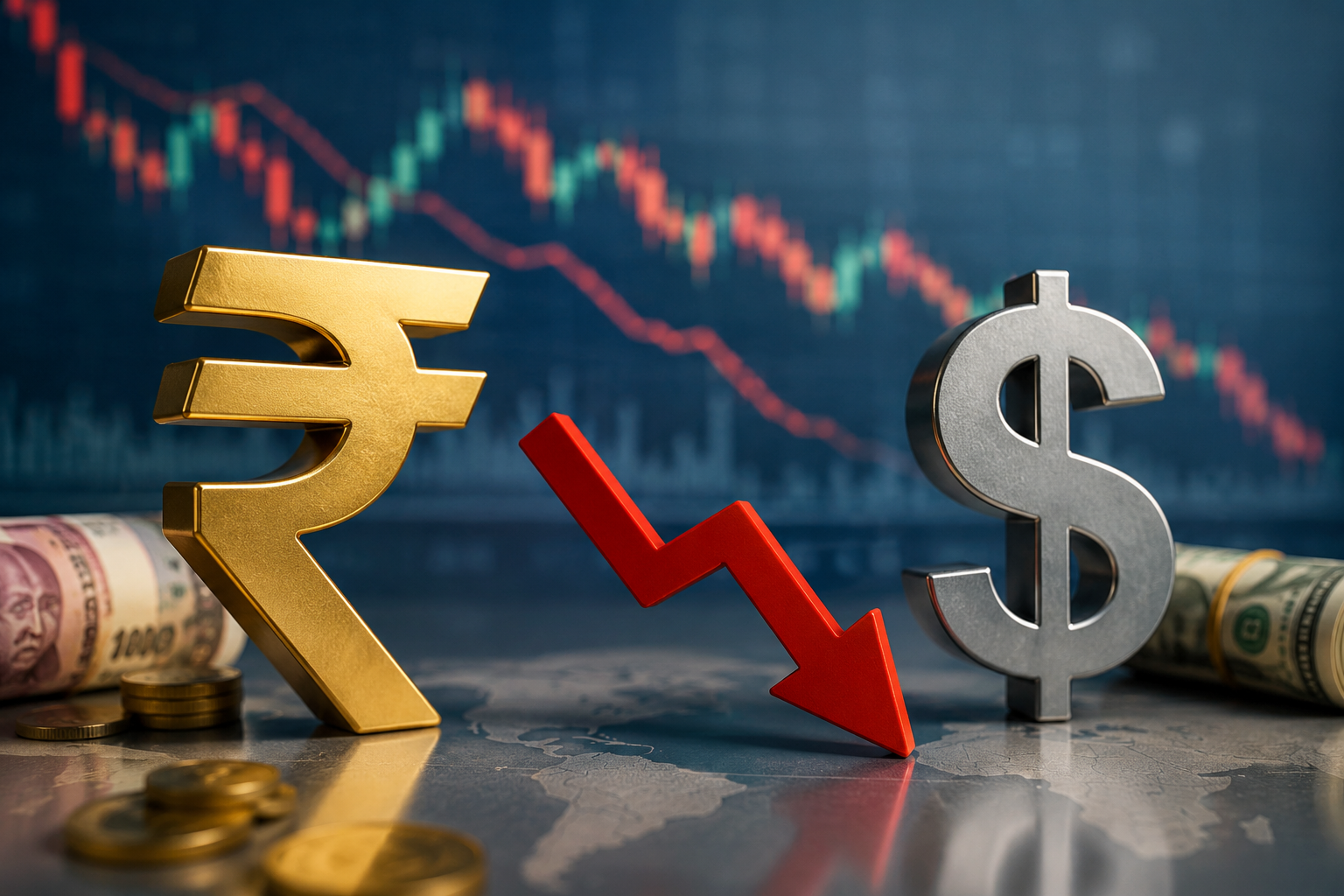
Domestic Currency Extends Losing Streak Despite Positive Equity Markets; Traders Monitor Oil Prices, US Dollar Strength and Geopolitical Developments for Further Direction
The Indian rupee weakened further against the US dollar on Thursday, slipping 6 paise to 96.31 during early trade as investors remained cautious amid elevated crude oil prices, persistent foreign institutional investor (FII) outflows and escalating geopolitical tensions in the Middle East. Although domestic equity markets opened on a positive note, the gains failed to offset pressure from rising global uncertainties, which continued to boost demand for the US dollar as a safe-haven asset.
Currency dealers noted that the rupee remains under pressure primarily due to concerns over crude oil imports and sustained capital outflows from Indian markets. The ongoing conflict involving the United States and Iran has intensified fears of supply disruptions in the global energy market, keeping Brent crude near multi-month highs and adding fresh pressure on oil-importing economies like India.
The movement in the rupee also reflects the cautious stance adopted by global investors, who continue to monitor geopolitical developments, central bank policies and foreign capital flows before taking fresh positions in emerging market currencies.
Rupee Opens Lower, Extending Recent Weakness
At the interbank foreign exchange market, the rupee opened at 96.28 per US dollar before slipping to 96.31, compared with its previous closing level of 96.25.
The decline marked the fourth consecutive session of weakness, indicating that the domestic currency continues to face sustained external pressures despite relatively stable domestic macroeconomic conditions.
Forex market participants said the early weakness reflected increased demand for the US dollar from importers as well as cautious positioning ahead of further developments in the Middle East.
Crude Oil Prices Remain the Biggest Concern
One of the key drivers behind the rupee's decline is the sharp rise in global crude oil prices.
Brent crude remained close to $85 per barrel, significantly above levels seen earlier this year, although prices eased slightly during Thursday's trading session.
For India, higher crude prices have a direct impact because the country imports nearly 85% of its crude oil requirements.
A sustained increase in oil prices generally leads to:
-
Higher import bills.
-
Greater demand for US dollars.
-
Pressure on the current account deficit.
-
Imported inflation.
-
Weakness in the domestic currency.
Oil marketing companies typically increase their dollar purchases when crude prices rise, creating additional demand for the US currency in domestic forex markets.
Middle East Conflict Continues to Drive Safe-Haven Demand
Geopolitical tensions remain one of the biggest influences on global financial markets.
The latest escalation between the United States and Iran has renewed concerns over potential disruptions in energy supplies from the Gulf region.
Recent developments include:
-
Intensified US military strikes.
-
Iranian missile and drone attacks.
-
Rising regional tensions involving Bahrain and Kuwait.
-
Continued uncertainty surrounding the Strait of Hormuz.
The Strait of Hormuz is one of the world's most critical shipping routes, handling nearly 20% of global crude oil exports.
Any disruption in this corridor could trigger further increases in oil prices, negatively affecting major oil-importing economies.
Foreign Investor Selling Adds Pressure
Foreign Institutional Investors (FIIs) remained net sellers in Indian equities, contributing to weakness in the rupee.
According to exchange data:
-
Net FII Outflow: ₹735.83 crore
When foreign investors sell Indian assets, they typically convert their rupee holdings into US dollars before transferring funds overseas.
This process increases demand for dollars while reducing demand for the rupee, putting additional pressure on the domestic currency.
Persistent FII outflows remain one of the most closely watched indicators for currency traders.
Domestic Equity Markets Offer Partial Support
Despite weakness in the currency market, Indian benchmark indices opened higher.
During early trade:
-
Sensex gained over 180 points.
-
Nifty 50 traded above 24,130.
The positive opening reflected continued optimism surrounding corporate earnings, domestic economic growth and selective buying in information technology stocks.
However, equity market gains were insufficient to offset external pressures affecting the rupee.
US Dollar Index Remains Firm
The US Dollar Index (DXY), which measures the strength of the dollar against six major global currencies, remained broadly stable around 100.5.
Although the index did not register significant gains, the dollar continued to attract safe-haven demand due to rising geopolitical uncertainty.
A stronger dollar generally leads to weaker emerging market currencies, including the Indian rupee.
What Forex Traders Are Watching
Currency market participants are currently focused on several key variables.
Crude Oil Prices
Any sustained move above current levels could increase pressure on the rupee.
Geopolitical Developments
Escalation in the Middle East could drive further demand for safe-haven assets.
Foreign Capital Flows
A reversal in FII selling could provide support to the domestic currency.
RBI's Policy Stance
Investors will monitor the Reserve Bank of India's approach to managing currency volatility.
US Federal Reserve Outlook
Future interest rate decisions by the Federal Reserve will influence global capital flows and dollar strength.
Impact of a Weaker Rupee on the Economy
A depreciating rupee affects different sectors of the economy in different ways.
Negative Impact
-
Higher fuel import costs.
-
Increased inflationary pressure.
-
More expensive imported goods.
-
Rising input costs for manufacturing industries.
Positive Impact
-
Improved competitiveness of Indian exports.
-
Higher earnings for IT companies.
-
Better realisations for pharmaceutical exporters.
-
Increased value of overseas remittances.
Export-oriented sectors often benefit when the rupee weakens, while import-dependent industries face higher costs.
Sectors Likely to Benefit
Companies earning significant revenues in foreign currencies may benefit from rupee depreciation.
These include:
-
Information Technology.
-
Pharmaceuticals.
-
Specialty Chemicals.
-
Textile Exporters.
-
Auto Component Exporters.
However, companies heavily dependent on imported raw materials may experience margin pressure if the rupee continues to weaken.
Can the RBI Intervene?
The Reserve Bank of India closely monitors excessive volatility in the foreign exchange market.
While the RBI generally allows market-driven movements, it may intervene by selling US dollars from its foreign exchange reserves if currency fluctuations become disorderly.
India's healthy foreign exchange reserves provide the central bank with adequate flexibility to manage sharp currency volatility when required.
Global Macro Factors Continue to Dominate
The rupee's near-term direction is expected to remain closely linked to developments in global markets.
Key factors include:
-
Oil price movements.
-
US-Iran conflict.
-
US Federal Reserve policy.
-
Global risk appetite.
-
Foreign institutional investment flows.
-
Domestic corporate earnings.
Until geopolitical uncertainties ease, currency markets are likely to remain volatile.
Outlook
The Indian rupee continues to face near-term pressure from elevated crude oil prices, persistent foreign investor outflows and heightened geopolitical risks in the Middle East. While India's domestic economic fundamentals remain relatively strong and equity markets continue to attract investor interest, external factors are currently dominating currency movements.
Looking ahead, the trajectory of the rupee will largely depend on crude oil prices, developments surrounding the US-Iran conflict, the direction of global capital flows and monetary policy signals from major central banks. If geopolitical tensions moderate and foreign investment flows stabilise, the rupee could regain some lost ground. However, sustained volatility in energy markets and continued demand for the US dollar may keep the domestic currency under pressure in the short term, making global developments the key determinant of its near-term direction.