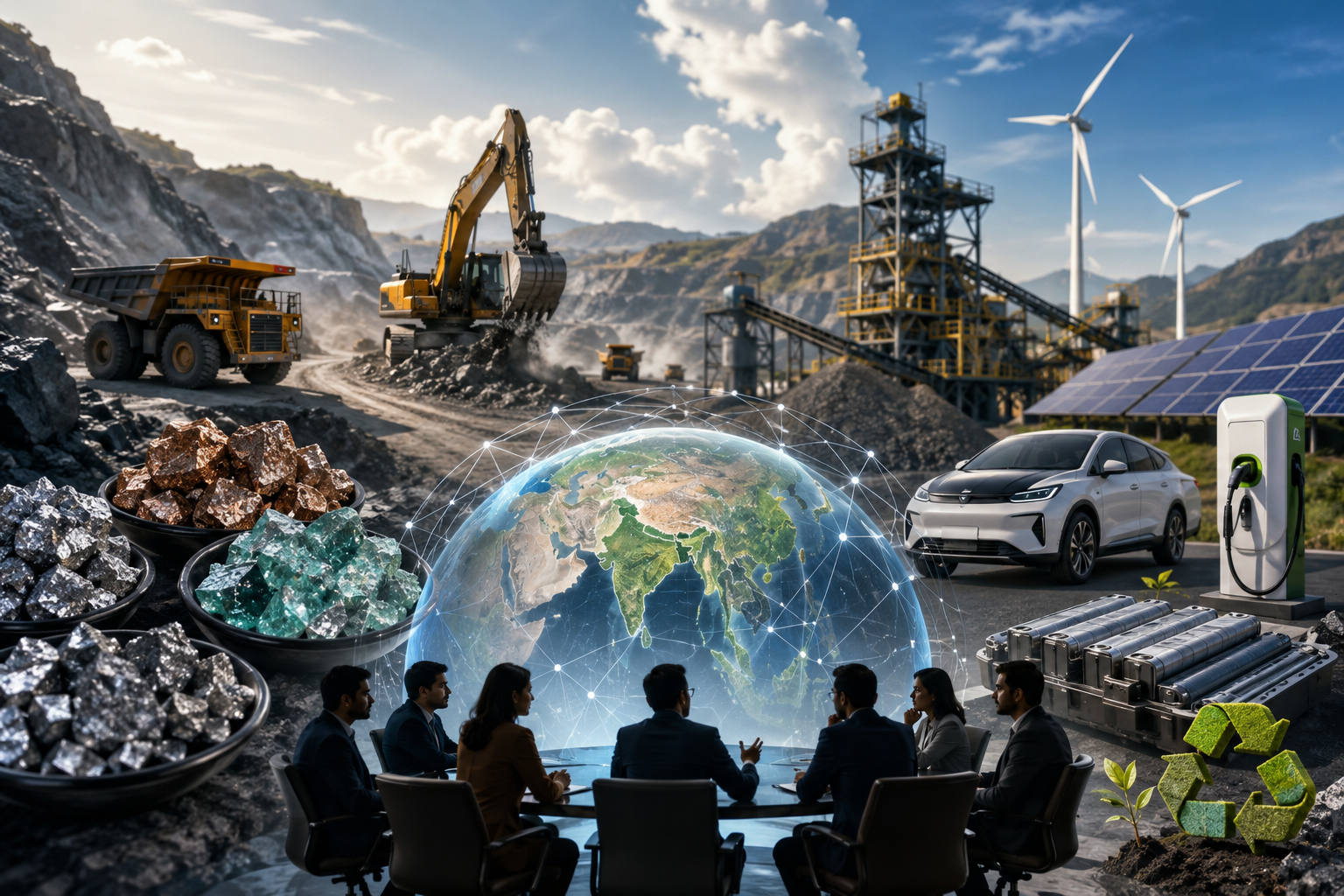
As India Accelerates Lithium, Rare Earth and Nickel Development, Industry Leaders Say Stakeholder Trust, ESG Oversight and Transparent Communication Will Be Key to Unlocking Long-Term Mineral Security
India's ambitious strategy to secure critical minerals for its clean energy transition and manufacturing future is prompting a significant shift in corporate governance across the mining and metals sector. Industry leaders believe that success in developing critical mineral projects will no longer depend solely on capital investment, advanced technology and regulatory approvals. Instead, companies will increasingly need to earn the trust of governments, investors, local communities and other stakeholders through transparent communication and responsible governance.
As India works to reduce its dependence on imported minerals such as lithium, nickel, cobalt, graphite and rare earth elements, experts argue that corporate communication should become an integral part of board-level decision-making. They believe the ability to manage stakeholder expectations, safeguard corporate reputation and maintain a strong environmental, social and governance (ESG) framework will play a decisive role in determining whether large-scale mining projects succeed.
The discussion reflects a broader transformation taking place across the global mining industry, where companies are increasingly judged not only by production volumes and financial performance but also by how responsibly they develop natural resources and engage with society.
Critical Minerals at the Heart of India's Growth Strategy
Critical minerals have become central to India's long-term economic and industrial strategy.
These resources are essential for manufacturing technologies that will define the next phase of economic development, including:
-
Electric vehicle batteries.
-
Renewable energy systems.
-
Grid-scale energy storage.
-
Semiconductor manufacturing.
-
Aerospace components.
-
Defence equipment.
-
Consumer electronics.
-
Advanced industrial machinery.
As geopolitical tensions continue to reshape global supply chains, countries around the world are racing to secure reliable sources of these strategic minerals. India is no exception.
The government has launched multiple initiatives aimed at strengthening domestic exploration, encouraging private sector participation, acquiring overseas mineral assets and building resilient supply chains to support the country's clean energy and manufacturing ambitions.
Governance Is Expanding Beyond Finance and Operations
According to industry experts, the traditional responsibilities of mining company boards are undergoing a fundamental transformation.
Historically, board discussions focused largely on:
-
Capital allocation.
-
Operational performance.
-
Regulatory compliance.
-
Production targets.
-
Financial returns.
-
Project execution.
Today, however, boards are expected to oversee a much broader range of strategic issues.
These include:
-
Corporate reputation.
-
ESG performance.
-
Sustainability initiatives.
-
Stakeholder engagement.
-
Climate-related risks.
-
Community relations.
-
Long-term organisational resilience.
As mining projects become increasingly complex and visible to the public, governance now extends far beyond financial oversight.
Stakeholder Trust Has Become a Strategic Business Asset
Former Vedanta Group CEO and former Hindustan Zinc CEO Sunil Duggal, who currently leads Bhumi Ventures, believes mining companies must redefine how they approach governance.
He noted that mining is no longer simply about extracting valuable resources from the ground.
Instead, companies must continuously build and maintain trust with:
-
Governments.
-
Investors.
-
Regulators.
-
Employees.
-
Local communities.
-
Environmental stakeholders.
According to Duggal, boards today must actively monitor stakeholder confidence alongside financial performance because reputational issues can directly influence project execution, regulatory approvals and long-term shareholder value.
He emphasized that corporate communication provides directors with critical insights into stakeholder expectations, helping them make more informed strategic decisions while reducing execution risks.
Communication Is Emerging as a Board-Level Capability
Corporate communication is increasingly being recognised as an important element of modern governance.
Communication strategist and author Pavan Kaushik, who advises boards and CEOs on reputation management, believes India's critical mineral ambitions cannot be achieved through engineering expertise and investment alone.
He argues that corporate communication introduces an important stakeholder perspective into boardroom discussions, enabling directors to identify potential concerns before they become operational challenges.
Effective communication supports:
-
Better strategic planning.
-
Improved investor relations.
-
Stronger government engagement.
-
Enhanced regulatory confidence.
-
Greater employee trust.
-
More effective community participation.
As projects become more stakeholder-intensive, these capabilities can significantly improve execution outcomes.
Why the Social Licence to Operate Matters
One of the most significant changes in the mining industry is the growing importance of the social licence to operate.
Unlike statutory approvals issued by regulators, a social licence represents the acceptance and support of communities and stakeholders affected by mining activities.
Companies increasingly need to demonstrate:
-
Responsible environmental management.
-
Transparent decision-making.
-
Ethical governance.
-
Community development.
-
Sustainable resource utilisation.
-
Long-term value creation.
Even projects with strong financial backing and regulatory approvals can face delays if they fail to gain stakeholder confidence.
Industry experts believe maintaining this social licence will become increasingly important as India expands exploration of critical mineral reserves.
ESG Has Become a Strategic Priority
Environmental, Social and Governance (ESG) standards have evolved into one of the most influential factors affecting investment decisions in the mining sector.
Institutional investors today evaluate companies on multiple parameters beyond profitability.
Key ESG indicators include:
-
Carbon emissions.
-
Water conservation.
-
Biodiversity protection.
-
Worker safety.
-
Community welfare.
-
Corporate governance.
-
Transparency in disclosures.
Strong ESG performance not only improves corporate reputation but also enhances access to global investment capital, strengthens regulatory relationships and supports long-term business sustainability.
Experts believe effective communication enables companies to clearly demonstrate their ESG commitments to all stakeholders.
Boards May Need New Forms of Expertise
Traditionally, mining company boards have been dominated by professionals with backgrounds in finance, engineering, operations and legal affairs.
However, experts increasingly believe future boards would benefit from directors possessing expertise in:
-
Corporate communication.
-
Reputation management.
-
Stakeholder engagement.
-
Crisis communication.
-
Sustainability strategy.
-
Public policy.
-
ESG governance.
Such expertise can help companies anticipate emerging reputational risks while improving strategic decision-making.
Responsible Mining Will Shape Investor Confidence
The Federation of Indian Mineral Industries (FIMI) has also highlighted the growing importance of responsible mining practices.
According to the industry body, companies must communicate their sustainability initiatives openly and transparently while ensuring compliance with environmental and regulatory standards.
Transparent communication helps strengthen:
-
Investor confidence.
-
Public trust.
-
Regulatory credibility.
-
Community partnerships.
-
Long-term business resilience.
As global investors place increasing emphasis on ESG performance, responsible mining practices are becoming an important competitive advantage.
India's Critical Mineral Mission Continues to Accelerate
India has launched several initiatives to strengthen domestic mineral security and reduce import dependence.
Key measures include:
-
Auctioning critical mineral blocks.
-
Encouraging private exploration.
-
Supporting overseas mineral acquisitions.
-
Building domestic processing capabilities.
-
Promoting recycling of strategic minerals.
-
Strengthening international partnerships.
-
Expanding geological exploration programmes.
These initiatives are expected to support India's ambitions in electric mobility, renewable energy, defence manufacturing and advanced industrial production.
Communication Can Reduce Execution Risks
Large mining projects often involve multiple stakeholders with diverse interests.
Effective communication can help companies:
-
Build community support.
-
Reduce misinformation.
-
Address environmental concerns.
-
Improve regulatory coordination.
-
Strengthen investor confidence.
-
Enhance employee engagement.
-
Prevent project delays.
Industry experts believe proactive stakeholder engagement is significantly more effective than attempting to repair reputational damage after disputes arise.
Challenges Facing India's Critical Mineral Sector
Despite strong policy momentum, several challenges remain:
-
Lengthy regulatory approval processes.
-
Environmental clearances.
-
Land acquisition complexities.
-
Community rehabilitation requirements.
-
Infrastructure development.
-
Global competition for mineral assets.
-
Commodity price volatility.
-
Technological and processing capabilities.
Successfully addressing these issues will require coordinated efforts between policymakers, industry participants and local communities.
Long-Term Outlook Remains Strong
Global demand for critical minerals is expected to rise sharply over the next two decades as countries accelerate investments in clean energy, electric vehicles and advanced manufacturing.
India's rapidly expanding industrial base and favourable policy environment position the country to become a significant participant in global critical mineral supply chains.
However, experts believe long-term success will depend as much on governance quality and stakeholder trust as on geology and capital investment. Companies that integrate sustainability, transparency and stakeholder engagement into their strategic planning are likely to execute projects more efficiently while creating stronger long-term value for shareholders.