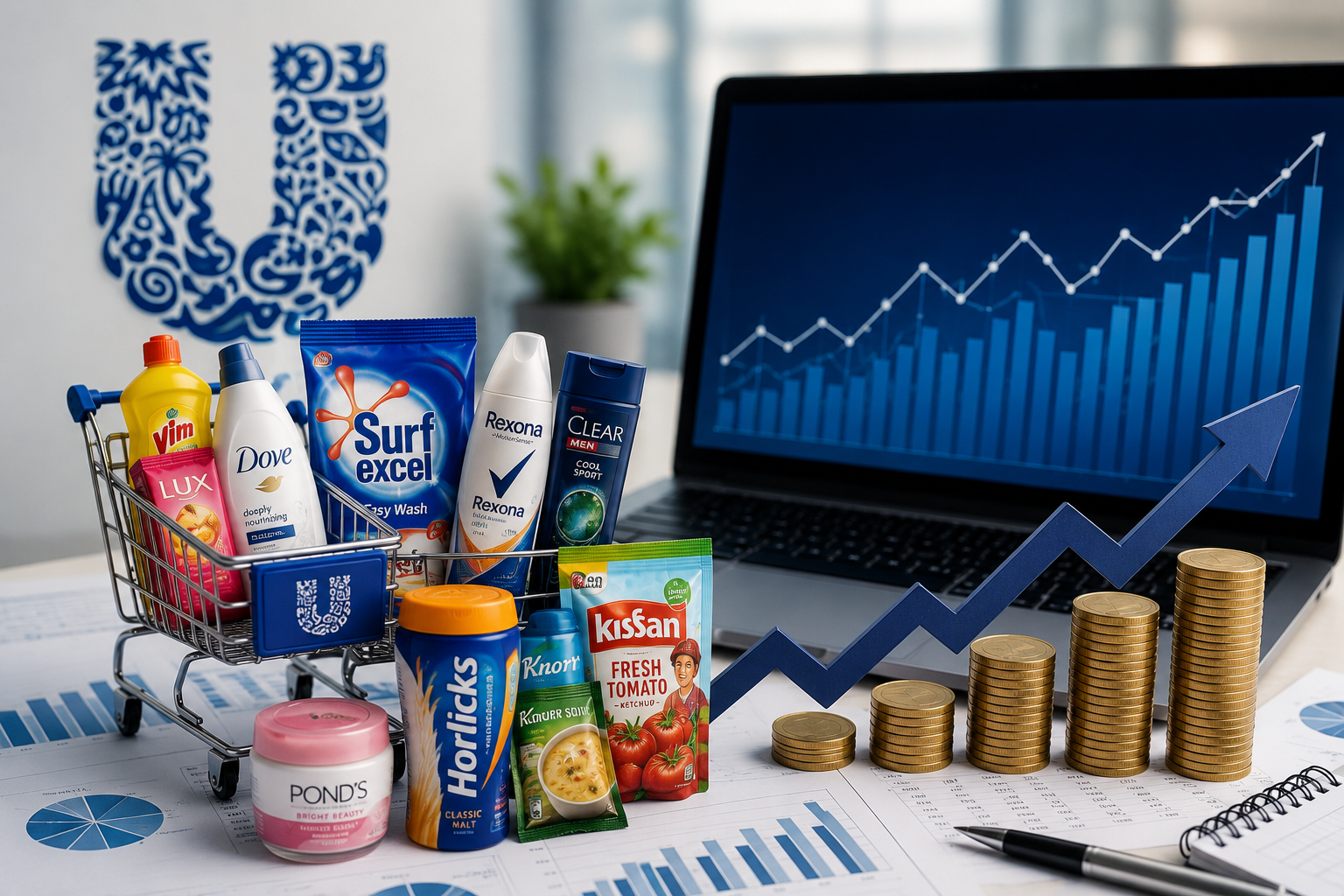
FMCG Leader Reports Lower Bottom-Line Despite Stable Business Performance; Restructuring Expenses Impact Quarterly Profit
Hindustan Unilever Ltd. (HUL), India's largest fast-moving consumer goods (FMCG) company, reported a 3.17% year-on-year decline in consolidated net profit to ₹2,680 crore for the first quarter of FY27, compared with ₹2,768 crore in the corresponding quarter last year. The decline was primarily driven by exceptional expenses and a higher tax outgo, even as the company's core operations remained resilient amid gradually improving consumer demand.
The June quarter results indicate that while HUL continues to maintain its leadership position across several consumer product categories, one-time restructuring costs and acquisition-related expenses affected reported profitability. The company's underlying business fundamentals, however, remain supported by strong brands, extensive distribution, premium product offerings and continued investments in long-term growth initiatives.
As one of India's largest consumer companies, HUL's quarterly performance is widely regarded as a key indicator of urban and rural consumption trends across the FMCG sector.
Exceptional Items Drag Quarterly Earnings
The primary reason for the decline in net profit was the recognition of ₹75 crore in exceptional losses during the quarter.
According to the company's regulatory filing, these included:
-
Restructuring expenses: ₹115 crore
-
Acquisition and disposal-related expenses: ₹5 crore
-
Other accounting adjustments that reduced the overall exceptional impact
These charges relate to strategic initiatives undertaken by the company to improve operational efficiency and strengthen its long-term business structure.
Restructuring expenses are generally one-time in nature and may include organisational changes, process optimisation, manufacturing improvements and workforce realignment.
Although such expenses affect short-term profitability, they are often intended to improve productivity and reduce operating costs over the longer term.
Higher Tax Outgo Further Pressures Profitability
Apart from exceptional items, HUL also reported a higher tax expense during the quarter, which contributed to the decline in net profit.
An increase in effective tax rates can reduce reported earnings even when operational performance remains stable.
While the company has not indicated any structural changes to its taxation profile, the higher tax burden negatively impacted bottom-line growth during the June quarter.
Core Business Continues to Demonstrate Stability
Despite the lower reported profit, HUL's underlying business remained relatively stable.
The company continues to derive revenue from a diversified portfolio spanning multiple high-demand consumer categories, including:
-
Home care products
-
Personal care
-
Beauty and skincare
-
Nutrition
-
Foods and beverages
-
Health and hygiene products
Its broad portfolio allows the company to balance performance across different consumer segments while reducing dependence on individual product categories.
This diversification has historically helped HUL navigate changing economic conditions and fluctuations in consumer spending.
Premiumisation Remains a Key Growth Strategy
One of HUL's long-term strategic priorities continues to be premiumisation.
Indian consumers are increasingly shifting towards premium products offering higher quality, better functionality and enhanced convenience.
The company has been expanding its presence across premium segments including:
-
Advanced skincare
-
Beauty products
-
Premium detergents
-
Functional nutrition
-
Personal wellness
-
Packaged foods
Premium products generally generate higher margins and improve overall profitability, helping offset inflationary pressures and slower volume growth.
Consumption Trends Continue to Improve Gradually
The broader FMCG industry has shown encouraging signs of recovery after facing demand challenges over the past few years.
Urban Markets
Urban demand remains relatively healthy, supported by:
-
Rising disposable incomes
-
Premium product demand
-
Organised retail expansion
-
E-commerce growth
Rural Markets
Rural consumption is gradually recovering as:
-
Agricultural incomes improve.
-
Monsoon conditions remain supportive.
-
Government spending continues.
-
Inflation moderates.
A sustained recovery in rural demand could become an important growth driver for HUL during the remainder of FY27.
Commodity Prices Offer Margin Support
One positive development for the FMCG industry has been the moderation in commodity prices compared with previous years.
Key input materials used by HUL include:
-
Palm oil
-
Crude oil derivatives
-
Packaging materials
-
Chemicals
-
Agricultural commodities
Lower input costs provide companies with greater pricing flexibility while supporting gross margins.
However, management is expected to continue monitoring global commodity markets closely as geopolitical developments and crude oil volatility could influence future cost structures.
Continued Investment in Business Transformation
The restructuring expenses recognised during the quarter also indicate that HUL remains focused on strengthening its long-term competitive position.
Current strategic priorities include:
-
Digital transformation
-
Supply chain optimisation
-
Manufacturing efficiency
-
Product innovation
-
Sustainability initiatives
-
Data-driven consumer insights
These investments are expected to improve operational efficiency while supporting future revenue growth.
Strong Distribution Network Remains a Competitive Advantage
HUL continues to maintain one of India's largest FMCG distribution networks.
Its products reach millions of consumers through:
-
Traditional retail stores
-
Modern trade
-
E-commerce platforms
-
Rural distribution channels
-
Direct-to-consumer initiatives
This widespread presence provides the company with significant competitive advantages in product availability, brand visibility and market penetration.
Competitive Landscape Continues to Evolve
India's FMCG sector has become increasingly competitive as both domestic and multinational companies expand their product portfolios.
HUL continues competing across categories with established FMCG players while also responding to the emergence of digital-first consumer brands.
Innovation, pricing strategies and brand investments are expected to remain key differentiators as companies compete for market share.
Key Factors Investors Should Monitor
Going forward, investors are likely to focus on:
-
Volume growth across product categories.
-
Rural demand recovery.
-
Gross margin expansion.
-
Commodity price trends.
-
Premium product sales.
-
Advertising and promotional spending.
-
Digital commerce performance.
-
Benefits from restructuring initiatives.
Management commentary on consumer sentiment and demand outlook will also be closely watched.
Investment Perspective
Although quarterly earnings declined, the market is likely to distinguish between temporary one-time expenses and the company's underlying operating performance.
The exceptional costs recognised during the quarter are non-recurring, while HUL continues to benefit from:
-
Strong cash generation.
-
Market leadership.
-
Healthy balance sheet.
-
Consistent dividend history.
-
Brand strength.
-
Long-term consumption growth.
These factors continue to make HUL one of the most closely followed stocks within India's FMCG sector.
Market Outlook
Hindustan Unilever's first-quarter FY27 results highlight the impact of one-off restructuring expenses and higher tax costs rather than any meaningful deterioration in its core business. While reported consolidated net profit declined 3.2% year-on-year to ₹2,680 crore, the company's underlying operations remain supported by stable consumer demand, premiumisation initiatives and a diversified product portfolio.
Looking ahead, easing commodity inflation, improving rural consumption and continued investments in innovation and operational efficiency are expected to strengthen earnings momentum over the medium term. As India's leading FMCG company, HUL remains well positioned to benefit from the country's long-term consumption growth story, although investors will continue to monitor demand trends, input costs and margin performance in the coming quarters.