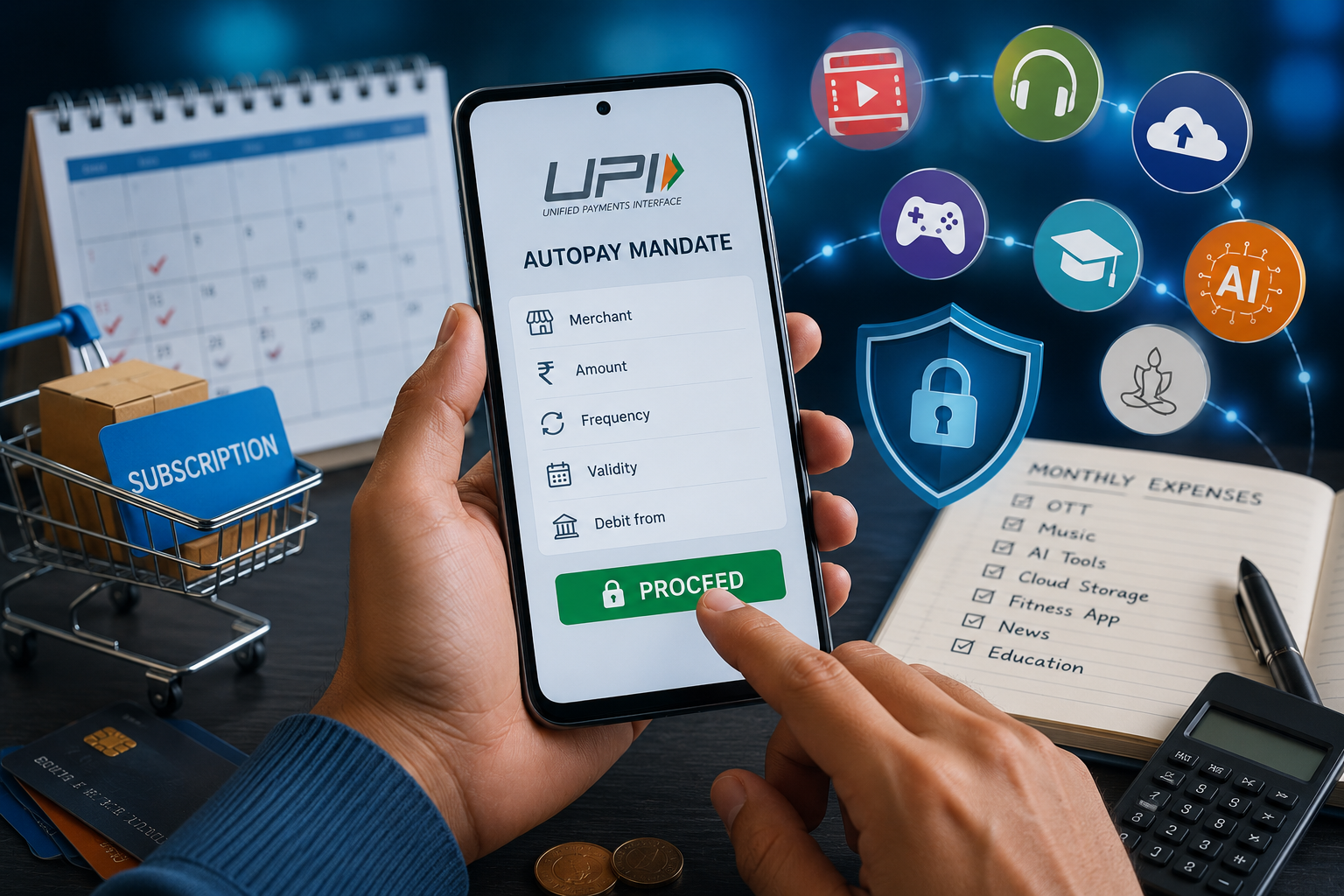
Forgotten Recurring Payment Authorisations Are Leading to Unnecessary Monthly Deductions; Experts Urge Consumers to Regularly Review Active UPI Mandates
The Convenience of Digital Payments Comes With Hidden Responsibilities
India's digital payments ecosystem has transformed the way consumers pay for subscriptions, entertainment services and online applications. From OTT platforms and music streaming services to AI tools, cloud storage and productivity software, subscription-based services have become an integral part of everyday digital life.
However, alongside this convenience lies a growing financial blind spot. Many consumers who sign up for promotional offers by paying just ₹1 or ₹2 unknowingly authorise recurring UPI AutoPay mandates. Once the trial period expires, subscription charges begin automatically unless the mandate is cancelled, resulting in recurring deductions that often go unnoticed for months.
While these transactions are legally authorised, experts believe a lack of awareness is causing consumers to spend far more than they realise.
How a ₹1 Trial Becomes a Monthly Expense
Most subscription platforms encourage new users through free or heavily discounted trial offers. During the payment process, customers selecting UPI as their payment method are asked to approve an AutoPay mandate before completing the transaction.
The mandate typically specifies:
-
Merchant name
-
Maximum debit amount
-
Billing frequency
-
Validity period
-
Linked bank account
Although these details are displayed before users enter their UPI PIN, many people complete the payment without fully understanding that they are authorising future recurring debits.
Once the promotional period ends, the subscription renews automatically and the agreed amount is deducted from the customer's bank account every month.
Why Many Consumers Overlook AutoPay Mandates
Experts say the issue is less about technology and more about user behaviour.
Digital payment interfaces are designed to make transactions quick and seamless. As a result, users often focus on activating the free trial rather than carefully reviewing the recurring payment authorisation displayed on the screen.
Many consumers also uninstall applications after using the free trial, assuming that removing the app automatically cancels the subscription. In reality, the AutoPay mandate remains active until it is manually revoked through the UPI application or by cancelling the subscription with the service provider.
This misunderstanding has become one of the leading causes of unintended recurring payments.
Recurring Debits Are Usually Legitimate
Contrary to common perception, most recurring subscription deductions are not fraudulent transactions.
Payment experts explain that once users approve an AutoPay mandate by entering their UPI PIN, future debits are considered authorised under the agreed terms. Banks simply execute the instructions previously approved by the customer.
Industry specialists stress that merchants, payment applications and banks each have an important role in ensuring customers clearly understand what they are consenting to before the mandate is activated.
Clear disclosures, advance debit notifications and simple cancellation mechanisms are increasingly viewed as essential components of a transparent subscription ecosystem.
Small Monthly Charges Can Add Up Quickly
One forgotten subscription may not significantly affect household finances. However, multiple recurring charges across different digital services can gradually become a substantial monthly expense.
Consumers today commonly subscribe to:
-
Video streaming platforms
-
Music services
-
Artificial intelligence applications
-
Cloud storage providers
-
Fitness and wellness apps
-
Online education platforms
-
Gaming memberships
-
Premium productivity software
Individually, each subscription may cost only a few hundred rupees. Combined, however, these recurring payments can quietly consume thousands of rupees annually without providing meaningful value to the user.
Impact on Household Cash Flow
Financial planners warn that forgotten subscriptions can create avoidable cash-flow challenges, particularly for households operating within fixed monthly budgets.
If several AutoPay mandates are executed around the same time, they may reduce available account balances just before essential payments such as:
-
Home loan EMIs
-
Credit card bills
-
Utility payments
-
Insurance premiums
-
School fees
-
SIP investments
Although each deduction may appear insignificant, the cumulative impact can disrupt carefully planned household finances and even trigger penalties due to insufficient account balances.
India's Subscription Economy Is Expanding Rapidly
The rapid adoption of UPI has encouraged businesses across industries to embrace subscription-based revenue models.
Streaming platforms, fintech companies, software providers, digital education firms and AI service providers increasingly rely on recurring billing to generate predictable income.
As subscription-based digital services continue expanding, financial experts believe consumers will need to become more proactive in managing recurring payment obligations.
The ability to track and review active mandates is becoming an essential component of personal financial management.
Best Practices for Managing UPI AutoPay Mandates
Experts recommend adopting simple habits that can significantly reduce unnecessary recurring expenses.
Consumers should:
-
Review active UPI AutoPay mandates every month.
-
Keep SMS, email and banking app notifications enabled.
-
Cancel subscriptions immediately after deciding they are no longer required.
-
Review monthly bank statements for recurring deductions, including small-value transactions.
-
Use a separate bank account or wallet for discretionary digital subscriptions.
-
Set reminders before free trial periods expire.
-
Periodically reassess whether paid subscriptions continue to deliver value.
Regular monitoring can help consumers identify unused services before they become a long-term financial burden.
Financial Awareness Is as Important as Digital Convenience
India's digital payments infrastructure has made recurring payments faster, safer and more convenient than ever before. However, experts caution that convenience must be accompanied by financial discipline.
Understanding the terms of AutoPay mandates, monitoring recurring payments and reviewing subscriptions regularly are becoming essential financial habits in an increasingly digital economy.
Consumers who actively manage their subscriptions can avoid unnecessary expenses while ensuring their bank accounts remain aligned with their financial priorities.
Outlook
As India's subscription economy continues to grow, UPI AutoPay will remain a key enabler of seamless digital commerce. At the same time, consumers will need to exercise greater financial awareness to prevent small recurring charges from turning into significant annual expenses.
For investors, the broader trend highlights the continued expansion of India's digital payments ecosystem and subscription-based business models, creating long-term opportunities for fintech companies, payment platforms and digital service providers. For consumers, however, the message is equally clear: every recurring payment deserves the same attention as any other financial commitment.