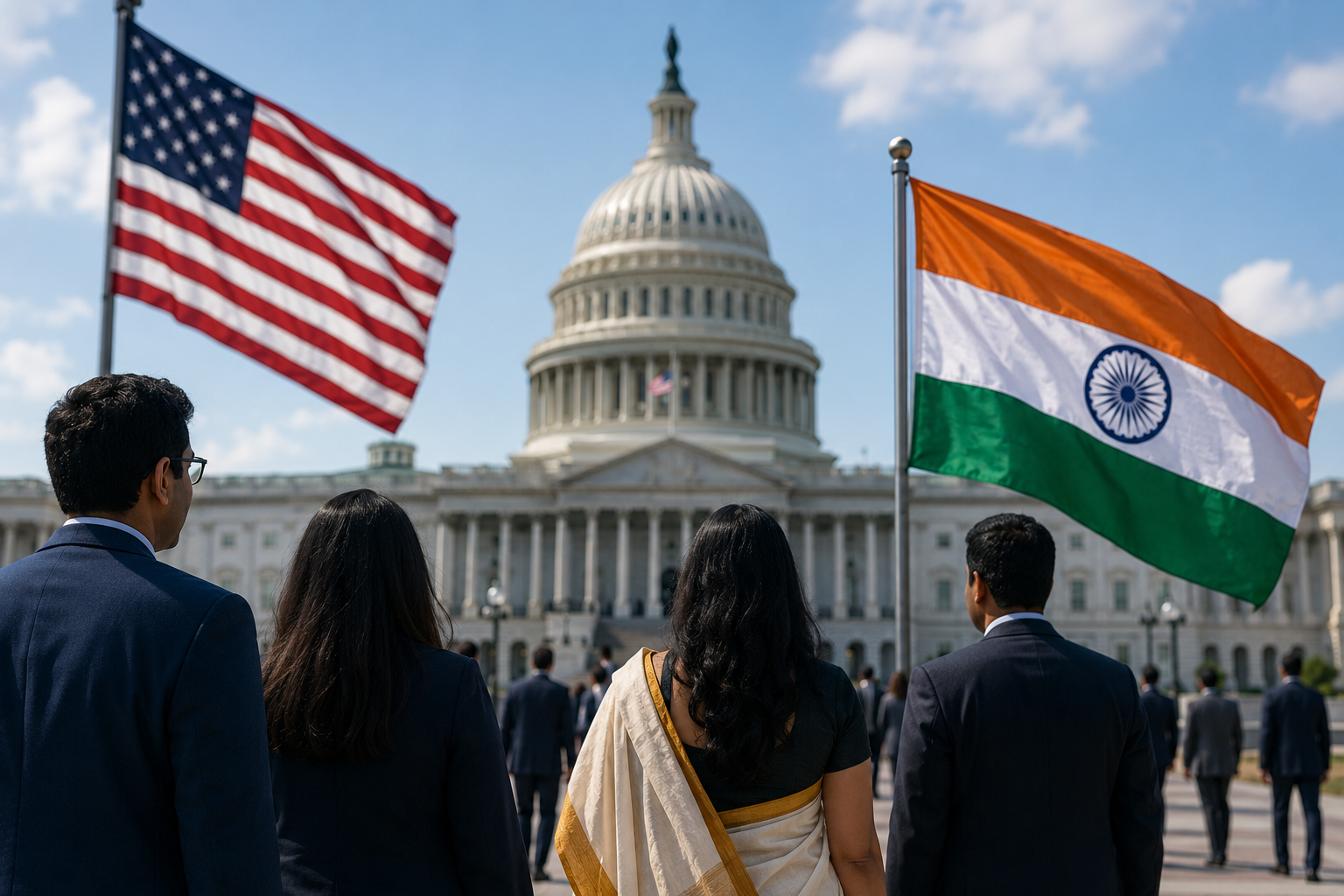
Capitol Hill Event Highlights Need for Stronger Political Representation and Community Engagement
Indian-American lawmakers have called on members of the Indian diaspora in the United States to actively participate in politics and public service, emphasizing that greater representation is essential at a time when incidents of anti-India, anti-Hindu, and anti-Desi sentiment are becoming increasingly visible in certain sections of American society.
The message was delivered during a high-profile gathering at Capitol Hill organized by the Foundation for India and Indian Diaspora Studies (FIIDS), where policymakers, community leaders, and professionals discussed the evolving role of Indian-Americans in shaping America's political and social landscape.
The event reflected a growing belief that while Indian-Americans have achieved extraordinary success in business, technology, healthcare, and academia, their political influence has yet to fully match their economic and demographic strength.
Indian-American Community Continues to Expand Its Influence
The Indian diaspora has emerged as one of the most successful immigrant communities in the United States. With an estimated population exceeding five million people, Indian-Americans have become influential contributors to the country's economy, innovation ecosystem, healthcare sector, and educational institutions.
Today, Indian-origin professionals hold leadership positions in multinational corporations, major technology firms, universities, research organizations, and government agencies.
Despite these accomplishments, experts note that political participation remains relatively limited when compared with the community's growing economic footprint.
A Community Driving Innovation
Indian-Americans have played a pivotal role in:
-
Technology and Artificial Intelligence
-
Healthcare and Medical Research
-
Financial Services
-
Entrepreneurship and Startups
-
Education and Academia
-
Public Policy and Governance
Many community leaders believe the next chapter of growth must involve stronger participation in elected office and policymaking institutions.
Concerns Over Rising Anti-Hindu and Anti-Indian Sentiment
Speaking at the event, Congressman Raja Krishnamoorthi highlighted what he described as a growing challenge facing the community.
While acknowledging the remarkable achievements of Indian-Americans, he warned about increasing instances of anti-Hindu, anti-Indian, and anti-Desi rhetoric in parts of the United States.
Community organizations have reported concerns over hate speech, online harassment, misinformation campaigns, and occasional acts of vandalism targeting Indian cultural and religious institutions.
Growing Need for Advocacy
Leaders at the event stressed that stronger political representation can help address issues such as:
-
Hate crimes and discrimination
-
Religious intolerance
-
Cultural stereotyping
-
Immigration challenges
-
Community safety concerns
-
Policy advocacy on issues affecting the diaspora
According to speakers, active engagement with the political system is one of the most effective ways to ensure that the concerns of the community are heard and addressed.
Why Political Representation Matters More Than Ever
Political representation is increasingly being viewed as a critical factor in safeguarding the interests of diverse communities.
While Indian-Americans have become influential contributors to the US economy, lawmakers believe that greater participation in government can help ensure that policies reflect the realities and aspirations of the diaspora.
Representation also enables communities to contribute directly to debates on education, immigration, technology, foreign policy, healthcare, and economic development.
Beyond Voting
Speakers encouraged Indian-Americans to move beyond simply participating in elections as voters and instead consider roles such as:
-
City Council Members
-
School Board Representatives
-
State Legislators
-
Congressional Candidates
-
Public Policy Advisors
-
Civic Organization Leaders
Such positions provide opportunities to shape decisions that affect communities at local, state, and national levels.
Political Influence of Indian-Americans Continues to Rise
The Indian-American community has already made significant progress in politics over the past decade.
Several lawmakers of Indian origin now serve in Congress, state legislatures, and local governments across the United States. Their success has inspired a new generation of Indian-Americans to explore careers in public service and governance.
Political analysts note that Indian-Americans are becoming an increasingly important voting bloc in key battleground states, making their participation more influential in national elections.
Emergence of a New Generation of Leaders
Younger Indian-Americans are increasingly pursuing careers in:
-
Public Administration
-
Government Affairs
-
International Relations
-
Law and Legal Advocacy
-
Political Campaign Management
-
Social and Community Activism
This trend is expected to accelerate as more second-generation Indian-Americans seek leadership roles in public institutions.
Strengthening the US-India Partnership
Speakers at the Capitol Hill event also highlighted the important role of the Indian diaspora in strengthening ties between the United States and India.
Indian-Americans have become a crucial bridge connecting the world's two largest democracies through business, technology, education, innovation, and cultural exchange.
Their growing presence in politics could further enhance bilateral cooperation across strategic sectors.
Areas of Growing Collaboration
The Indian diaspora contributes significantly to:
-
Trade and Investment
-
Technology Partnerships
-
Defense Cooperation
-
Academic Exchanges
-
Healthcare Innovation
-
Startup Ecosystems
-
Clean Energy Initiatives
As US-India relations continue to deepen, politically engaged diaspora communities are expected to play an increasingly important role in shaping future collaboration.
Challenges Remain Despite Economic Success
Although Indian-Americans are among the most educated and affluent communities in the United States, challenges remain.
Issues such as immigration backlogs, visa uncertainties, workplace discrimination, cultural misunderstandings, and misinformation campaigns continue to affect sections of the community.
Many leaders believe that political participation is essential not only for protecting community interests but also for promoting broader democratic values and inclusion.
Looking Ahead: A Call for Civic Leadership
The overarching message from Capitol Hill was clear: the Indian-American community must translate its economic success into greater civic and political influence.
As the diaspora continues to grow in size and prominence, active engagement in public life can help ensure stronger representation, better advocacy, and a more inclusive society.
Lawmakers believe that encouraging more Indian-Americans to contest elections, join public institutions, and participate in policymaking will strengthen both the community and the democratic process itself.