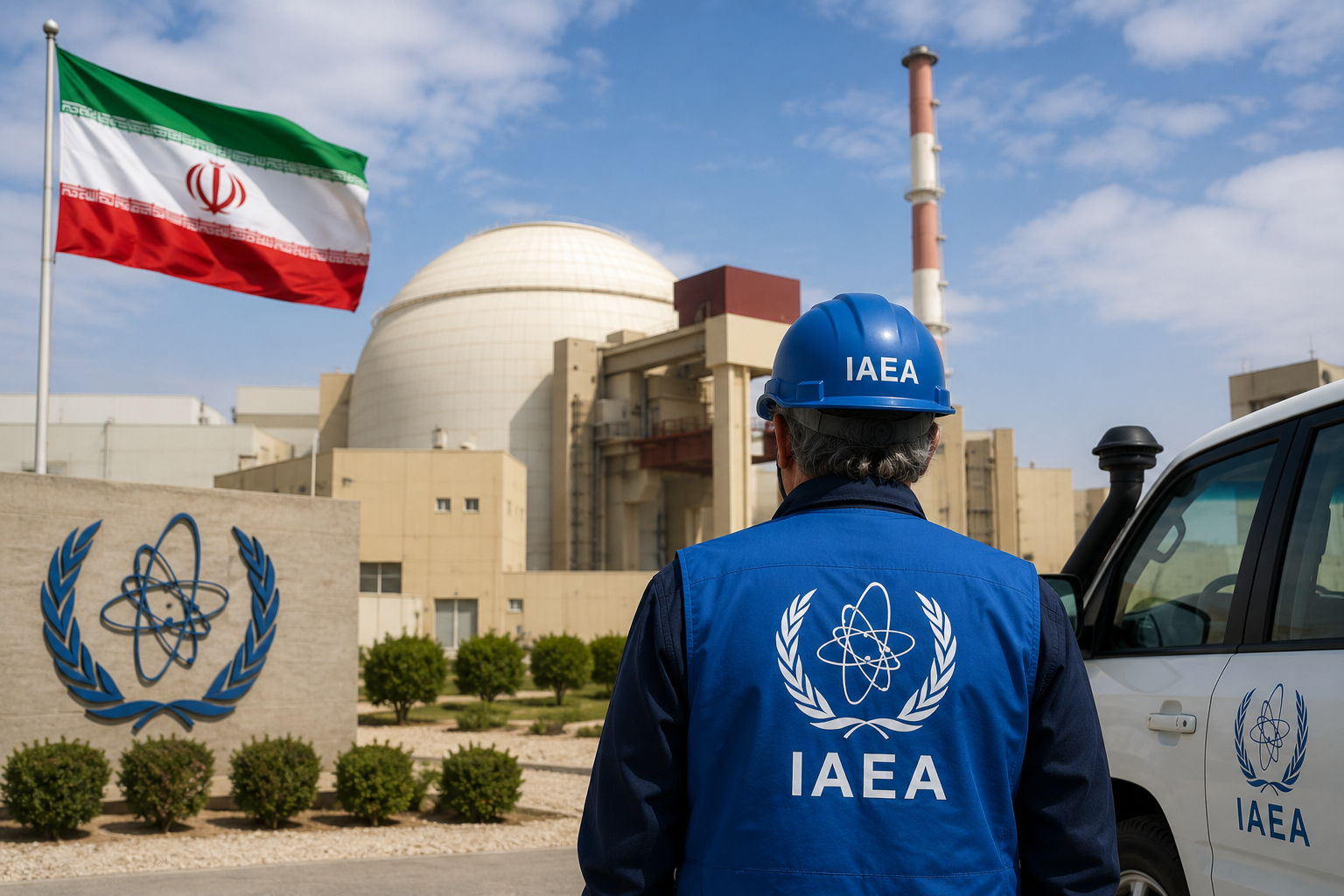
UN Nuclear Watchdog Chief Says Inspections Will Resume Soon Under New Diplomatic Framework
The head of the International Atomic Energy Agency (IAEA), Rafael Mariano Grossi, has indicated that international inspectors will soon return to Iran’s key nuclear facilities, a development that could play a crucial role in sustaining the recently announced diplomatic understanding between the United States and Iran.
Speaking during a visit to Japan, Grossi stressed that nuclear inspections are expected to take place under the framework agreed upon by both countries. His comments come amid conflicting statements from Washington and Tehran regarding the timing and scope of inspections, highlighting the delicate nature of the ongoing diplomatic process.
The announcement is being viewed as a positive signal for global security and energy markets, as transparency around Iran’s nuclear programme remains one of the most important factors influencing geopolitical stability in the Middle East.
Inspections Form the Backbone of the New Agreement
International monitoring of Iran’s nuclear activities is considered one of the most critical elements of the evolving understanding between Tehran and Washington.
Under the current framework, Iran is expected to cooperate with international inspectors while discussions continue on broader issues including sanctions relief, nuclear limitations, and regional security concerns.
The IAEA’s role is central because it serves as the independent body responsible for verifying nuclear activities and ensuring compliance with international obligations.
Why Verification Matters
The agency’s inspections help:
-
Monitor uranium enrichment activities
-
Verify nuclear material inventories
-
Assess centrifuge operations
-
Ensure transparency
-
Build international confidence
-
Support non-proliferation efforts
Without independent verification, global powers would have limited visibility into the status of Iran’s nuclear programme.
Grossi Expresses Confidence Despite Political Differences
While acknowledging that political leaders often make statements aimed at domestic audiences, Grossi emphasized that the formal understanding between the United States and Iran clearly includes a role for the IAEA.
According to the agency chief, inspections are not merely a possibility but an expected outcome of the agreement.
His remarks suggest that technical negotiations are progressing even as public messaging from various stakeholders remains inconsistent.
A Matter of Timing, Not Possibility
Grossi indicated that inspectors could return within days or weeks, but stressed that the exact timing is less important than the commitment to resume monitoring.
For international observers, this represents one of the strongest indications yet that nuclear verification activities could soon restart.
Focus Returns to Iran’s Uranium Stockpile
One of the primary concerns of the international community remains the status of Iran’s highly enriched uranium stockpile.
Over the past several years, Iran has significantly expanded its enrichment capabilities, raising concerns among Western governments and non-proliferation experts.
While Iran maintains that its nuclear activities are entirely peaceful, international monitoring remains essential to verify those claims.
Understanding the Enrichment Issue
Uranium enrichment is a process used to increase the concentration of uranium isotopes.
Lower levels of enrichment are typically used for:
-
Civilian nuclear energy production
-
Medical research
-
Scientific applications
However, highly enriched uranium can potentially be used for military purposes if further processed.
This is why transparency and monitoring remain critical components of international nuclear agreements.
IAEA Access Has Been Limited Since Regional Conflict
Access to some of Iran’s most sensitive nuclear facilities has remained restricted following the conflict between Israel and Iran that escalated in 2025.
The restrictions have made it difficult for inspectors to independently verify:
-
Uranium inventories
-
Operational status of enrichment facilities
-
Condition of centrifuge cascades
-
Nuclear material movements
As a result, uncertainty has increased regarding the exact status of Iran’s nuclear programme.
Global Powers Seek Greater Clarity
The return of inspectors would provide much-needed information to the international community and could help reduce speculation regarding Iran’s nuclear capabilities.
Experts believe that restoring regular inspections is a necessary first step toward rebuilding trust between Tehran and the West.
Diplomatic Progress Could Ease Regional Tensions
The latest developments are taking place against a backdrop of ongoing geopolitical uncertainty in the Middle East.
Relations between Iran, Israel, and several regional actors remain fragile, while global powers continue to monitor developments closely.
Many analysts believe successful implementation of the inspection framework could contribute to broader regional stability.
Potential Benefits of Successful Cooperation
A functioning inspection regime could:
-
Reduce geopolitical uncertainty
-
Improve diplomatic engagement
-
Lower regional tensions
-
Strengthen non-proliferation efforts
-
Support international confidence
Such outcomes would be welcomed by governments and investors alike.
Energy Markets Watching Closely
Iran occupies a strategically important position in global energy markets, making developments surrounding its nuclear programme highly relevant for oil traders and investors.
Any improvement in diplomatic relations could reduce concerns about supply disruptions and shipping risks in the Middle East.
Conversely, renewed tensions could increase volatility across energy markets.
Why Investors Care
The outcome of negotiations could influence:
-
Crude oil prices
-
Shipping costs
-
Global inflation trends
-
Energy security
-
Currency markets
-
Equity market sentiment
As a result, financial markets continue to monitor developments closely.
New Agreement Faces Several Challenges
Despite encouraging signs, significant challenges remain before a comprehensive agreement can be achieved.
Negotiators must still address a range of issues including:
-
Long-term nuclear restrictions
-
Sanctions relief
-
Regional security concerns
-
Compliance verification
-
Future inspection arrangements
Analysts caution that diplomatic progress could remain uneven given the complexity of these topics.
Building Trust Takes Time
Years of strained relations between Iran and Western nations mean that confidence-building measures will likely be necessary before a broader settlement can be reached.
The resumption of inspections could represent an important step in that process.
Global Non-Proliferation Efforts at a Critical Juncture
The outcome of the current diplomatic initiative could have broader implications for international non-proliferation efforts.
The IAEA has long been regarded as the cornerstone of the global nuclear monitoring system, and its ability to conduct effective inspections is vital to maintaining confidence in international agreements.
Successful cooperation between Iran and the agency could strengthen the credibility of diplomatic solutions to nuclear disputes worldwide.
Outlook: A Positive Signal, But More Work Ahead
The IAEA chief’s comments have provided an encouraging indication that nuclear inspections in Iran may soon resume, potentially easing one of the key concerns surrounding the country's nuclear programme.
While significant diplomatic and technical challenges remain, renewed access for inspectors would represent an important step toward greater transparency and stability.
For global markets, policymakers, and energy producers, the coming weeks could prove critical in determining whether recent diplomatic progress evolves into a more durable framework for regional peace and nuclear oversight.
Smart Investment Perspective
The resumption of IAEA inspections would be viewed positively by financial markets as it could reduce geopolitical uncertainty in a strategically important region. Improved transparency around Iran’s nuclear programme may support stability in global energy markets, lower risk premiums on crude oil, and improve investor sentiment toward emerging markets. However, any setbacks in implementation could quickly revive volatility across commodities, currencies, and global equities.