Former Ruling Party Faces Renewed Crackdown Amid Deepening Political Divide
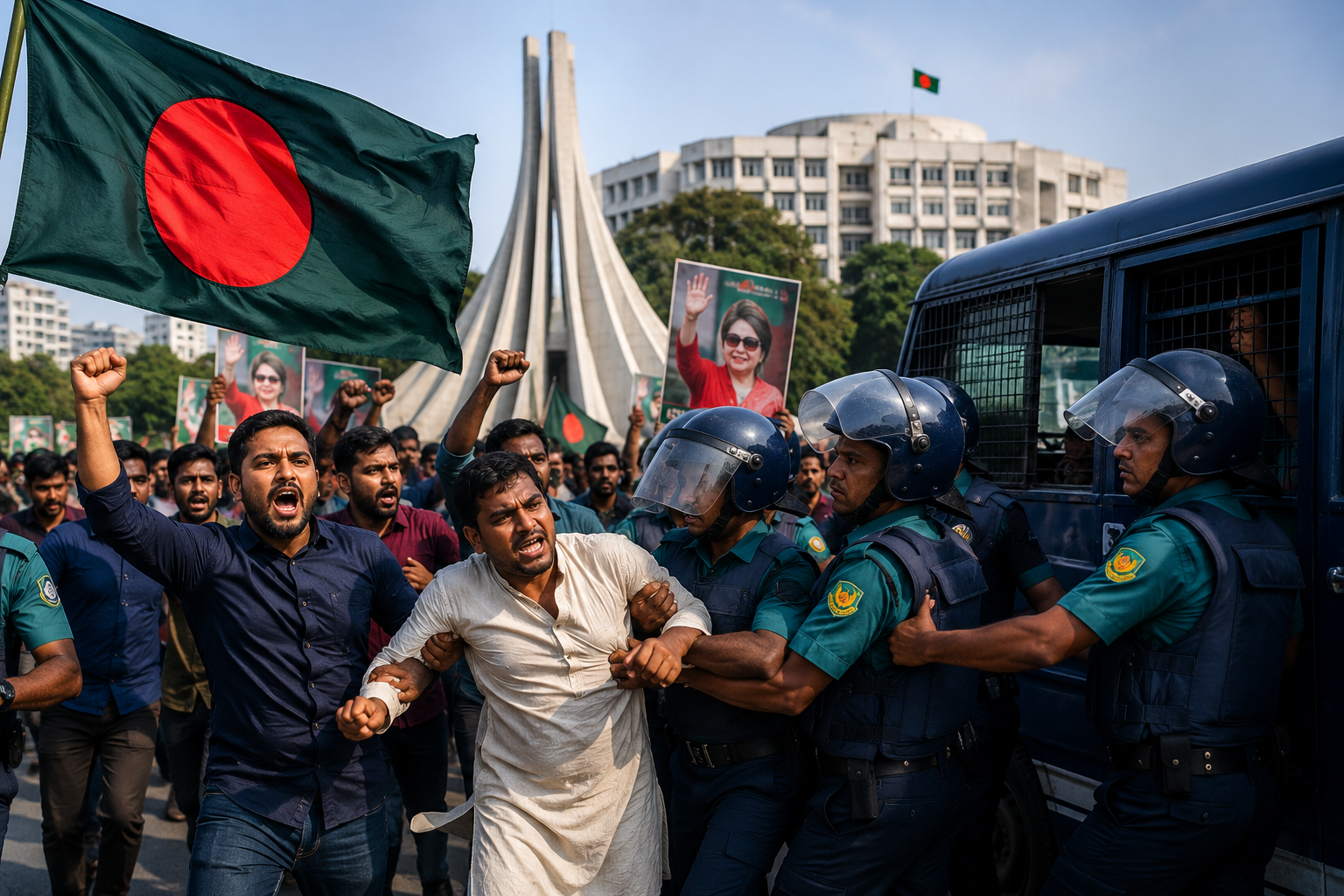
Bangladesh authorities arrested dozens of Awami League activists after supporters of the country's oldest political party attempted to mark its 77th founding anniversary despite restrictions on political activities. The detentions highlight the continuing political tensions nearly two years after the dramatic change in government that reshaped Bangladesh's political landscape.
Security forces carried out overnight operations in several locations after Awami League supporters organized small gatherings, processions and anniversary observances. Authorities said the measures were taken to enforce existing restrictions and maintain public order, while party supporters described the actions as an attempt to suppress political expression.
Historic Party at the Centre of Political Controversy
Founded on June 23, 1949, during the period when present-day Bangladesh was part of East Pakistan, the Awami League has played a defining role in the nation's history. The party led Bangladesh's independence movement and was instrumental in the 1971 Liberation War that resulted in the country's creation.
For decades, the Awami League remained one of the two dominant political forces in Bangladesh. Under the leadership of former Prime Minister Sheikh Hasina, the party governed the country for multiple terms and oversaw significant economic growth, infrastructure expansion and industrial development.
However, its political fortunes changed dramatically following widespread unrest and protests that culminated in the fall of Hasina's government in August 2024.
Fallout from the 2024 Political Upheaval
The current political environment stems from the student-led protests known as the "July Uprising," which triggered one of the most significant political transitions in Bangladesh's recent history. The demonstrations evolved into a nationwide movement that ultimately led to the collapse of the Awami League-led administration.
Following the change in power, an interim government headed by Muhammad Yunus initiated a series of political and institutional reforms. Among the most controversial decisions was the move to disband the Awami League, a step that fundamentally altered the country's political landscape.
The decision was later endorsed through parliamentary procedures under the administration led by Prime Minister Tarique Rahman, effectively removing the party from formal political participation.
Concerns Over Democratic Space
Political analysts believe the latest arrests are likely to intensify debate over political freedoms, opposition rights and democratic participation in Bangladesh. Human rights observers have closely monitored developments, particularly regarding the treatment of former ruling party members and supporters.
Supporters of the government argue that maintaining stability remains essential during the ongoing political transition, while critics contend that long-term stability requires broader political inclusion and open democratic engagement.
Regional and Economic Implications
Bangladesh remains one of South Asia's fastest-growing economies, making political stability a key concern for investors and international observers. Continued political uncertainty could influence investor sentiment, policy implementation and foreign investment flows.
The country's garment exports, infrastructure projects and manufacturing sectors have attracted significant international attention over the past decade. Analysts note that maintaining economic momentum will require a stable political environment and confidence in governance institutions.
Looking Ahead
As Bangladesh navigates a new political chapter, the future role of the Awami League and its supporters remains uncertain. The latest anniversary-related arrests demonstrate that the party's influence and legacy continue to resonate despite its official dissolution.
With political divisions still evident and questions surrounding democratic participation unresolved, Bangladesh's evolving political landscape is expected to remain closely watched both domestically and internationally in the months ahead.