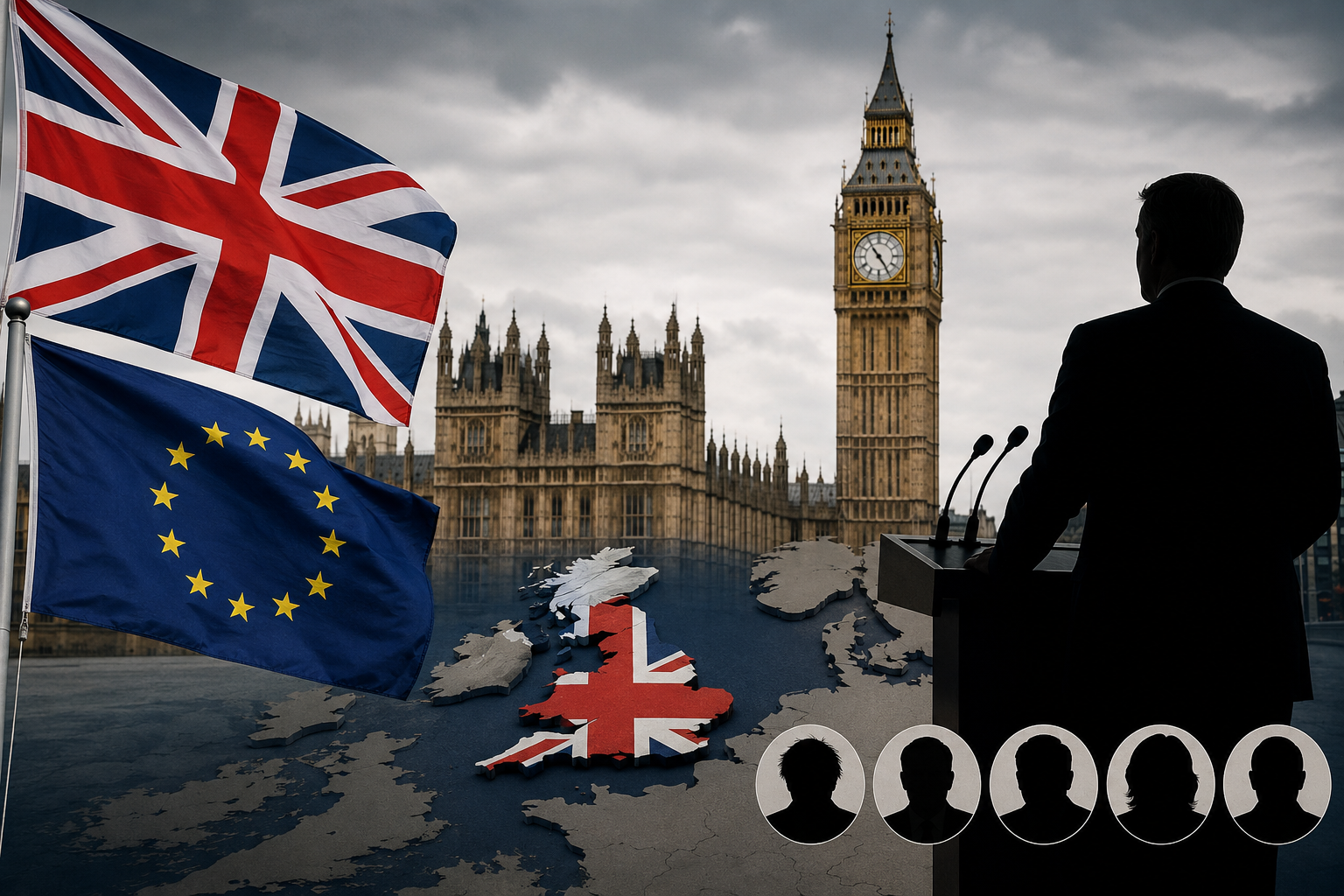
A Decade After the Referendum, Political Instability Continues to Shape Britain's Future
Ten years after the landmark Brexit referendum transformed the United Kingdom's relationship with Europe, the political aftershocks of that decision continue to reverberate through Westminster. As the nation marks a decade since voting to leave the European Union, Britain now finds itself preparing for its seventh prime minister in just ten years, highlighting the enduring political turbulence that has followed the historic vote.
referendum represented one of the most consequential political decisions in modern British history. While Brexit was officially completed years ago, the political, economic and social debates triggered by the decision remain far from settled. Successive governments have grappled with issues ranging from trade and immigration to economic growth, public finances and Britain's changing role on the global stage.
Leadership Change Signals Another Political Turning Point
The latest chapter in Britain's political uncertainty unfolded after Prime Minister Keir Starmer stepped down following a loss of confidence among Labour Party lawmakers. Starmer has announced a three-week timetable for the election of a new party leader, who will subsequently assume the country's highest office.
However, political observers suggest that the leadership contest may be largely symbolic. Andy Burnham, the newly elected Member of Parliament for Makerfield and former Mayor of Greater Manchester, has emerged as the overwhelming favorite to succeed Starmer. Strong support from Labour members and senior party figures has fueled expectations that Burnham could secure the leadership with minimal opposition.
Speaking after launching his campaign, Burnham praised Starmer's contribution to the country, acknowledging the difficult circumstances under which the outgoing prime minister governed. He emphasized the need to restore political stability and rebuild public confidence in government institutions.
Brexit Continues to Influence Political Landscape
Analysts argue that the frequent turnover of British prime ministers since the Brexit vote reflects the profound challenges of governing a nation still adapting to life outside the European Union. Since 2016, successive leaders have faced pressure from economic uncertainty, changing trade relationships, inflation concerns and evolving geopolitical dynamics.
The referendum reshaped party politics across the country, creating divisions that continue to influence elections, policymaking and public debate. Issues such as immigration control, economic competitiveness and Britain's international partnerships remain closely tied to the Brexit legacy.
Economic Challenges Await New Leadership
The incoming prime minister will inherit a challenging economic environment. Britain continues to face pressure to stimulate growth, improve productivity and strengthen investment while managing public spending commitments. Businesses and investors will be closely monitoring the leadership transition for signals on fiscal policy, regulatory reforms and international trade priorities.
Market participants are expected to focus on the new government's plans for economic recovery, infrastructure investment and efforts to enhance the UK's competitiveness in a rapidly evolving global economy.
What Comes Next?
As Labour moves toward selecting its next leader, the outcome will have significant implications not only for domestic politics but also for Britain's economic direction and international standing. With the Brexit era entering its second decade, the challenge for the next prime minister will be to deliver stability and growth while addressing the unresolved issues that continue to shape the nation's future.
For many observers, Britain's preparation for a seventh prime minister in ten years serves as a reminder that the political consequences of Brexit remain as relevant today as they were a decade ago.