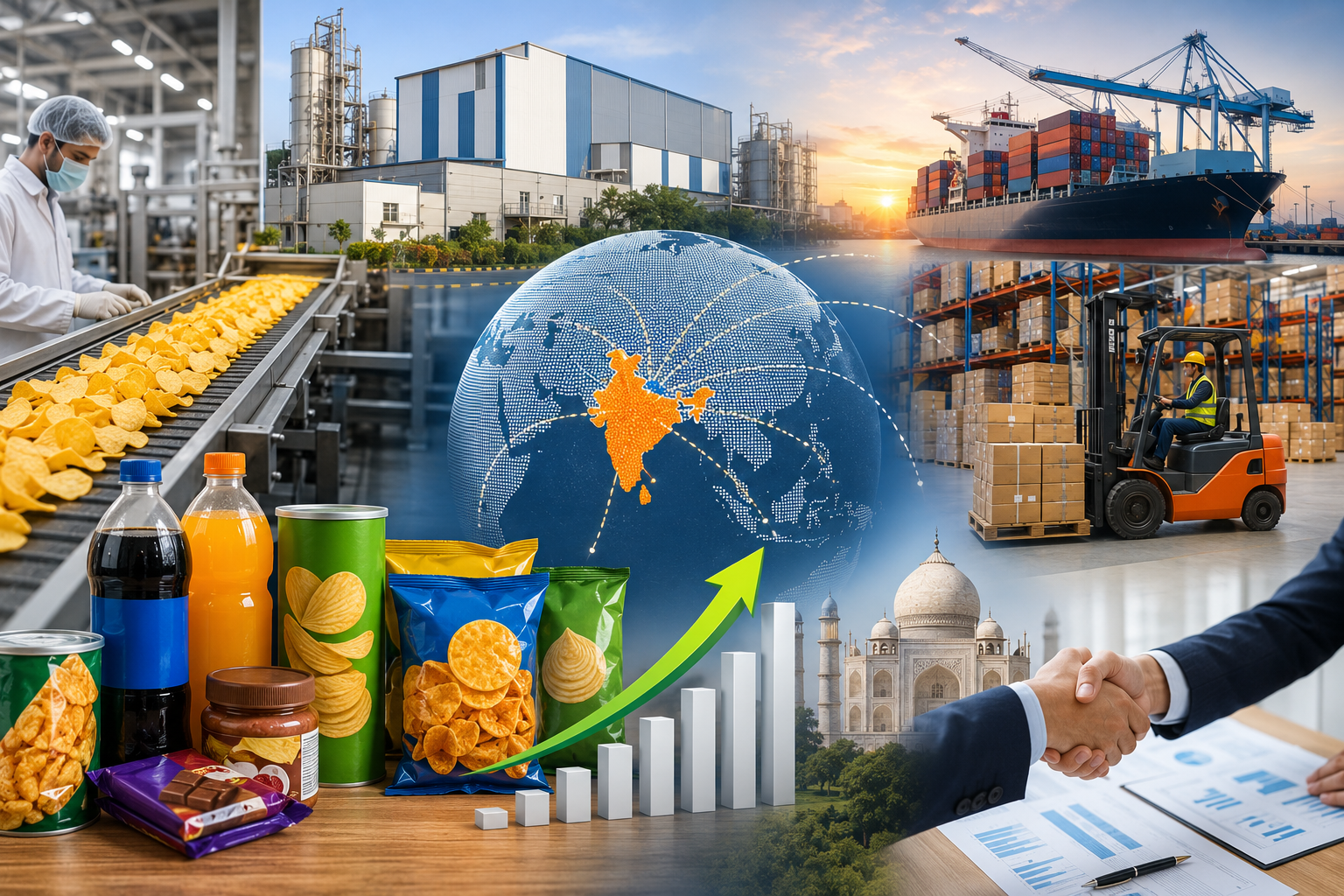
Rising domestic demand, export opportunities and supply-chain diversification are transforming India into a major global manufacturing hub
India is rapidly becoming a strategic manufacturing destination for global fast-moving consumer goods (FMCG) companies as multinational brands increasingly move beyond selling products in the country and begin building large-scale production ecosystems locally.
From beverages and packaged foods to snacks, cosmetics and ready-to-eat products, global consumer companies are investing heavily in manufacturing plants, food processing infrastructure and export-oriented supply chains across India.
Industry experts believe the shift marks a major turning point for India’s consumer manufacturing landscape, driven by strong domestic demand, improving logistics infrastructure, government reforms and global efforts to diversify supply chains beyond China.
PepsiCo, Coca-Cola and Reliance Drive Investment Momentum
The latest example of this growing trend comes from PepsiCo, which plans to invest nearly ₹5,700 crore in India by 2030 to expand its foods manufacturing business.
The investment includes:
- A concentrates manufacturing plant in Madhya Pradesh
- Snacks production facilities in Assam and Tamil Nadu
- Expansion of food processing capabilities
PepsiCo’s India business reported revenue of nearly ₹9,789 crore and profits of ₹905 crore for the 12 months ended December 2025, while its foods division reportedly grew around 11%.
Similarly, bottlers linked to The Coca-Cola Company announced investment plans worth approximately ₹25,760 crore for greenfield and brownfield manufacturing projects across nine Indian states.
Meanwhile, Reliance Consumer Products has pledged nearly ₹40,000 crore toward integrated food manufacturing units and AI-enabled food parks in Maharashtra and Andhra Pradesh.
India No Longer Just a Consumer Market
For decades, multinational FMCG companies viewed India primarily as a large consumption-driven market. However, the narrative is now changing as companies increasingly see India as a long-term production and export base.
Experts say this shift is being driven by a combination of:
- Rapidly expanding domestic consumption
- Lower logistics friction after GST implementation
- Improved supply-chain efficiency
- Availability of agricultural raw materials
- Competitive labour costs
- Geopolitical diversification strategies
The transition reflects India’s growing importance in global manufacturing and regional trade networks.
GST and Logistics Reforms Improve Manufacturing Efficiency
Industry analysts say the introduction of the Goods and Services Tax (GST) has played a major role in improving manufacturing economics for FMCG companies.
Before GST, companies maintained scattered warehousing systems across states to optimise taxes. The unified tax structure has allowed firms to consolidate warehousing, streamline transportation and build larger manufacturing hubs.
Experts believe this consolidation has:
- Reduced logistics inefficiencies
- Lowered production costs
- Improved supply-chain management
- Increased export competitiveness
Large-scale manufacturing is now becoming commercially more viable for multinational consumer companies operating in India.
China+1 Strategy Accelerates India’s Manufacturing Role
Global supply-chain disruptions and geopolitical tensions have accelerated the “China+1” strategy, where multinational corporations seek alternative manufacturing destinations outside China.
Analysts say India is emerging as one of the biggest beneficiaries of this global realignment.
India’s strategic location near Middle Eastern and Southeast Asian markets, combined with its relatively neutral foreign policy positioning, has strengthened its appeal as a regional manufacturing hub.
The country’s access to key shipping lanes and growing trade infrastructure are further supporting export-oriented production strategies.
India Emerging as Export Hub for FMCG Products
Experts believe India is gradually evolving from a domestic production centre into an export base for food, beverage and consumer products.
The country’s abundant agricultural resources and strong inorganic chemicals ecosystem are helping global companies manufacture:
- Packaged foods
- Beverages
- Snacks
- Cosmetics
- Frozen foods
- Ready-to-eat products
Indian-made FMCG products are increasingly being exported to:
- Middle East
- Southeast Asia
- United States
- Canada
- Australia
- Europe
This growing export orientation is encouraging companies to invest more heavily in manufacturing quality, automation and cold-chain logistics.
Global Brands Expanding Manufacturing Footprint
Industry experts highlighted that even premium global brands are increasingly choosing India for manufacturing and regional exports.
For example, global food giant Mondelez International reportedly shifted manufacturing of Lotus Biscoff products to India to serve both domestic premium consumers and broader Asia-Pacific export markets.
Analysts say India’s scale advantage is becoming difficult for multinational corporations to ignore.
Strong domestic demand allows companies to achieve economies of scale, which lowers manufacturing costs and improves export competitiveness.
Government Policies Supporting Manufacturing Growth
Although FMCG manufacturing incentives are relatively smaller compared to sectors like electronics and semiconductors, policy reforms have still played an important role in encouraging investments.
Industry experts say supportive measures include:
- Corporate tax reforms
- Food-processing-related PLI schemes
- State-level subsidies
- Power concessions
- Interest subvention support
- Logistics assistance
Several states are aggressively competing to attract food processing and FMCG investments through customised industrial incentive packages.
Automation and Cold-Chain Infrastructure Gain Importance
Companies are increasingly investing in:
- Automated manufacturing systems
- Quality control infrastructure
- Cold-chain logistics
- Warehousing networks
- AI-enabled food parks
- Export-grade packaging systems
Industry leaders believe global consumers now expect high standards of hygiene, shelf stability, consistency and traceability in food and consumer products.
As a result, investments in technology and supply-chain infrastructure are becoming essential for Indian manufacturing competitiveness.
FMCG Manufacturing Expansion to Boost Jobs
Experts say the rise of large-scale FMCG manufacturing could generate significant employment opportunities across urban and semi-urban India.
The expansion is expected to create jobs in:
- Food processing
- Supply-chain management
- Warehousing
- Packaging
- Agriculture sourcing
- Quality assurance
- Logistics
- Food technology
The sector’s deep integration with agriculture and MSMEs could also create a multiplier effect across rural economies and supplier ecosystems.
Local Suppliers and Farmers Likely to Benefit
Industry analysts believe multinational manufacturing expansion could strengthen local supplier networks and improve income opportunities for farmers and small businesses.
Long-term sourcing contracts and organised procurement systems are expected to improve supply-chain stability while encouraging higher production standards among local suppliers.
Experts also noted that many Indian manufacturers may increasingly become contract production partners for global FMCG brands, helping domestic companies scale up operations and improve manufacturing efficiency.
India’s Consumer Manufacturing Story Gains Global Attention
As multinational corporations continue diversifying production and building resilient supply chains, India’s role in the global FMCG ecosystem is expected to expand significantly over the coming decade.
Industry experts believe the combination of strong domestic consumption, export readiness, digital infrastructure and policy support could position India as one of the world’s leading consumer goods manufacturing hubs in the years ahead.