Oversubscription Signals Surplus Funds; Cut-Off Rate at 5.24% Reflects Tight Liquidity Management
In a decisive move to manage excess liquidity in the financial system, the Reserve Bank of India (RBI) absorbed ₹2,00,031 crore through a seven-day Variable Rate Reverse Repo (VRRR) auction on Friday. The operation underscores the central bank’s proactive stance in maintaining monetary discipline amid evolving market conditions.
Strong Participation Highlights Surplus Liquidity
The VRRR auction witnessed strong demand from banks, with total bids amounting to ₹2,28,098 crore—well above the notified amount of ₹2 lakh crore. This oversubscription indicates that banks are currently holding surplus funds and are willing to park them with the RBI for short-term returns.
Such liquidity conditions are often seen during periods of strong deposit inflows, government spending cycles, or limited credit off-take in the system.
Auction Details: Rates Indicate Policy Alignment
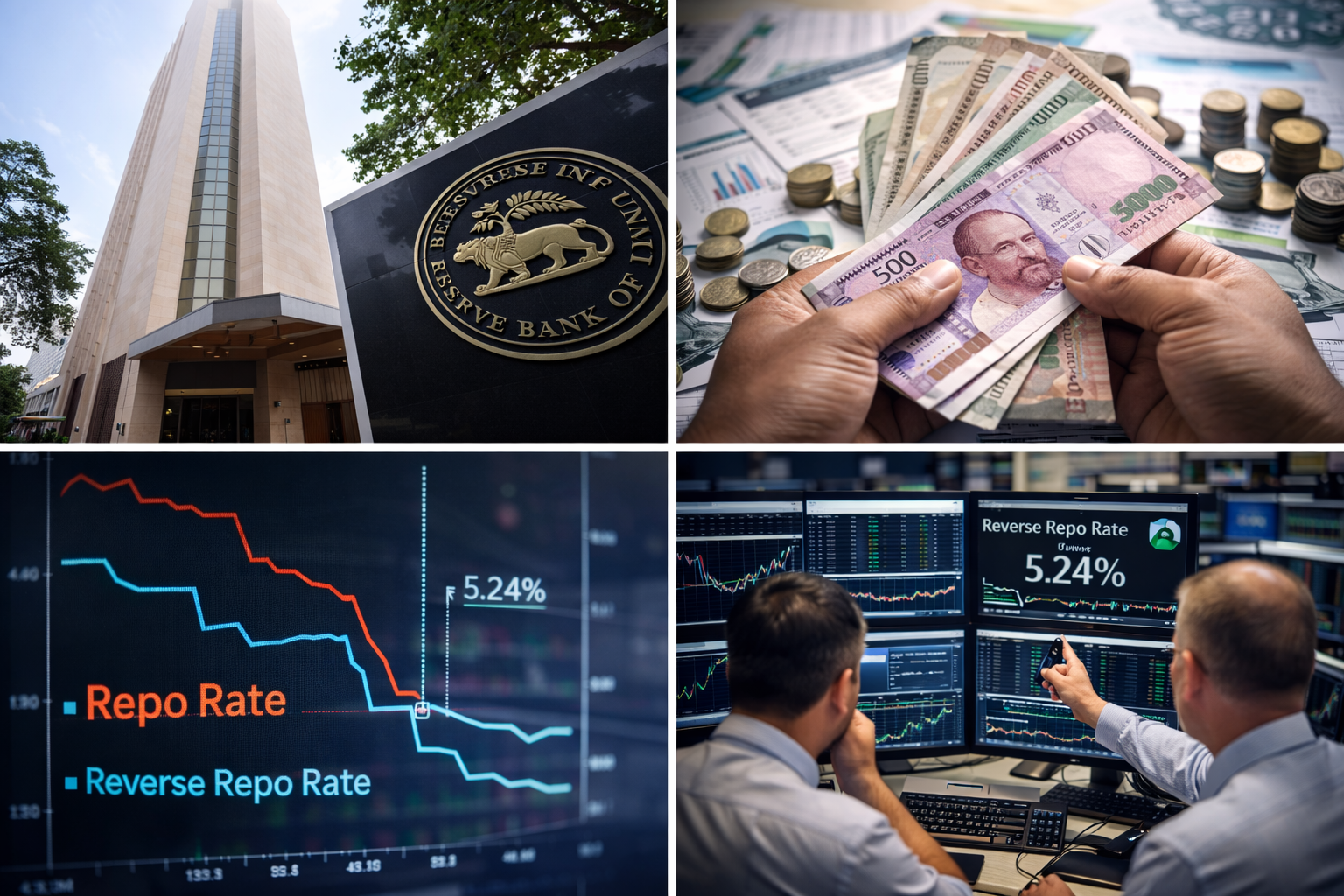
The RBI accepted bids at a cut-off rate of 5.24%, with a weighted average rate of 5.23%. These rates are closely aligned with the prevailing monetary policy corridor, suggesting that the central bank is maintaining consistency in its liquidity absorption strategy.
The VRRR mechanism allows banks to deposit surplus funds with the RBI at market-determined rates, making it a flexible tool for short-term liquidity adjustment.
What is VRRR and Why It Matters
The Variable Rate Reverse Repo (VRRR) is a key liquidity management instrument used by the RBI to absorb excess liquidity from the banking system. Unlike fixed-rate reverse repo operations, VRRR auctions allow market participants to bid for interest rates, ensuring efficient price discovery.
By draining liquidity, the RBI aims to:
- Prevent excessive money supply in the system
- Anchor short-term interest rates
- Control inflationary pressures
- Maintain financial stability
Impact on Banking System and Markets
The absorption of such a large quantum of liquidity can influence short-term money market rates, potentially pushing them closer to the policy repo rate. This, in turn, affects borrowing costs for banks and financial institutions.
For equity markets, tighter liquidity conditions can sometimes lead to cautious sentiment, especially in rate-sensitive sectors such as banking, real estate, and NBFCs.
However, the move is largely seen as a technical adjustment rather than a shift in policy stance.
Monetary Policy Outlook: Calibrated Approach Continues
The RBI’s latest action signals a calibrated approach toward liquidity management rather than aggressive tightening. The central bank continues to balance growth and inflation while ensuring that excess liquidity does not distort financial markets.
With inflation trends, global interest rate movements, and domestic growth dynamics in focus, liquidity operations like VRRR are expected to remain a key tool in the RBI’s policy toolkit.
The RBI’s ₹2 lakh crore liquidity absorption reflects strong surplus conditions in the banking system and a measured approach to monetary control. While the move tightens short-term liquidity, it reinforces stability and discipline in India’s financial markets.