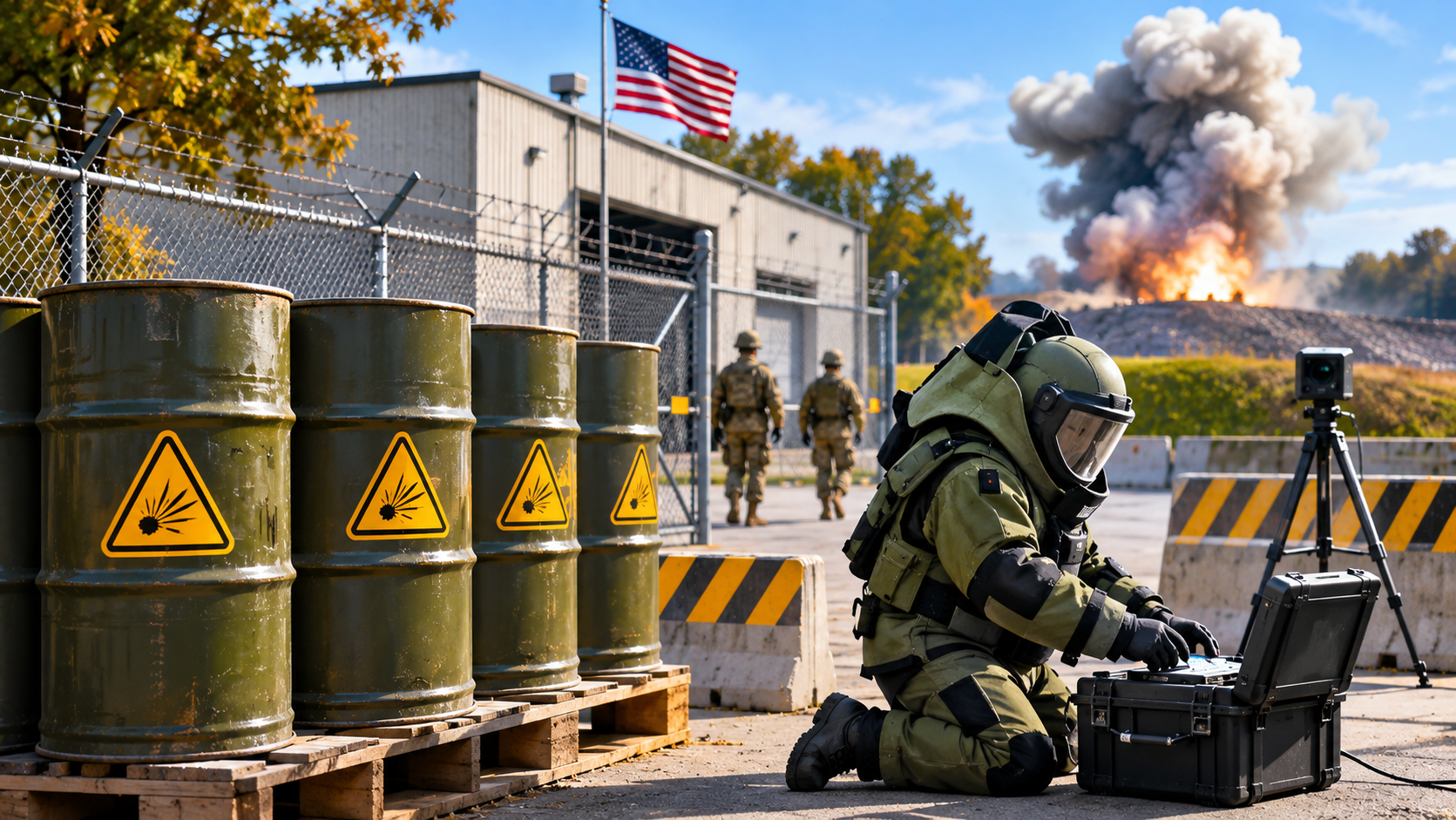
Eighth Circuit allows the Army to proceed with the controlled disposal of 68 drums of unstable lead azide after finding that EPA safeguards are designed to limit lead-dust exposure and environmental risks
A US appeals court has cleared the way for the controlled detonation of hazardous explosives stored at the Iowa Army Ammunition Plant in Middletown, Iowa, after concluding that federal environmental safeguards are sufficient to reduce the risks associated with the operation.
The Eighth Circuit Court of Appeals on Monday rejected a request from environmental groups to halt the planned disposal of 68 drums containing lead azide, a highly sensitive primary explosive historically used in ammunition.
The decision comes after several postponements of the planned detonation and amid growing concerns over both the potential environmental impact of the operation and the possibility of an uncontrolled explosion if the material remains in storage.
Court Finds EPA Safeguards Adequate
Environmental organisations, including the Iowa Environmental Council and Sierra Club, had challenged the Environmental Protection Agency’s authorisation of the controlled detonation.
The groups argued that an open-air detonation could release lead dust into the atmosphere and potentially expose communities located several miles from the facility.
The appeals court, however, determined that the EPA had incorporated safeguards intended to minimise the dispersal of lead dust and reduce potential exposure risks.
The ruling allows federal authorities to proceed with the planned operation while maintaining mitigation measures designed to protect nearby communities and the environment.
Army Warns of Potential Spontaneous Explosion
The Army has argued that leaving the material in long-term storage could itself pose a serious safety threat.
According to an EPA letter dated November 20, the Army determined that recrystallisation of the lead azide had occurred during prolonged storage. Officials said the change could increase the material's sensitivity to friction and shock and create a risk of spontaneous explosion.
The Army concluded that controlled detonation was the only viable option for removing the hazardous material.
The operation had initially been scheduled for November 20 but was postponed. The Army subsequently announced that the detonation had been rescheduled for Wednesday to allow for more favourable weather conditions and additional mitigation measures to be put in place.
Trump Warns Against Further Delays
President Donald Trump has repeatedly highlighted the potential danger of allowing the explosives to remain at the facility.
Before the court ruling, Trump warned that a prolonged delay could increase the risk of what he described as a potentially large spontaneous explosion. He also said the incoming Democratic governor of Iowa, Rob Sand, would have to decide whether to consent to proceeding with the operation.
Trump's comments added a political dimension to an issue that has primarily centred on public safety, environmental protection and federal responsibility.
Sand said the federal government should rely on the expertise of officials deployed to the site while also making more information available to Iowa residents.
Incoming Governor Seeks Greater Transparency
Sand has called for greater public access to the information provided to state officials during federal briefings.
He argued that residents should have access to the same information available to government representatives so that communities can better understand the risks and the reasons behind the Army's decision.
The demand for greater transparency has emerged as a key issue alongside the debate over whether controlled detonation or continued storage represents the safer option.
Federal Agencies Promise Extensive Safety Measures
The Army, EPA and Department of Health and Human Services have said multiple federal agencies are coordinating the operation.
In a joint statement, the agencies said preparations had been underway since March and that officials had been working to implement extensive mitigation measures to protect the public and minimise disruption.
The Army also held consultations with Middletown officials and residents to address concerns surrounding the hazardous material and the proposed disposal process.
Authorities have indicated that weather conditions, protective measures and operational planning will all be considered before the detonation proceeds.
Environmental Concerns Remain
Despite the court's decision, environmental groups continue to question whether an open-air detonation is the safest approach.
Their primary concern is the possibility that lead particles could be dispersed beyond the immediate area during the explosion. Lead exposure can pose health and environmental risks, particularly if contaminated dust reaches populated areas or enters soil and water systems.
The court's decision does not eliminate those concerns but allows the federal agencies to proceed under the safeguards they have established.
Iowa Officials Demand More Information
Iowa Senator Chuck Grassley has also backed the controlled removal of the hazardous material while expressing concern about the limited information available to the public.
Grassley said a controlled and safe removal would be preferable to the possibility of an uncontrolled catastrophe, but maintained that Iowa residents should receive a clearer explanation of the Army's decision-making process.
The debate therefore remains focused on balancing two competing risks: the potential environmental consequences of controlled detonation and the possibility that deteriorating explosives could become unstable if kept in storage.
Controlled Removal Becomes the Central Safety Question
The court ruling represents an important step toward resolving the long-running problem at the Iowa Army Ammunition Plant. Federal officials now face the challenge of executing the operation while ensuring that the safeguards identified in court proceedings are fully implemented.
For residents of Middletown and surrounding communities, the timing of the operation and the effectiveness of the protective measures will remain closely watched.
The case also highlights the difficult decisions authorities can face when aging hazardous materials become increasingly unstable and conventional storage is no longer considered a safe long-term option.